Kelp species such as Saccharina japonica and Undaria pinnatifida are vital to global economies, yet rising seawater temperatures due to climate change are threatening their cultivation. A team led by Prof. Shan Tifeng from the Institute of Oceanology at the Chinese Academy of Sciences has developed a novel triploid breeding method aimed at creating heat-resistant kelp cultivars. Their findings were published on November 19, 2025, in the Journal of Phycology.
The urgency for developing new kelp varieties arises from the detrimental effects of global warming on seaweed farms. Traditional breeding methods have struggled to adapt to the changing conditions, therefore, innovative approaches are essential. While triploid breeding is common in land-based agriculture, its application in kelp cultivation has been limited.
Innovative Breeding Technique
Previous attempts to obtain diploid gametophytes from heterozygous sporophytes through apospory encountered significant challenges. The sex of these gametophytes was often variable, complicating the precise breeding needed to establish triploid lines. As Prof. Shan noted, this inconsistency has been a major obstacle in advancing triploid breeding for kelp.
To overcome this issue, the research team employed doubled haploid (DH) population construction technology, specifically targeting Undaria pinnatifida. They generated homozygous diploid gametophytes by inducing apospory in DH sporophytes. This involved crossing these gametophytes with haploid gametophytes to successfully create triploid sporophytes, thus addressing the technical bottleneck that had previously hindered progress.
The researchers began by obtaining DH sporophytes through the selfing of a monoicous gametophyte. Subsequently, they derived single-sex male diploid gametophytes through apospory. These male gametophytes were then crossed with three female haploid gametophyte clonal lines, resulting in the creation of three distinct triploid hybrid lines.
Successful Cultivation Trials
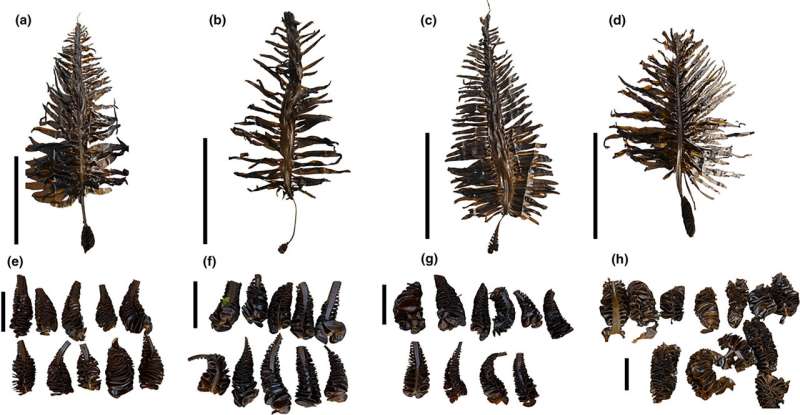
Field trials conducted at a seaweed farm indicated that the newly developed triploid hybrids outperformed conventional diploid cultivars. The triploid lines demonstrated a significantly faster growth rate, longer blades, and improved resistance to high temperatures and aging. Additionally, they exhibited notable sterility, which may enhance their adaptability in changing marine environments.
Prof. Shan emphasized that the triploid breeding method established through this study has the potential to be applied to other kelp species due to their similar life cycles. This research provides a valuable tool for the kelp industry, aiming to develop more resilient and adaptable cultivars, thus supporting the long-term sustainability of seaweed farming.
The study reinforces the importance of innovative breeding techniques in combating the challenges posed by climate change and highlights the need for ongoing research in marine agriculture.
For further details, refer to the publication: Tifeng Shan et al., “Breeding of triploid Undaria pinnatifida through crossing aposporous gametophytes derived from doubled haploid sporophytes with haploid gametophytes,” published in the Journal of Phycology (2025). DOI: 10.1111/jpy.70107.