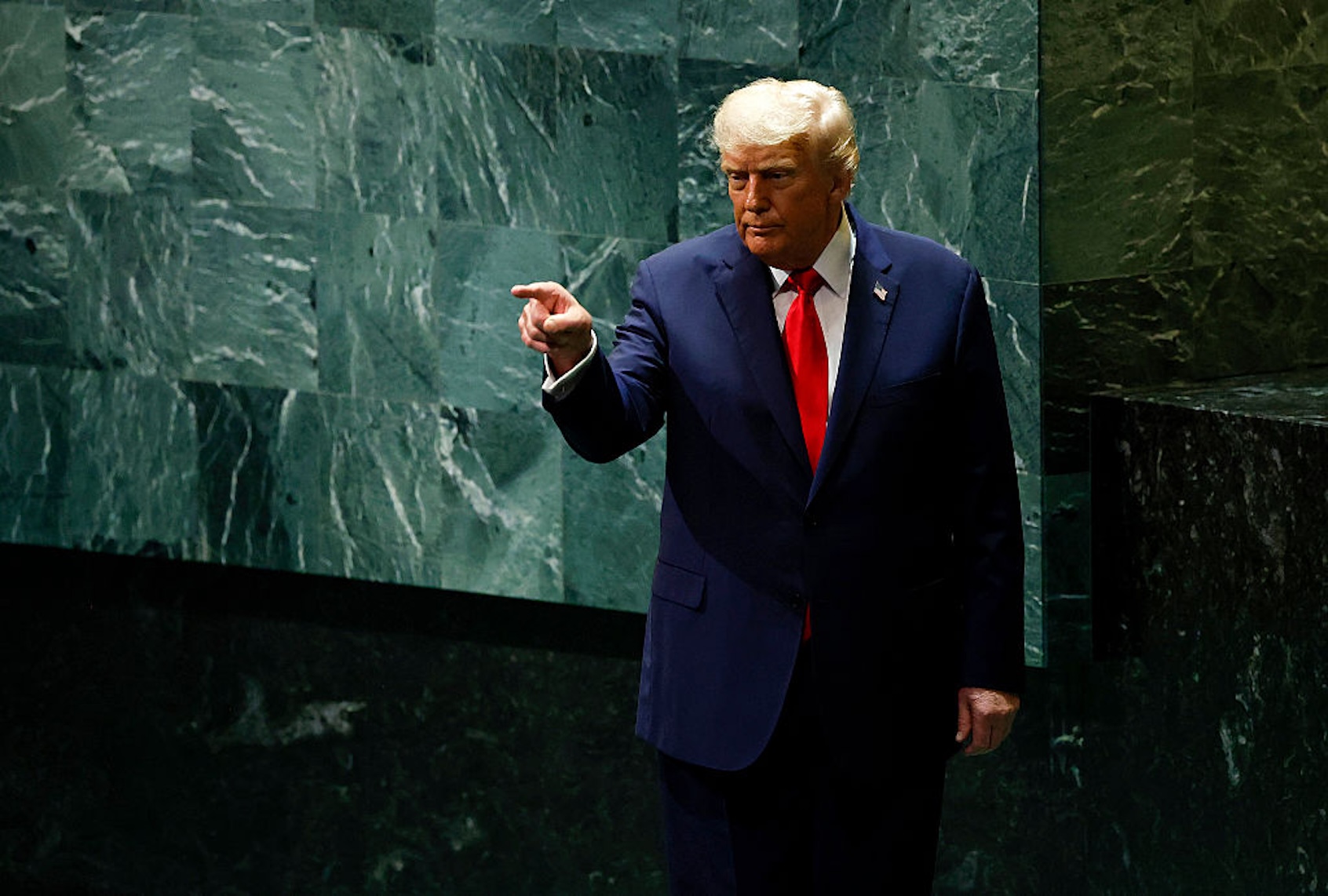
The White House has responded to a controversial incident involving President Donald Trump during a flight on Air Force One. Last week, Trump directed a derogatory comment towards a reporter after she posed questions regarding Jeffrey Epstein. The president reportedly pointed his finger at her and stated, “Quiet, piggy!” This exchange was captured on video and subsequently shared by the White House, quickly gaining traction online.
In the wake of the uproar, a White House official defended Trump’s actions while criticizing the reporter. Speaking to MS NOW, the official characterized her behavior as “inappropriate and unprofessional.” They added that if reporters intend to confront figures in power, they should be prepared for a strong response. “If you’re going to give it, you have to be able to take,” they stated.
The incident occurred against a backdrop of heightened tension surrounding the Epstein case. Following the release of emails that linked Epstein to Trump, the president has exhibited increasing irritability during press interactions. For instance, on November 15, 2025, Trump confronted an ABC News reporter after they inquired about Saudi Crown Prince Mohammed bin Salman and his connection to the murder of journalist Jamal Khashoggi. During this exchange, Trump threatened to revoke ABC’s broadcast license, asserting, “I think the license should be taken away from ABC because your news is so fake and it’s so wrong.”
The White House’s defense of Trump’s comments has sparked widespread debate. Critics argue that such interactions undermine the professionalism expected in journalistic inquiries. Supporters contend that Trump’s frustration is justified given the persistent scrutiny he faces regarding sensitive topics such as the Epstein case.
As the political landscape continues to evolve, the implications of Trump’s remarks and the White House’s defense may resonate beyond this particular incident. The ongoing discussions surrounding accountability in journalism and the treatment of reporters by public officials remain crucial in shaping future interactions between the press and those in power.