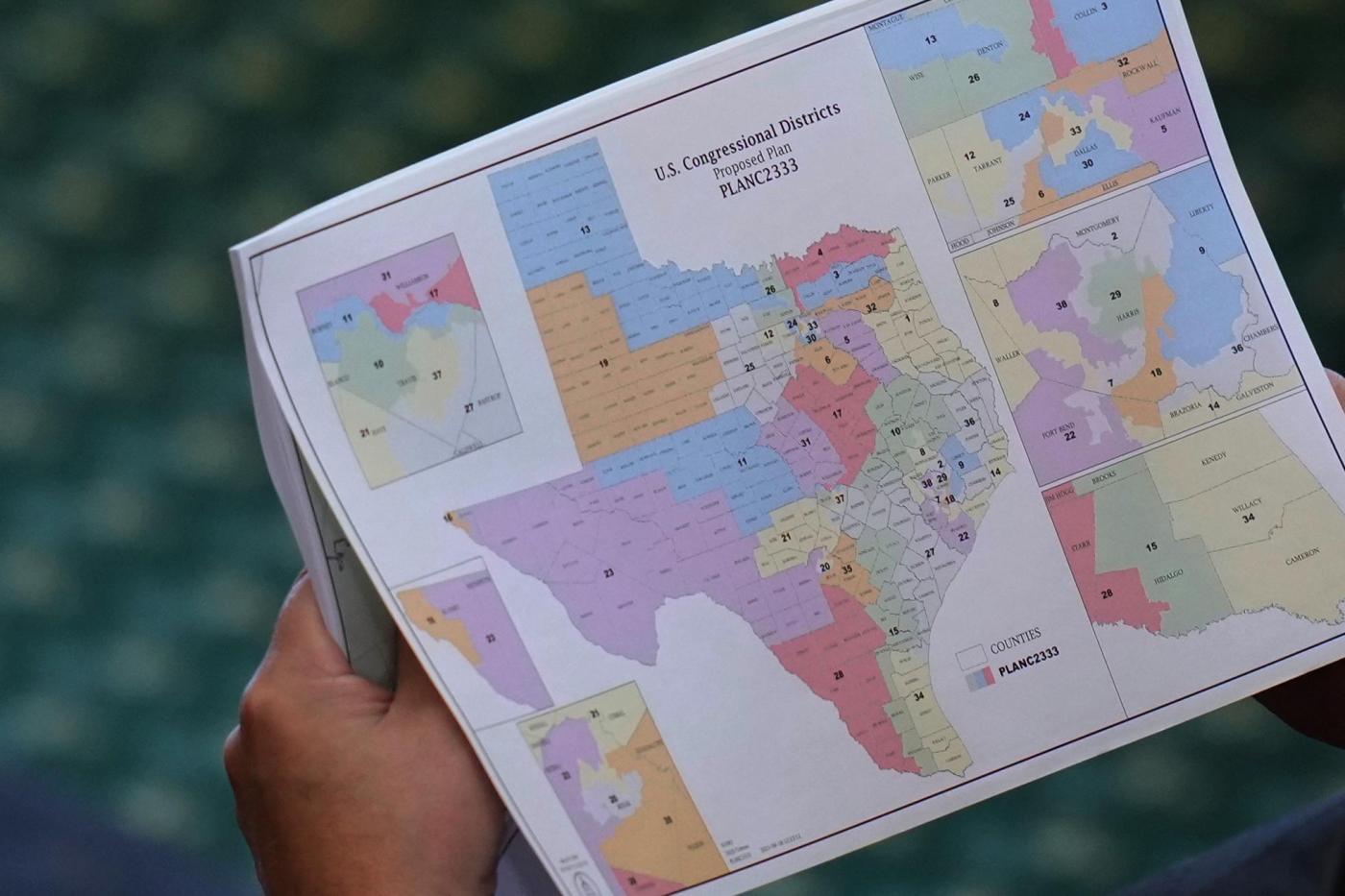
A federal court has prohibited Texas from implementing its newly drawn congressional map for the upcoming 2026 midterm elections. In a 2-1 ruling, U.S. District Judge Jeffrey Brown, appointed by former President Donald Trump, ordered the state to revert to the congressional maps utilized during the 2021 elections.
Judge Brown’s decision emphasized significant concerns regarding the racial implications of the new map, known as the 2025 Map. He stated, “The map ultimately passed by the Legislature and signed by the governor — the 2025 Map — achieved all but one of the racial objectives that DOJ demanded.” He noted that the Texas Legislature had dismantled key districts identified by the Department of Justice (DOJ) in a letter urging the state to redraw the maps to comply with the Voting Rights Act.
The newly approved map, which was passed in August 2023, had the potential to secure an additional five congressional seats for the Republican Party. This drew scrutiny from the DOJ, which threatened legal action if Texas failed to address the “coalition districts” that were deemed necessary for maintaining fair representation.
Judge Brown acknowledged the political motivations behind the map’s design but pointed to substantial evidence indicating that Texas engaged in racial gerrymandering. He stated, “The public perception of this case is that it’s about politics. But it was much more than just politics.”
Following the map’s approval, the National Association for the Advancement of Colored People (NAACP) filed a lawsuit, alleging that the redistricting process was racially motivated and aimed at undermining Black communities ahead of the midterm elections.
The push for the new congressional lines was largely influenced by Trump, who has called for Republican-led states to fortify their positions in Washington as the 2026 elections approach. This decision has sparked a wave of redistricting efforts from both political parties nationwide. In response to Texas, a new Democratic map was drawn in California, aiming to flip five Republican-held seats.
The DOJ has also taken action in California, filing a lawsuit against state officials over the new map designed to provide a competitive advantage for Democrats in the 2026 elections. Should Texas choose to appeal the federal court’s ruling, the case is expected to reach the U.S. Supreme Court.
This latest development highlights the ongoing tensions surrounding electoral districting in the United States and the significant role that race and politics play in shaping congressional representation.