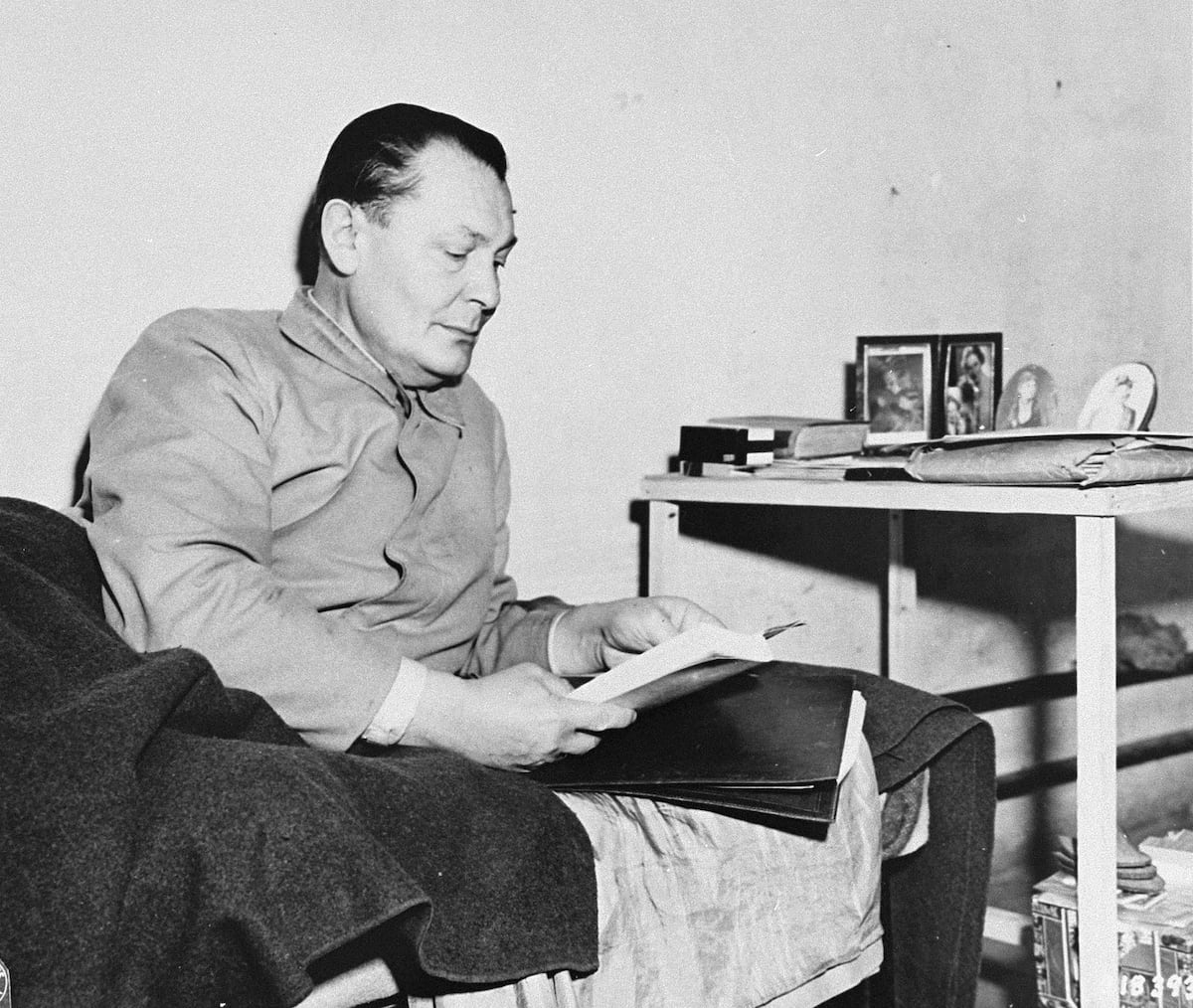
An overlooked interview with Hermann Göring, the infamous Reichsmarschall of Nazi Germany, has resurfaced, shedding light on the strategic considerations of the Nazi leadership during World War II. Conducted on July 25, 1945, by Major Kenneth W. Hechler of the U.S. Army Europe’s Historical Division, this conversation provides valuable insights into Göring’s perceptions of the military capabilities of the United States and the Soviet Union.
Göring, known for his flamboyant personality and stature, surrendered to American forces on May 8, 1945, expecting to be treated with respect. Instead, he was stripped of his military honors and confined in Prisoner of War Camp No. 32, infamously termed the “Ashcan.” The interview conducted in this setting reveals Göring’s candid reflections on the war and his views on America’s potential as a military power.
During the interview, Göring expressed his belief in the United States’ formidable economic and technological resources. He noted that while the U.S. air force was not yet fully developed, he recognized the capacity for rapid industrial conversion to war production, particularly in the automobile sector. Göring recalled advising Hitler to prevent American involvement in the war, emphasizing the need to conclude European campaigns swiftly to avoid U.S. intervention.
Göring’s Strategic Insights
One of the key points raised by Göring was the assessment of American war potential. He indicated that Hitler underestimated U.S. resolve, believing that the traumas of World War I would deter American intervention. Göring stated, “I always answered Hitler that it would be comparatively easy to convert factories to war production.” His remarks indicate a clear understanding of the potential threat posed by the U.S., which he believed could build an air force more rapidly than an army.
The conversation also touched upon the circumstances surrounding Germany’s declaration of war on the United States. Göring expressed surprise at this decision, suggesting that it was unnecessary to strike first, especially given America’s growing military capabilities. He claimed that Hitler’s motivations were partly influenced by a desire to placate Japan following the attack on Pearl Harbor, even though Germany was not obligated by treaty to support its ally.
Göring provided insights into the German command’s perception of U.S. military intentions, noting that they monitored American shipbuilding capabilities and the potential for a U.S.-led invasion. He described the astonishment among German leaders at the speed of American production, particularly in shipbuilding, which they initially underestimated.
The Aftermath and Nuremberg Trials
As the war concluded, Göring faced significant repercussions for his actions. On August 12, 1945, he was transported to Nuremberg along with other high-ranking Nazi officials for the trials that would hold them accountable for war crimes. By the start of the Nuremberg Trials on November 20, he had lost weight and reportedly had been weaned off painkillers.
Despite his commanding presence and articulate defense during the trials, Göring’s reputation suffered as evidence of the atrocities committed by the Nazi regime came to light. His assertions of loyalty to the German people did little to mitigate the overwhelming evidence against him. Ultimately, on October 1, 1946, Göring was found guilty on all charges and sentenced to death by hanging.
In a bid to evade execution, he ingested potassium cyanide on October 15, just hours before his scheduled execution. His death marked a dramatic end to the life of one of history’s most notorious figures, whose actions and ideologies had far-reaching consequences.
The recently uncovered interview with Göring serves as a stark reminder of the complexities surrounding the decisions made during World War II. It highlights not only the hubris of Nazi leadership but also the significant miscalculations regarding the military capabilities of their adversaries. The insights gained from this conversation underscore the importance of understanding historical perspectives as we reflect on the past.