Research into the survival capabilities of desert cyanobacteria, specifically from the genus Chroococcidiopsis, has revealed significant implications for astrobiology and sustainable life support systems. This study examines how these microorganisms endure extreme conditions similar to those found in space and on other planetary bodies, such as Mars. The findings not only expand our understanding of what constitutes a habitable environment but also offer potential applications for future space missions.
Laboratory Simulations and Space Conditions
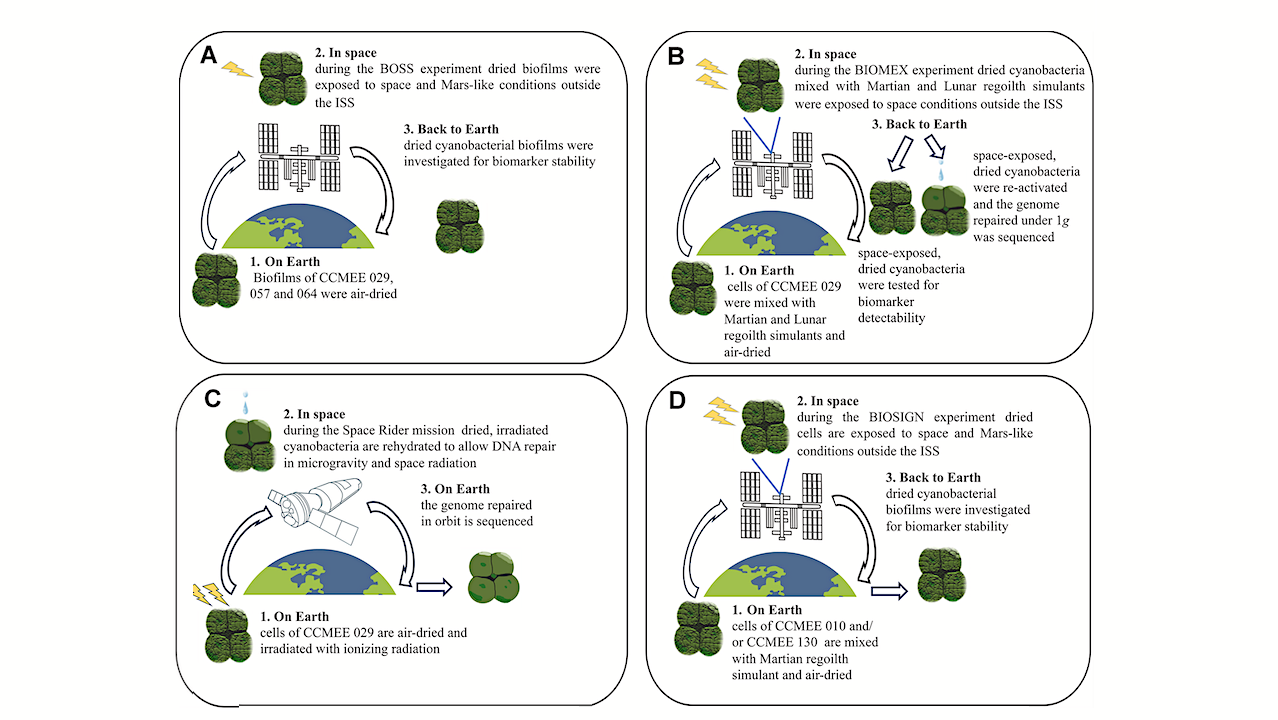
Scientists have conducted a series of experiments to test the resilience of Chroococcidiopsis under various simulated extraterrestrial conditions. These laboratory simulations mimic the harsh environments found in space and the specific atmospheric conditions of Mars. The organisms were subjected to high levels of radiation, low temperatures, and desiccation, all factors that would typically threaten life.
In addition to laboratory tests, researchers also exposed these cyanobacteria to real space conditions. This included experiments conducted in Low Earth Orbit (LEO), where the organisms experienced microgravity and increased radiation levels. The objective was to determine their survival potential in environments that future astronauts may encounter.
Implications for Future Space Exploration
The results of these studies hold profound implications for astrobiology, particularly in understanding the limits of life. The ability of Chroococcidiopsis to thrive in extreme environments suggests that life could exist in places previously deemed uninhabitable. This research not only provides insight into the potential for extraterrestrial life but also informs the design of sustainable life support systems for long-duration space missions.
By harnessing the resilience of these microorganisms, scientists aim to develop biotechnological applications that could support human life in space. This includes the possibility of using Chroococcidiopsis in closed-loop life support systems, where they could recycle waste and produce oxygen, essential for sustaining human life on missions to Mars or beyond.
The findings underscore the adaptability of life forms and challenge traditional notions of habitability. As space agencies like NASA prepare for future missions to explore Mars, understanding these extremophiles becomes increasingly vital. Their capacity to endure and adapt to hostile conditions may pave the way for innovative solutions in astrobiology and human space exploration.
In conclusion, the ongoing research into desert cyanobacteria not only enhances our knowledge of life’s resilience but also serves as a beacon of hope for future interplanetary exploration. The implications extend far beyond scientific curiosity, aiming to create sustainable environments for human life as we venture deeper into the cosmos.