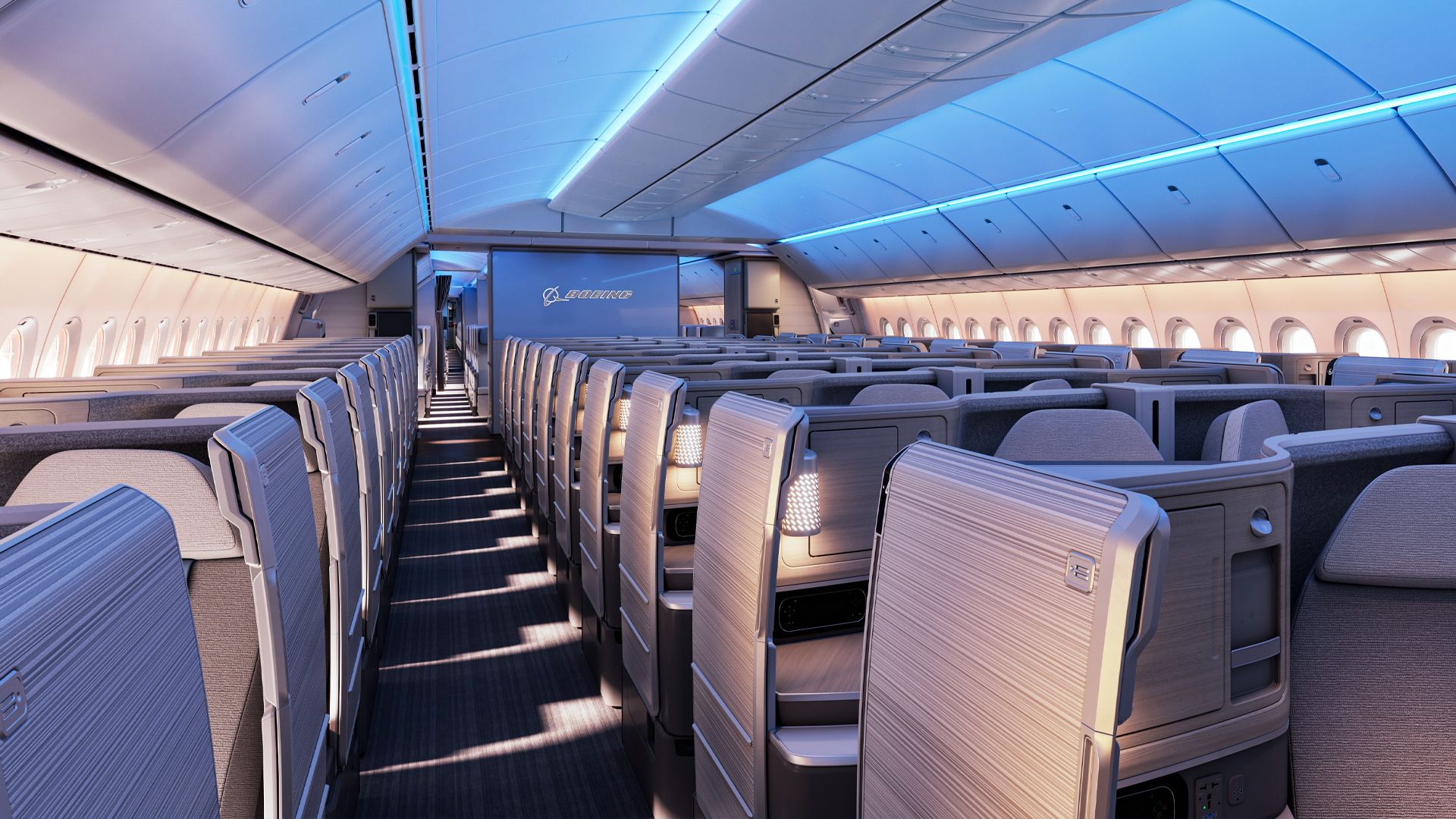
The Boeing 777X is poised to transform long-haul air travel with its anticipated entry into commercial service set for 2027. This aircraft features groundbreaking designs, including the largest commercial aircraft engine ever built and unique folding wingtips, setting it apart in the competitive aviation market. Alongside its exceptional aerodynamics, the cabin experience is also upgraded, promising passengers a more comfortable and enjoyable journey.
Innovations in the Boeing Sky Interior enhance the overall passenger experience. Developed in collaboration with the design agency Teague, the Sky Interior introduces features aimed at improving comfort and ambiance. One of the standout aspects is the LED lighting system that allows airlines to adjust colors and intensities throughout flights. For instance, warm tones can be used during meal service, while gentle sunrise hues can assist in easing passengers awake before landing. This thoughtful design not only creates a more pleasant atmosphere but may also help mitigate jet lag on long-haul routes.
The cabin design includes sculpted sidewalls and larger pivoting overhead lockers, which offer increased storage while maximizing headroom. When closed, these lockers blend seamlessly into the ceiling, contributing to a more spacious and open feel. Additionally, the redesigned windows allow for more natural light, enhancing the overall cabin environment. With these features, the Sky Interior aims to deliver a smoother, more enjoyable travel experience.
Room for Innovation: Wider Fuselage and Modular Framework
The fuselage of the Boeing 777X measures 19 feet and seven inches (5.97 meters) wide, surpassing previous 777 models by four inches (10 cm). This increase, achieved through advanced materials and a concave interior design, creates a more spacious environment. Airlines can configure the aircraft with ten seats abreast in a 3-4-3 layout, offering an 18-inch width per seat, exceeding the industry standard.
A notable innovation is the modular framework of the 777X, designed for flexibility and customization. According to Teague, the aircraft supports “two baseline architectural layouts” and offers options for premium ceiling treatments and customizable lighting. This allows airlines to adjust cabin configurations based on market demands, such as reallocating space between business and economy classes. Furthermore, the modular approach aids in reducing maintenance costs, as systems like lighting and ventilation can be grouped in separate sections.
Technological Advancements and Delays
At the heart of the 777X are the advanced General Electric GE9X engines, the largest and most powerful commercial aircraft engines to date. With new composite wings that feature folding wingtips, the aircraft achieves fuel savings of up to 10% compared to its predecessors. The 777X is available in two primary passenger variants, the Boeing 777-8 and the longer Boeing 777-9, alongside the Boeing 777-8F cargo variant, providing airlines with options tailored to specific route and passenger needs.
The folding wingtips, a highlight of the design, allow the 777X to maintain a wingspan of 235 feet (71.63 meters) in flight. Upon landing, the outer 11 feet (3.35 meters) of each wing fold upward, reducing the wingspan to 212 feet (64.62 meters). This design ensures compatibility with existing airport gates, preventing the need for costly infrastructure adjustments. The mechanism is engineered with safety in mind, incorporating sensors that monitor the wingtips’ positions during critical phases of flight.
Despite its innovative features, the Boeing 777X program has faced multiple delays. Originally slated for delivery in 2020, the entry into service has been pushed back by over seven years due to certification challenges, design adjustments, and the impacts of the COVID-19 pandemic. Increased scrutiny from regulators following the incidents involving the 737 MAX resulted in a more cautious development process for the 777X. As a result, the first aircraft is now expected to be delivered to launch customer Lufthansa in 2027.
So far, the Boeing 777X has garnered over 500 orders from airlines globally, with Emirates leading as the largest operator, having ordered a total of 205 units (35 777-8s and 170 777-9s). Other significant orders include Qatar Airways with 90 units and Korean Air with 40. As the newest member of Boeing’s long-haul twin-engine aircraft portfolio, the 777X is set to become a flagship for many global carriers, continuing the company’s legacy of innovation in air travel.