
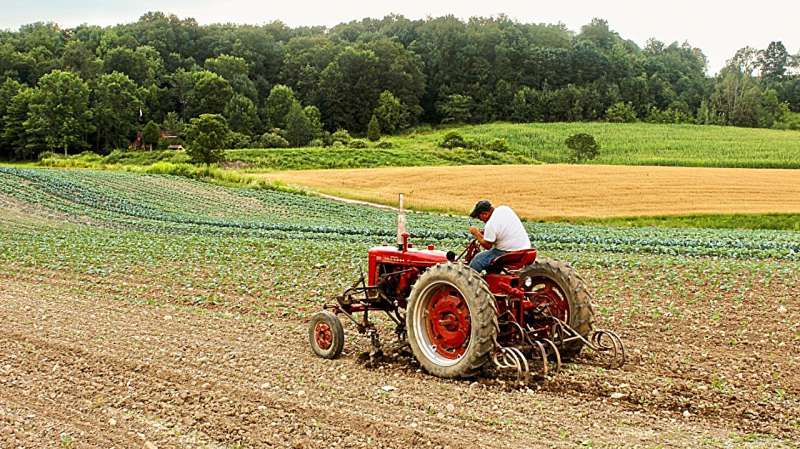
Farmers in the United States may be overlooking the benefits of eco-friendly agricultural practices due to misconceptions about labor requirements. A recent study conducted by researchers from Cornell University found that the perception of increased labor associated with these practices is a significant barrier to their adoption. The research, published in the journal Agriculture and Human Values, involved surveys of over 500 fruit and vegetable growers nationwide, along with in-depth interviews with nearly 50 farmers in New York and California.
The study identified three primary labor-related concerns—cost, time, and complexity—as reasons why farmers often shy away from implementing agroecological practices. These practices include rotating crops, using compost, planting cover crops, and reducing tillage, all of which can enhance resilience against climate change and provide environmental benefits. Interestingly, farmers who had previously adopted these methods perceived them as less labor-intensive compared to those who had not.
Rachel Bezner Kerr, a professor of global development at Cornell, noted, “When people talk about agroecological practices, they often assume it’s not really viable in the U.S. context.” She emphasized that the findings indicate these practices are indeed feasible and that the barriers to adoption are lower than many believe.
The authors, including researchers from The Nature Conservancy, highlighted the importance of peer-to-peer knowledge sharing among farmers to dispel myths surrounding agroecological methods. Jeff Liebert, the study’s lead author and a recent Cornell Ph.D. graduate, pointed out that successful agroecology often relies on social components that are currently underdeveloped in the U.S. He remarked, “Agroecology is really about context-specific, place-based solutions, and there are a lot of opportunities to help develop local, farmer-led movements.”
The eight practices analyzed in the study, which include the use of compost, reduced tillage, intercropping, flower strips, crop rotations, cover cropping, and border plantings, generally require more complex management. Nevertheless, researchers found that these interventions can ultimately pay for themselves through increased productivity, while also supporting biodiversity and improving water and air quality.
Bezner Kerr stated, “There’s robust scientific evidence that these practices can build resilience for farms to climate impacts.” She underscored the dual benefits, stating that incorporating these methods is advantageous not only for society but also for farmers’ stable income and production capabilities.
Adoption rates for these practices lagged particularly among larger farms, which dominate U.S. farmland. Farmers operating larger operations reported more intense labor challenges, including a shortage of farm workers and heightened pressure from state-specific minimum wage increases. There is a trend towards mechanization in these operations, which has implications for the future of farm labor.
Liebert raised concerns about the potential long-term consequences of this shift, stating, “If we replace humans with machines, it forecloses the potential pathway to farm work that’s really meaningful and dignified.” He emphasized the need for a broader discussion on the impacts of non-agricultural policies that complicate labor investments, especially for farmers facing market pressures for cheaper food.
Through interviews that often extended for hours, Liebert discovered that many farmers prioritize not only feeding people but also protecting their workers. He observed that structural factors often limit their options. “This type of research really gives you a much better, deeper sense of the complicated landscape in which farmers are making these decisions.”
In conclusion, addressing the misconceptions surrounding labor requirements and fostering community-led initiatives could significantly enhance the adoption of agroecological practices in the U.S. This shift not only benefits the environment but also supports the economic stability of farms, ensuring sustainable agricultural practices for the future.
For more detailed insights, the study can be accessed through the journal Agriculture and Human Values, where it is published under the title “Not as hard as it seems? Labor challenges and opportunities for agroecological practices in the United States.”


