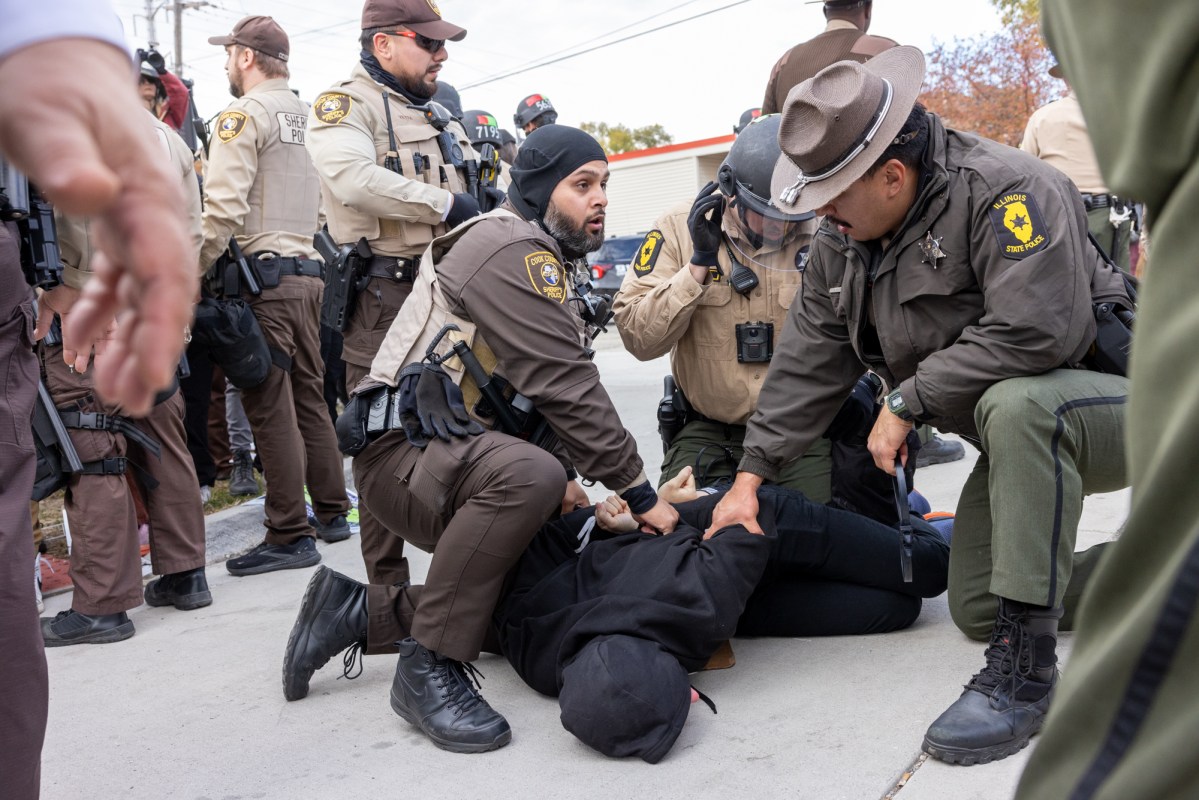
CHICAGO — Protests outside the Immigration and Customs Enforcement (ICE) facility in Broadview have escalated recently, culminating in numerous arrests despite assurances of protecting free speech. On October 17, 2025, activist Jackie Birov, among dozens of demonstrators, was taken into custody by Illinois State Police. Birov, who regularly protests in a Lady Liberty costume, described a chaotic scene where police allegedly “ushered people into the streets” before using batons to make arrests.
Birov was charged with resisting arrest and disobeying a police officer. She expressed frustration, stating, “At the same moment they’re doing that, ICE is able to move vehicles of detainees in and out of the facility.” Birov criticized Illinois Governor JB Pritzker, claiming that his supportive statements towards protesters contradict the actions taken by law enforcement.
Over the past months, Broadview has become a focal point for those opposing federal immigration enforcement. According to records from the Cook County Sheriff’s Office, around 80 protesters have been arrested since the protests intensified in early October. Most arrests were related to resisting arrest, although some protesters faced more serious charges, including battery and unlawful possession of a weapon.
The heightened tensions between protesters and law enforcement began during early demonstrations in September. Federal agents at the time responded with significant force, using chemical agents and less-lethal projectiles to control crowds. In response to ongoing violence, state officials announced the launch of a Unified Command mission on October 2 to manage the protests and protect public safety.
“Our goal is to ensure that people can express their First Amendment rights while keeping everyone safe,” Pritzker stated during a press conference. Despite this, the number of arrests has continued to rise, leading some to question the efficacy of the safety measures in place.
Most arrests have been made by the Illinois State Police, accounting for over 80 percent of the incidents, according to Sheriff’s Office records. Critics argue that the police actions conflict with the stated intent of allowing peaceful protest. State Police spokesperson Melaney Arnold defended the actions, stating, “While the vast majority of demonstrators have remained peaceful, there have been isolated incidents in which individuals have attempted to engage in unlawful activity.”
Protesters, however, portray a starkly different reality. A’Keisha Lee, a regular participant in the protests, recounted an incident where she was struck with a baton and arrested despite following police instructions to march peacefully. Lee stated, “I think now [Illinois State Police] is the one deterring people from coming out.”
As protests continued, the arrests raised alarms among civil rights advocates. Attorney Joe DiCola criticized the disproportionate use of force by police, stating, “There is a real disconnect between the stated purpose of the Unified Command and the violent force the Illinois State Police is using to repress free speech.”
Legal observers and protesters alike have documented incidents of violence, with authorities reportedly using pepper balls during protests on November 1. The situation remains tense, as many demonstrators fear further arrests may deter participation in future protests.
The broader implications of these protests and arrests have sparked discussions about the role of state and local authorities in managing civil unrest. As protests continue, advocates emphasize the need for accountability and a genuine commitment to upholding constitutional rights.
As public scrutiny grows, community leaders, including Alderman Byron Sigcho-Lopez, have called for greater action to support families affected by immigration policies. The ongoing situation in Broadview highlights a complex interplay between activism, law enforcement, and the political landscape surrounding immigration in the United States.