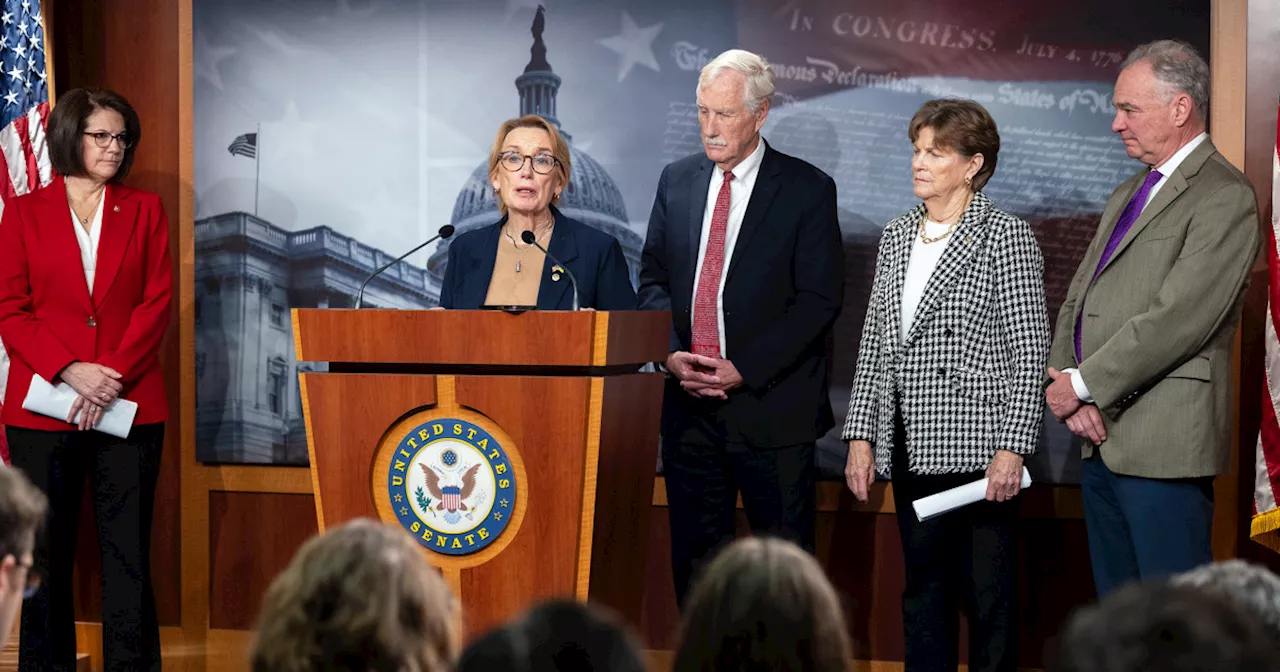
BREAKING: A coalition of eight Senate Democrats has just finalized a controversial agreement with Republicans aimed at ending the ongoing federal government shutdown, which has dragged on for weeks. This deal, struck on October 15, 2023, is expected to reopen government operations but has sparked outrage among party members who feel it compromises key Democratic priorities.
The emerging agreement closely resembles a proposal from Senate Majority Leader John Thune, allowing for a temporary government reopening in exchange for a vote on extending expiring Affordable Care Act subsidies later. Critics argue that this approach undermines the initial goal of the shutdown, which was to force a real extension of health care support, not merely a symbolic vote.
Key provisions in the deal also include back pay for furloughed federal workers and the rehiring of laid-off personnel. However, these measures are seen as mere damage control rather than meaningful outcomes of the shutdown’s intended purpose. The deal has left many Democrats feeling they have gained little, while their base grows increasingly frustrated.
As the shutdown reached historic lengths, it severely impacted government services, noticeably affecting air traffic and food assistance programs. Reports indicate that Trump’s administration has been slow to distribute SNAP benefits, leaving millions of vulnerable Americans in dire situations. One SNAP recipient expressed their frustration, stating, “Our survival was used as a bargaining chip… and now it’s all for nothing.”
Senator Jeanne Shaheen of New Hampshire, one of the Democrats who backed the deal, emphasized the urgency of the situation, stating, “Waiting another week, or another month, wouldn’t deliver a better outcome.” She argued that the harm caused by the shutdown warranted a quicker resolution, despite the ethical complexities involved.
Polls showed that Democrats were gaining some public support amid the shutdown, which was initially perceived as a fight for health care access. However, the recent deal may have shifted public opinion back against them, as many view it as a capitulation rather than a strategic victory.
This development raises significant concerns about the Democratic Party’s ability to leverage future government shutdowns for policy gains under Trump’s presidency. Observers suggest that the Republican response to this crisis demonstrates a willingness to inflict suffering for political gain, complicating any future negotiations.
The fallout from this agreement is likely to reverberate through the Democratic base, as activists and party members demand stronger leadership and a more robust stance against Republican tactics. As this situation continues to unfold, all eyes will be on how Democrats respond and what the long-term implications of this deal will be for their political strategy moving forward.
Stay tuned for more updates as this story develops.