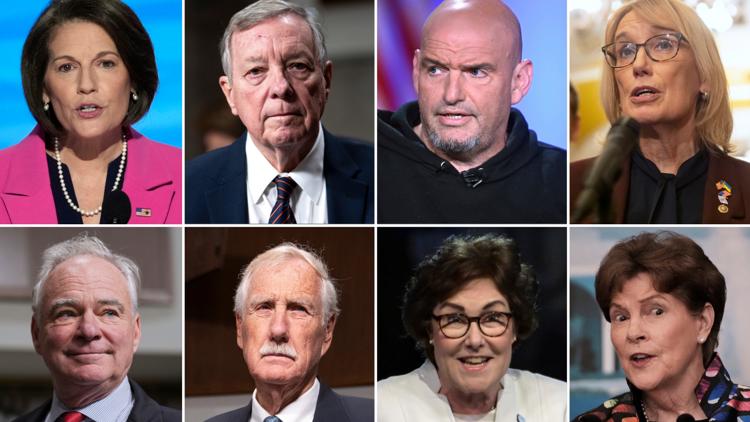
UPDATE: In a stunning political move, eight senators from the Democratic caucus broke ranks on October 15, 2023, joining Republicans to advance crucial legislation aimed at ending the government shutdown. This bipartisan effort represents a significant shift in Senate dynamics, as these senators provided essential votes to facilitate reopening the government.
The decision has sparked outrage among party leaders, with accusations of “betrayal” and “pathetic” behavior directed at the defectors. Republican House Speaker Mike Johnson commended the senators for prioritizing principle over personal politics, highlighting the gravity of the situation.
Among the senators who voted in favor of the compromise were prominent figures such as Jeanne Shaheen of New Hampshire and Dick Durbin of Illinois. Both are retiring, with Shaheen stating, “This was the only deal on the table. It was our best chance to reopen the government.”
Tim Kaine, also a former governor, emphasized the importance of provisions in the funding bill that protect federal workers from layoffs, a critical issue for his constituents in Virginia. He noted that the agreement was not perfect but necessary to mitigate the ongoing crisis.
The group also included Maggie Hassan of New Hampshire, who has been actively involved in negotiations, and Jacky Rosen of Nevada, who criticized the shutdown’s impact on working families and federal programs.
The urgency of this development cannot be overstated. Federal workers, including military personnel and government employees, have been left without pay for weeks, leading to widespread anxiety and financial strain. John Fetterman of Pennsylvania voiced his concerns on social media, apologizing to those affected by the shutdown, stating, “It should’ve never come to this. This was a failure.”
As the Senate moves forward, all eyes are on the implications of this vote. The impact on federal assistance programs, including SNAP, is immediate, as funding is crucial for millions of Americans relying on these services.
With the political landscape shifting rapidly, the next steps involve further negotiations to solidify the terms of the compromise and ensure the government remains operational. The broader implications for the upcoming elections in 2024 and beyond are profound, as these senators’ decisions could reshape party loyalties and voter sentiments.
This situation is developing, and the urgency of the issue demands attention. The actions taken by these senators today may have lasting ramifications on governance and public trust. Stay tuned for more updates as this story unfolds.