The third quarter of 2023 revealed a surprising trend in the United States automotive market: while electric vehicle (EV) sales reached a significant milestone, fossil-fueled vehicle sales also increased. According to data reported by CleanTechnica, EVs accounted for **10.6%** of total vehicle sales, marking their highest share to date. Despite this growth in the electric sector, fossil-fueled vehicle sales were the highest recorded in several years.
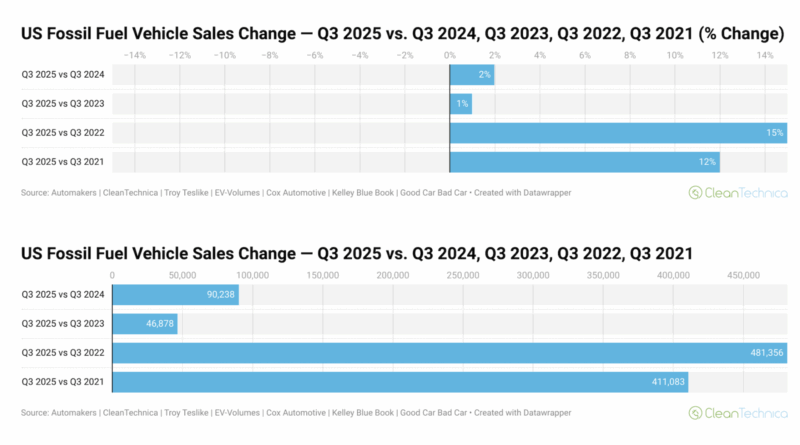
In total, fossil-fueled vehicles sold during Q3 2023 amounted to **3,712,110**, a notable increase from previous years. This figure is particularly striking when compared to **3,854,984** sales in Q3 2020, during the recovery phase of the COVID-19 pandemic, and **4,275,000** sales in Q3 2019, before the pandemic’s impact.
The data indicates that while there has been a robust increase in the uptake of electric vehicles, the traditional gasoline-powered cars have not seen a proportional decline. The unexpected rise in fossil-fueled vehicle sales suggests that consumer demand remains strongly tied to these vehicles, despite the growing awareness of environmental impacts and a push towards sustainable technologies.
Comparative Sales Analysis
The analysis from CleanTechnica highlights a broader trend in the market. In Q3 2023, the total sales of fossil-fueled vehicles were higher than in Q3 2022, indicating a resurgence in consumer preference for traditional vehicles. While electric vehicle sales have certainly gained momentum, the overall increase in fossil fuel vehicle sales raises questions about the pace of transition towards more sustainable transportation options.
The numbers from Q3 2023 stand in contrast to the aspirations of manufacturers and environmental advocates who aim to phase out fossil-fueled technology in favor of zero-emissions alternatives. With electric vehicle sales on the rise, one might expect a corresponding decline in fossil-fueled vehicles, but this has not been the case thus far.
Looking Ahead
As the automotive market continues to evolve, the final quarter of 2023 will be critical in determining whether this trend will persist. Industry analysts and environmental advocates will likely monitor these sales figures closely, particularly as manufacturers ramp up production of electric vehicles and governments implement stricter emissions regulations.
In conclusion, while the surge in electric vehicle sales is a positive sign for the future of sustainable transportation, the concurrent rise in fossil-fueled vehicle sales suggests that the transition to cleaner technologies will require more than just increasing EV sales. The automotive landscape remains complex, and the path to a sustainable future is still fraught with challenges.