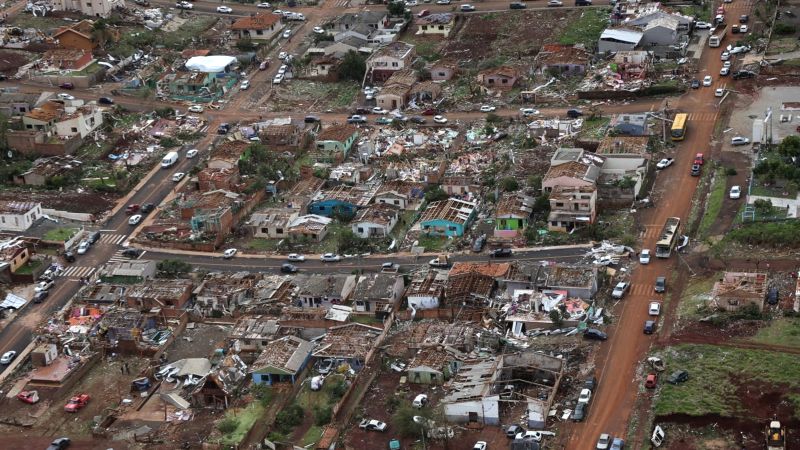
A powerful tornado struck southern Brazil, resulting in the deaths of at least six individuals and injuring more than 400 others. The tornado, described by local authorities as an “unprecedented catastrophe” in the state of Paraná, particularly devastated the town of Rio Bonito do Iguaçu. Winds in the area may have reached speeds of over 250 km/h (155 mph), according to the state meteorological service, Simepar.
The tornado’s impact was catastrophic, affecting nearly 90% of the residences and commercial buildings in Rio Bonito do Iguaçu. Ratinho Júnior, the state governor, emphasized the scale of the destruction, stating, “It’s unlikely that any house, or even a commercial building, will remain standing. We saw silos collapsing, gas stations.” Aerial footage illustrates the extent of the damage, with many buildings reduced to rubble and roofs torn away.
Among the deceased are three men aged 49, 57, and 83, as well as two women aged 47 and 14, all from Rio Bonito do Iguaçu. Additionally, a 53-year-old man was killed in the nearby city of Guarapuava. Rescue teams continue to search for one individual who remains missing, and the situation may evolve as authorities receive further information from families. Officials are also gathering data on those who are homeless or displaced due to the disaster.
A state of “public calamity” has been declared in Paraná, enabling the government to implement emergency measures to mobilize resources and seek federal assistance. The severe weather is linked to a cold front, with forecasts indicating that wind gusts could exceed 100 km/h in states such as Rio Grande do Sul, Santa Catarina, and São Paulo. There are warnings that this weather phenomenon will continue to affect regions along the coast, including Rio de Janeiro and Espírito Santo, until at least Sunday.
Authorities are advising residents to avoid open areas and remain vigilant regarding the potential risks posed by falling structures, trees, and power lines. The situation remains fluid, and local governments are working tirelessly to assess and address the aftermath of this devastating event.