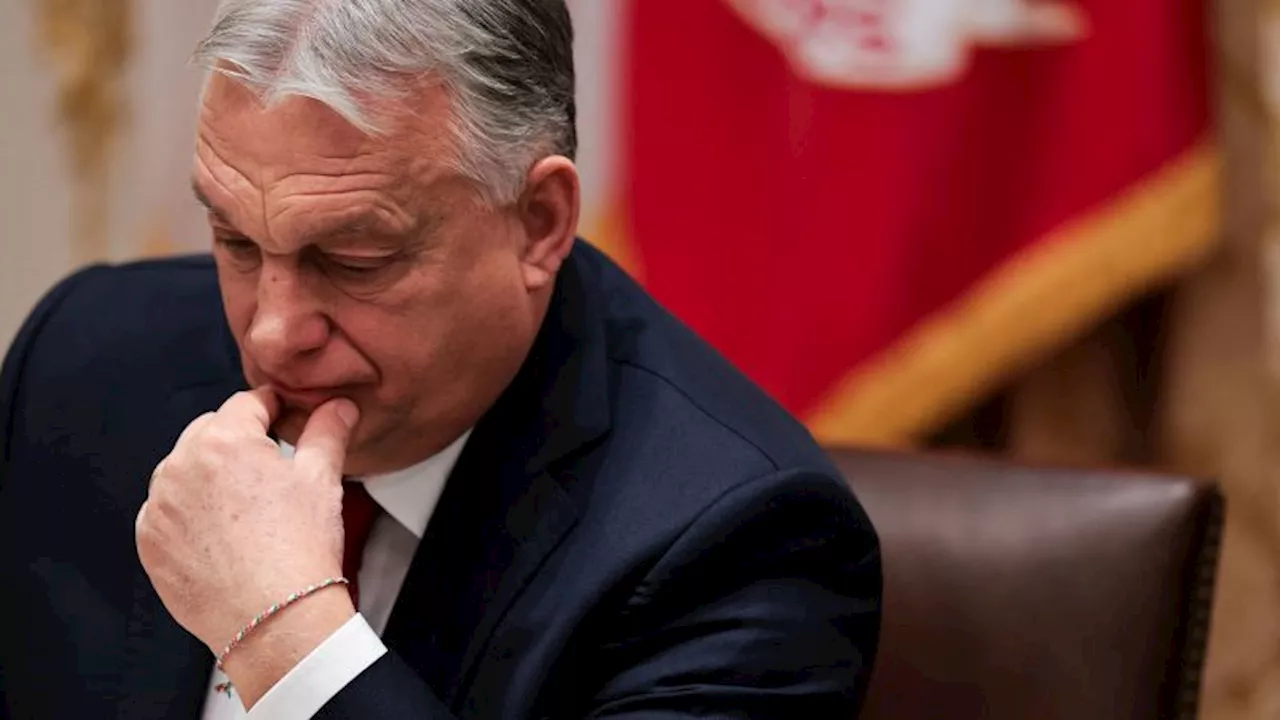
UPDATE: In a critical meeting at the White House, US President Donald Trump is evaluating Hungarian Prime Minister Viktor Orban‘s request for an exemption from US sanctions on Russian oil. This urgent development could significantly impact Hungary’s economy, which relies heavily on Russian energy imports.
During their meeting on October 13, 2023, Trump praised Orban as a “great leader,” despite his administration’s long-standing criticism of EU countries for purchasing Russian oil and gas. This meeting marks the first major test of the Trump administration’s commitment to enforcing sanctions aimed at crippling the Kremlin’s war efforts in Ukraine.
Orban’s government has faced mounting pressure as its dependence on Russian oil has surged from 61% pre-invasion to a staggering 86% in 2024. Recent reports indicate that Russia now accounts for an overwhelming 92% of Hungary’s crude oil imports. This dependency places Hungary in a precarious position as EU nations strive to phase out Russian energy sources.
The stakes are high. Orban has warned that cutting off Russian supplies could “bring Hungary’s economy to its knees.” He is seeking not only a sanctions exemption but also a potential summit with Russian President Vladimir Putin, previously announced by Trump but later shelved. Trump confirmed discussions about this meeting, stating, “We are looking at it.”
Analysts are closely monitoring this situation, as any leniency shown to Hungary could encourage other nations to bypass US sanctions, undermining their effectiveness. The Druzhba pipeline remains a critical energy artery, with Hungary and neighboring Slovakia being the only EU countries still receiving oil from Russia.
In the aftermath of Moscow’s invasion of Ukraine in 2022, the EU initiated a phased ban on Russian oil imports, granting exemptions to Hungary, Slovakia, and the Czech Republic. However, these countries have exploited the exemptions, deepening their reliance on Russian energy instead of reducing it. Slovakia is reported to be “almost 100% dependent” on Russian crude oil.
Despite Hungary’s claims of energy insecurity, experts argue that alternative routes, such as the Adria pipeline in Croatia, could feasibly meet Hungary’s demands. In fact, a recent analysis from the Center for the Study of Democracy and the Centre for Research on Energy and Clean Air indicates that phasing out Russian oil is entirely achievable for both Hungary and Slovakia.
Trump’s administration has faced criticism for its friendly approach toward Orban, who has been labeled a roadblock to the US’s demands for stronger European action against Russia. The Atlantic Council has emphasized the need for the White House to maintain a firm stance despite Orban’s appeal.
“We are in a good position to open a new chapter—a golden age—between the United States and Hungary,” Orban stated, highlighting his desire to repair relations that have soured under the Biden administration, which imposed sanctions on Hungary for democratic backsliding.
As this situation unfolds, the implications for US foreign policy and European energy security are profound. Observers will be watching closely to see if Trump grants Hungary a waiver, potentially reshaping the landscape of international sanctions against Russia.
Stay tuned for more updates on this developing story.