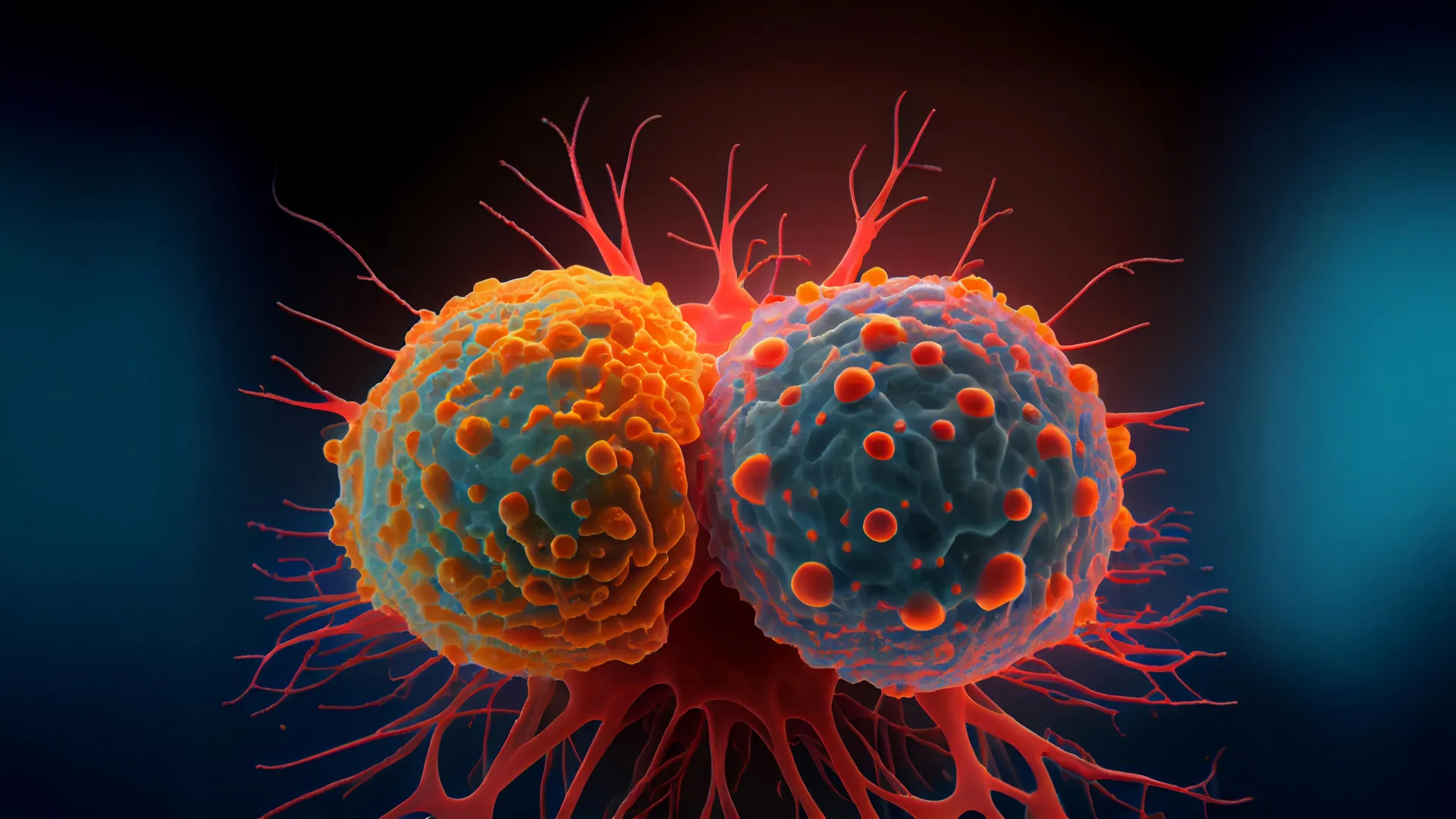
Researchers have identified a crucial moment in the development of bowel cancer, likening it to a “Big Bang” that determines how the disease grows and spreads. This discovery, supported by organizations such as Cancer Research UK and the Wellcome Trust, reveals that the early evasion of the immune system by cancer cells significantly influences the behaviour of the cancer as it progresses.
The research, conducted by teams from The Institute of Cancer Research in London, Fondazione Human Technopole in Milan, and Chalmers University of Technology in Sweden, indicates that this pivotal event occurs when cancer cells first manage to hide from the immune system. This phenomenon, termed immune escape, allows the cancer cells to avoid detection and multiply unchecked.
During this process, bowel cancer cells disrupt the genes responsible for signalling to the immune system that they are a threat. The researchers discovered that once immune escape has occurred, the cancer’s disguise remains largely unchanged as it continues to develop. This insight could enhance the ability of doctors to predict which patients are more likely to respond to immunotherapy, including innovative bowel cancer vaccines aimed at training the immune system to target and eliminate cancer cells.
Understanding Immune Evasion in Bowel Cancer
Professor Trevor Graham, Director of the Centre for Evolution and Cancer at The Institute of Cancer Research, emphasized the implications of these findings. He stated, “Some bowel cancers are ‘born to be bad.’ How they interact with the immune system is set early on.” He noted that immunotherapy and bowel cancer vaccines hold immense potential for treating the disease.
As treatment approaches become increasingly personalized, understanding how tumors evolve is more critical than ever. “Like the explosion which set the course of the universe, bowel cancer’s Big Bang gives us the biggest clues of what its future holds and how we might change that future,” added Professor Graham.
Bowel cancer ranks as the fourth most common cancer in the UK, with approximately 44,100 new cases diagnosed each year, translating to around 120 cases daily. Currently, about 15% of these patients respond effectively to immunotherapy, while the majority remain resistant to treatment. Ongoing clinical trials are assessing various bowel cancer vaccines designed to assist the immune system in recognizing and destroying cancer cells that may return after surgery or other interventions.
Research Insights and Future Directions
Lead author Eszter Lakatos, a mathematical biologist at Chalmers University of Technology and the University of Gothenburg, expressed hope that these insights will lead to more targeted and effective treatment options. The research group conducted an analysis of tumor and immune cells taken from 29 individuals with bowel cancer. They sequenced DNA and RNA from each sample and examined the epigenetic factors that influence how DNA is processed in cancer cells.
The findings indicated that epigenetic changes can diminish the presence of neoantigens—proteins that signal to the immune system that a threat is present. With fewer neoantigens, the immune system struggles to identify and combat the tumor effectively. The researchers suggest that combining immunotherapy with drugs aimed at modifying the epigenome could enhance treatment efficacy by increasing the number of neoantigens present on cancer cells.
Dr. Catherine Elliott, Director of Research at Cancer Research UK, highlighted the necessity of understanding the early stages of bowel cancer for improved patient outcomes. “Bowel cancer has an insidious ability to resist treatment,” she remarked. “This research helps us understand why, as well as offering new insights to enhance immunotherapy effectiveness.”
The significance of tracing the early stages of bowel cancer cannot be overstated. Tom Collins, Research Lead for Discovery Research at the Wellcome Trust, noted that the research offers valuable insights into the mechanisms behind cancer development. He described it as a powerful example of discovery science that could lead to more targeted and timely treatments for patients.
The study, titled “Epigenetically driven and early immune evasion in colorectal cancer evolution,” was published in Nature Genetics on November 5, 2025. This pivotal research paves the way for future studies aimed at refining treatment strategies for bowel cancer, ultimately striving for better health outcomes for patients facing this challenging disease.