In a significant crackdown on migration, Mauritania has initiated mass deportations of African migrants, prompting widespread concern over human rights violations. The campaign, which intensified in August 2024, has led to thousands of migrants being detained and expelled, often under harsh conditions.
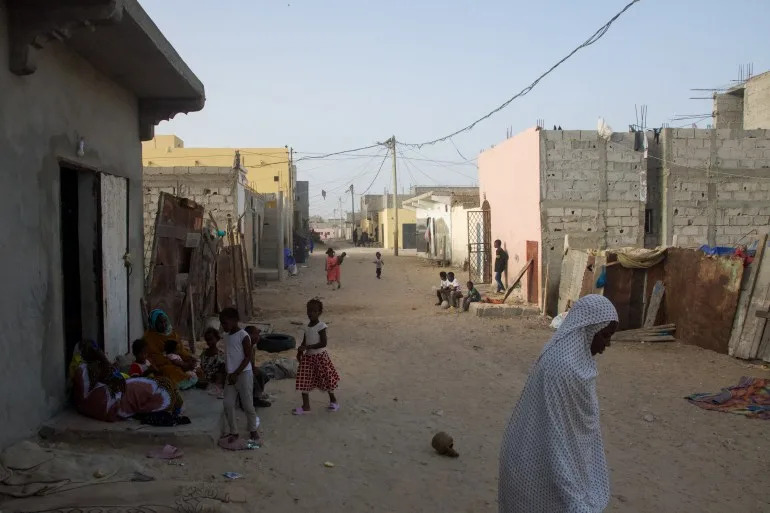
Omar, a 29-year-old bricklayer from The Gambia, crossed into Mauritania in March 2024 seeking better job opportunities. He settled in Nouadhibou, the country’s second-largest city, and found work that paid significantly more than he earned at home. However, his life took a drastic turn when armed National Guard vehicles began patrolling the area, targeting migrants for detention. Without a residence permit, Omar was forced to stop working, restricting his movements to his home and nearby shops.
As the police began raiding homes, Omar and his friends attempted to evade capture by fleeing over rooftops. With no income, they struggled to afford food, surviving on minimal rations. “All the emotions I go through in one day are hard to explain,” he expressed in an interview with Al Jazeera in early September.
Government Response and Human Rights Concerns
According to the Mauritanian Association for Human Rights (AMDH), approximately 1,200 migrants were deported in March 2024 alone, including around 700 individuals with valid residence permits. Though the Mauritanian government has not publicly detailed the full scope of the deportation campaign, government spokesman Houssein Ould Medou stated that 130,000 migrants entered the country in 2022, while only 7,000 renewed their residence permits that year.
Interior Minister Mohamad Ahmed Ould Mohamed Lemine defended the government’s actions, asserting that Mauritania has the right to regulate foreign presence on its territory. He claimed that deportees would receive sufficient food and medical care during the process. Despite these assurances, testimonies from migrants suggest a starkly different reality.
The growing deportation campaign has drawn comparisons to similar actions in 2009 and 2012, albeit on a smaller scale. Notably, the timing of the current crackdown coincides with a €210 million ($248 million) migration partnership agreement between the European Union and Mauritania, aimed at enhancing “migration management” and security. Experts have raised concerns over the EU’s approach to border control, noting that similar deals have been made with other North African nations to curtail irregular migration.
Experiences of Migrants under Crackdown
In Nouadhibou, a city with a significant migrant population, many workers fear for their safety. An Ivorian construction worker recounted being arrested three times in one week. Each time, he and others were released after paying bribes to police. This culture of extortion has severely impacted the livelihoods of migrants, forcing them into a state of fear and uncertainty.
Omar’s situation worsened when police raided his compound again, leading him to surrender without resistance. Another migrant, Yunisa, described being apprehended en route to work, only to have his phone smashed when he sought help. He was deported to Senegal without retrieving his belongings. Such accounts highlight the brutal realities faced by those caught in the ongoing crackdown.
Women and children are not exempt from these raids. Mariam, a mother of two, was arrested while seeking medication for her sick child. She described the holding facility as dehumanizing, where her daughters received only a single ice cream during their detention. The emotional toll of separation from family members has left many migrants struggling to reunite with loved ones.
As deportations continue, authorities transport detainees from Nouadhibou to facilities in the capital, Nouakchott, before expelling them to border crossings. Many report being shackled during these transfers, enduring further humiliation. Once they reach the border with Senegal, some migrants attempt to cross, only to face rejection due to their deportation status.
Seeking a Way Forward
Omar, now back in The Gambia, reflects on his harrowing experience with mixed emotions. While he no longer faces the constant threat of arrest, he struggles to find work and support his family. “The schools are opening, and my family is asking, ‘Where is the bag of rice?’” he lamented. Despite the challenges, he remains hopeful for a return to Mauritania if conditions improve.
The Mauritanian government has not responded to media inquiries about the deportation campaign, leaving many questions unanswered. Rights groups and opposition politicians continue to raise alarms about the treatment of migrants, describing the situation as one of fear and violation of human dignity.
As the situation evolves, the plight of migrants in Mauritania remains a pressing issue, with their voices echoing calls for justice and humane treatment. The international community watches closely, as the consequences of Mauritania’s actions ripple through the fabric of regional migration dynamics.