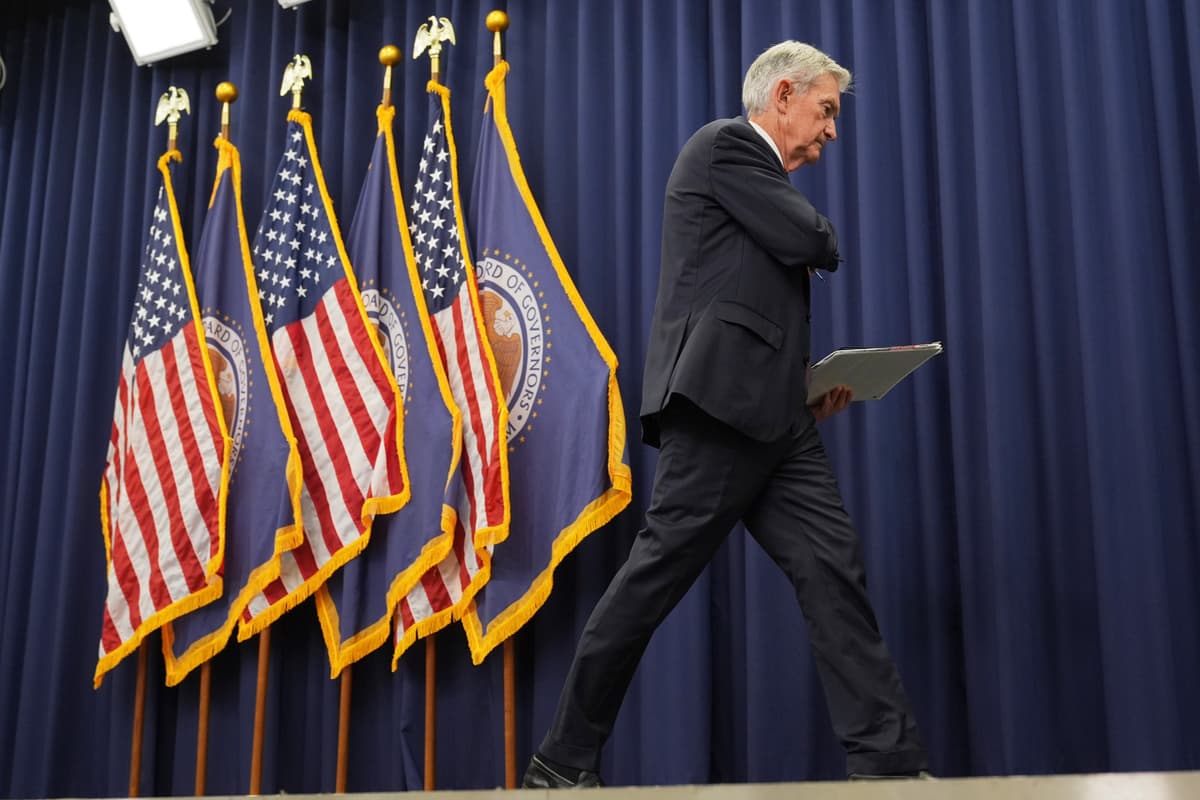
UPDATE: Tensions are rising within the Federal Reserve as officials express sharp divisions over the future of monetary policy, throwing the anticipated December rate cut into doubt. A critical 10 to 2 vote at last week’s Federal Open Market Committee meeting revealed contrasting views on whether to lower borrowing costs, leaving markets unsettled.
Just days ago, a rate cut seemed almost certain, but markets now price in only a 65 percent chance of a reduction next month. This shift follows Fed Chairman Jerome Powell acknowledging significant disagreements among officials, stating, “We hold strongly differing views about how to proceed.”
The discord was evident during the meeting, where newly appointed Fed Governor Stephen Miran advocated for a more aggressive half-point cut, while Kansas City Fed President Jeffrey Schmid voted against any reduction. Miran described the current policy as “too restrictive,” emphasizing the need for action to support the labor market amid uncertain economic conditions.
In recent comments, Miran pointed to a surprise increase in job growth as evidence for easing monetary policy. Private payroll data revealed that American companies added 42,000 jobs in October, exceeding economists’ expectations. “Given the state of the labor market, continuing to run policy that restrictive is to run unnecessary risks,” he stated in an interview with Yahoo Finance.
However, a growing contingent within the Fed is taking a more hawkish stance. Dallas Fed President Lorie Logan, Cleveland Fed President Beth Hammack, and Atlanta Fed President Raphael Bostic have all expressed concerns about further easing while inflation remains elevated.
Chicago Fed President Austan Goolsbee also voiced caution, saying he is “nervous about the inflation side of the ledger,” especially with inflation having exceeded targets for over four years. He entered the December meeting “undecided,” reflecting the uncertainty gripping the Fed.
Fed Governor Lisa Cook has called for a balanced approach, recognizing the tension between maintaining maximum employment and ensuring price stability. She warned against keeping rates too high, which could severely damage the labor market, yet acknowledged the risks of lowering rates excessively.
Cook described the upcoming December meeting as “live” for potential cuts but refrained from committing to any specific action. She asserted that the Fed has access to various data sources, countering Powell’s remarks about the “fog” created by the ongoing government shutdown, which has disrupted the release of critical economic data.
San Francisco Fed President Mary Daly echoed similar sentiments, labeling last week’s cut as “insurance” against potential labor market weakness. She maintained an open mind for the December meeting, highlighting the need to balance the risks of high inflation with the potential loss of jobs. “It would be an unfortunate outcome if we get inflation to 2 percent at the cost of millions of jobs,” she cautioned.
The conflicting views within the Fed signal a critical juncture for American economic policy, as the central bank navigates the complexities of a shifting labor market and persistent inflation. As the December meeting approaches, all eyes will be on how these divisions impact the future of interest rates.
Stay tuned as more updates emerge on this developing story, which stands to affect markets and economic conditions across the globe.