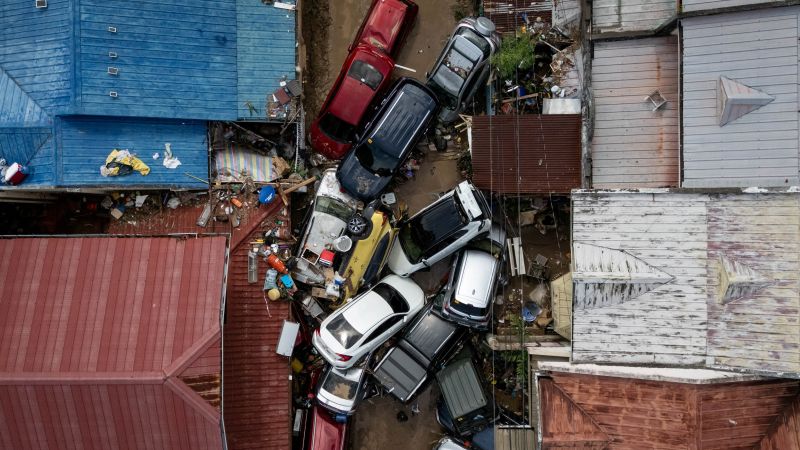
Typhoon Kalmaegi has wrought significant destruction in the central Philippines, claiming at least 114 lives and leaving many others missing. The storm, which is now the deadliest typhoon to strike the country this year, has devastated neighborhoods, particularly in Cebu province. As residents begin the arduous process of recovery, Kalmaegi is moving over the South China Sea, posing a new threat to Vietnam.
The storm made landfall earlier this week, unleashing catastrophic flooding that submerged homes and displaced tens of thousands of people. In Talisay city, entire communities have been buried under mud and debris, and drone footage revealed streets transformed into rivers. Rescue workers are wading through waist-deep water, desperate to save those trapped in their homes.
“We don’t have any home anymore. We weren’t able to salvage anything from our house,” said Mely Saberon, a 52-year-old resident from Talisay. “We didn’t expect the surge of rain and wind. We’ve experienced many typhoons, but this one was different.”
The impact of Typhoon Kalmaegi has been exacerbated by the region’s vulnerability to flooding. The Philippines is accustomed to typhoons, but this storm, classified as a Category 2 hurricane upon landfall, was particularly slow-moving. It dumped exceptional amounts of rain, with some areas receiving more than 150 mm (approximately 6 inches) in just 24 hours.
Philippines President Ferdinand Marcos Jr. declared a state of national calamity on Thursday, promising ongoing relief efforts for those affected. This disaster follows closely on the heels of a powerful magnitude 6.9 earthquake that struck Cebu just over a month ago, killing at least 74 individuals and displacing many more.
Understanding the Destructive Force of Kalmaegi
Despite not being the strongest storm of the year, Kalmaegi’s slow movement and heavy rainfall contributed to its destructive nature. Most fatalities resulted from drowning as the storm triggered flash floods, causing rivers to overflow. The rugged terrain of Cebu channeled excess water into communities that lack adequate drainage systems.
“Wind speed is often what the public focuses on, but water is almost always the #1 killer,” noted Taylor Ward, a meteorologist with CNN. The disaster has prompted calls for improved early warning systems and better infrastructure capable of withstanding future storms intensified by climate change.
The Philippines is frequently in the path of tropical storms, yet this year has been particularly challenging due to a corruption scandal involving flood control projects. Numerous legislators and construction companies have been implicated in allegations of receiving kickbacks related to flood prevention funding.
Next Steps as Kalmaegi Approaches Vietnam
As Typhoon Kalmaegi continues its path toward Vietnam, it has strengthened into a storm with winds reaching 215 kph (approximately 130 mphDanang and Quang Ngai, are preparing for severe weather conditions, including damaging winds and potential flooding. Authorities in the province of Gia Lai expect to evacuate around 350,000 people in anticipation of the storm.
The approaching typhoon comes as central Vietnam struggles to recover from devastating floods that occurred just last week, which claimed at least 13 lives and inundated over 116,000 homes. The ancient town of Hoi An, a UNESCO World Heritage site, was notably affected, with reports of extensive flooding obscuring the historic streets.
The western Pacific is recognized as the most active tropical storm basin globally, and the ongoing impacts of climate change are intensifying these weather patterns. As global ocean temperatures continue to rise, storms like Kalmaegi are likely to become more destructive, leading to increased rainfall and flooding.
In light of these challenges, authorities are urged to reassess their disaster preparedness and response strategies to better protect vulnerable communities from the escalating threats posed by climate-related disasters.