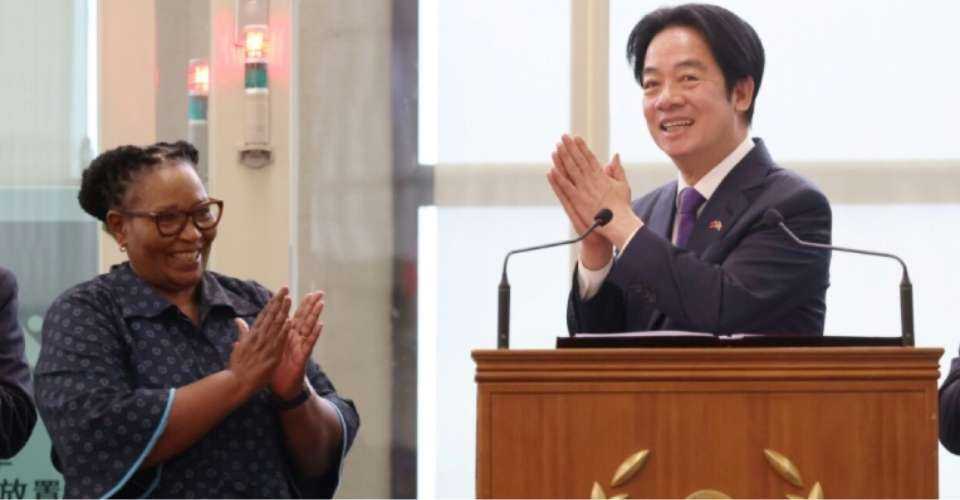
Taiwan President Lai Ching-te returned from a highly contested trip to Africa after Beijing allegedly pressured multiple countries to block his journey, asserting Taiwan’s right to engage globally despite Chinese opposition.
Lai landed at Taipei Taoyuan International Airport on May 5 after finally traveling to Eswatini, Taiwan’s only ally in Africa, aboard the Eswatini king’s plane. His trip, initially planned for late April, was delayed when Seychelles, Mauritius, and Madagascar revoked overflight permissions amid suspected Chinese coercion.
China’s Intense Diplomatic Pressure Disrupts Taiwan’s Diplomatic Outreach
According to sources, China applied “intense pressure” on these African nations—including threats of withdrawing economic debt relief and imposing sanctions—to prevent Lai’s access to Eswatini for the dual occasion of celebrating King Mswati III’s 40th anniversary as monarch and 58th birthday.
“Taiwanese people have the right to engage with the world,” Lai declared upon his return, flanked by Eswatini Deputy Prime Minister Thulisile Dladla who accompanied him to Taiwan. “We will not shrink back because of suppression.”
Lai emphasized that mutual visits between heads of state are “a basic right of every country,” criticizing Beijing’s blockade attempts as illegitimate. His trip finally proceeded on May 2, dispelling the earlier disruptions.
Global Reactions and Rising Tensions
The United States swiftly condemned China’s actions as an “intimidation campaign,” supporting Taiwan’s international engagement. Conversely, China’s foreign ministry dismissed the claims, calling Lai’s eventual travel a “stowaway-style escape farce” and labeling him an “international laughing stock.”
Eswatini remains one of only 12 countries worldwide that maintain official diplomatic relations with Taiwan, making this visit a critical show of support amid Beijing’s intensifying global campaign to isolate Taipei.
Earlier, Taiwan’s Foreign Minister Lin Chia-lung visited Eswatini in Lai’s stead during the postponement, but presidential-level diplomacy was delayed for weeks due to the diplomatic fallout.
Why This Matters to the U.S. and California
China’s efforts to isolate Taiwan disrupt regional stability and undermine democratic alliances. For the United States, which maintains a robust unofficial but strategic partnership with Taiwan, these developments signal heightened tensions that resonate with broader U.S.-China competition impacting technology supply chains, defense alignments, and global diplomacy.
For California, home to a significant Taiwanese-American population and high-tech industries reliant on stable Taiwan relations, the trip underscores the geopolitical pressures facing Silicon Valley’s supply chains and international business partnerships.
Next Steps and Ongoing Watch
President Lai’s successful visit demonstrates Taiwan’s resolve to expand global ties despite Chinese pressure. Observers will watch closely for Beijing’s next diplomatic moves and how the U.S. government responds to these provocations as Taiwan pushes for greater international space.
Meanwhile, Taiwan’s diplomatic battleground remains an evolving front in global power struggles, and future visits by Taiwanese leaders will likely face continued interference attempts.
Taiwan’s commitment to global engagement was made clear by Lai’s declaration: “Taiwanese people are people of the world.”