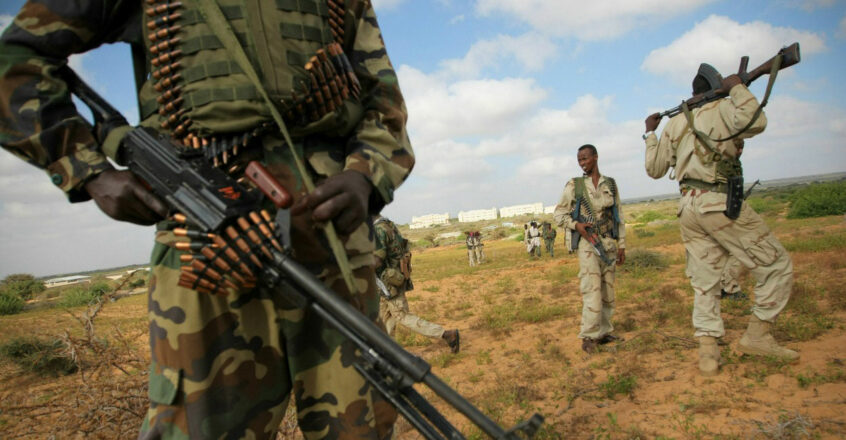
BREAKING: New reports confirm that Sudan’s military, the Sudanese Armed Forces (SAF), is increasingly under the influence of the Muslim Brotherhood, raising urgent questions about U.S. foreign policy in the region. This development threatens to undermine democratic processes and peace negotiations in a nation already grappling with a devastating civil war.
The SAF, led by General Abdel Fattah al-Burhan, has shifted allegiance towards non-Sudanese interests aligned with the Muslim Brotherhood, complicating the United States’ stance on treating the SAF as a conventional national army. The U.S. has previously labeled various Muslim Brotherhood factions as terrorist organizations, creating a stark contradiction in its approach.
Evidence shows that the Brotherhood’s infiltration of state institutions began with the coup that brought Omar al-Bashir to power in June 1989. This historical context is crucial as the Brotherhood has embedded itself within the military and other state apparatus, steering Sudan’s political landscape towards further conflict.
Recent actions by the SAF have led to egregious violations of international humanitarian law, with reports of atrocities against non-Arab ethnicities, including horrific accounts of bodies being dumped into water and humanitarian aid being obstructed. The U.S. Treasury has already sanctioned Ali Karti, a key military figure, for his involvement in these violations, reinforcing the urgent need for reassessment of international engagement with the SAF.
As the situation escalates, thousands of former regime Islamists have reportedly joined the SAF, intensifying the violence. The Civil Democratic Alliance for Revolutionary Forces, known as Somoud, has called for international support for a democratic transition, directly blaming the SAF and its Islamist allies for obstructing peace. On social media platform X, Somoud has urged the international community to criminalize Islamist brigades aligned with the SAF due to their anti-democratic ideologies.
Meanwhile, the Sudan Founding Alliance, or Tasis, is advocating for a new, inclusive, and secular governance framework, emphasizing freedom, justice, and equality. These emerging political movements highlight the pressing need for international partners to reconsider their strategies regarding engagement with Islamist networks embedded within the SAF.
The international community faces a critical juncture: whether continued legitimacy for figures such as Burhan and Karti ultimately hinders the democratic transition that many stakeholders claim to support. The entrenchment of these actors within Sudan’s military raises fundamental questions about the effectiveness of current policies.
As violence continues to escalate, the global response will be vital in shaping Sudan’s future. Will the U.S. and its partners adapt their strategies in light of these developments? The urgency of the situation cannot be overstated, as the future of Sudan hangs in the balance, with the potential for widespread humanitarian crises looming large.
Stay tuned for more updates as this situation develops, and consider the implications of an Islamist-controlled military on both regional stability and international diplomatic relations.