European NATO countries have significantly reduced their reliance on the United States for arms imports over the past year, according to a recent analysis by the Stockholm International Peace Research Institute (SIPRI). The report, released on March 9, 2024, indicates that the U.S. accounted for 58% of major arms imports by European NATO member states during the 2021-2025 period, down from 64% in the previous five years.
This shift comes in the wake of increased defense spending across Europe, prompted by heightened security concerns following Russia’s invasion of Ukraine in 2022. European nations have redirected a larger portion of their foreign defense acquisitions to suppliers such as South Korea, France, and Israel. As a result, arms imports to Europe have more than tripled.
The report highlights changing threat perceptions among European nations. SIPRI noted, “Threat perceptions concerning Russia, compounded by uncertainties over the USA’s commitment to defending its European allies, have boosted demand for arms among European member states.” This evolving landscape has led to a greater emphasis on domestic defense capabilities.
While European defense firms have ramped up production, the report reveals that European nations have still imported significant quantities of U.S. arms in recent years, particularly in the forms of combat aircraft and long-range air-defense systems. Katarina Djokic, a researcher with SIPRI’s Arms Transfers Programme, pointed out that twelve European countries had a total of 466 F-35 fighter jets ordered or preselected for order by the end of 2025.
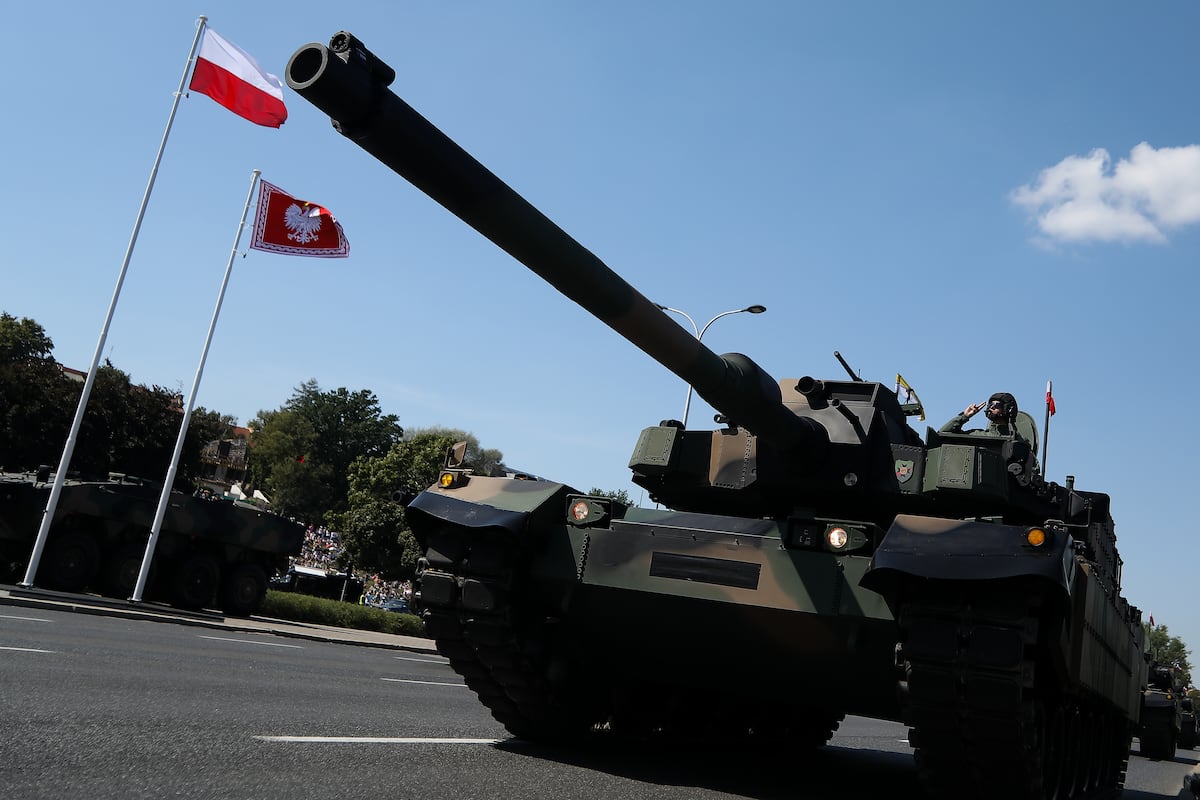
In terms of emerging suppliers, South Korea is now the second-largest arms provider to European NATO members, accounting for 8.6% of their imports, up from 6.5% in the previous analysis. Israel’s share increased to 7.7% from 3.9%, while France’s contribution rose to 7.4% from 6.5%. This diversification of suppliers underscores a strategic pivot among European nations to enhance their military capabilities independently of the U.S.
Global Arms Trade Dynamics
The global arms trade is experiencing a notable surge, with exports rising at the fastest pace in a decade. According to SIPRI, the volume of major arms transfers between states increased by 9.2% from 2021 to 2025 compared to the previous five-year period. This growth is largely attributed to the ongoing conflict in Ukraine, where deliveries to the Ukrainian military have significantly influenced arms trade patterns.
Mathew George, director of SIPRI’s Arms Transfers Programme, remarked, “Deliveries to Ukraine since 2022 are the most obvious factor, but most other European states have also started importing significantly more arms to shore up their military capabilities against a perceived growing threat from Russia.” Despite the increasing imports, U.S. arms shipments to Europe surged by 217% during the same period, reflecting a complex interplay of geopolitical considerations.
The U.S. remains the largest arms exporter globally, holding a market share of 34%, followed by France at 9.8% and Russia at 6.8%. U.S. arms exports are viewed not just as a commercial venture but as an essential component of foreign policy aimed at strengthening ties with allies.
Germany has also made significant strides in the arms market, overtaking China to become the world’s fourth-largest arms exporter in 2021-2025. Notably, 24% of German arms exports were directed to Ukraine, highlighting the ongoing military cooperation between the two nations. Italy has climbed to sixth place among arms exporters, with a substantial portion of its exports directed toward the Middle East.
As the international arms landscape evolves, countries are adjusting their strategies in response to regional threats. In Asia, for instance, India remains the second-largest arms importer, despite a 4% decline in its share of global imports during this period. The report indicates that India’s high volume of arms purchases is primarily driven by concerns over China’s military capabilities and its long-standing tensions with Pakistan.
Implications for Global Security
The shifting dynamics of arms imports reflect broader geopolitical trends that could reshape alliances and security arrangements. With European nations striving to enhance their military independence from the U.S., the implications for NATO’s collective defense strategy warrant close attention.
As defense spending increases and new partnerships form, countries may find themselves navigating a complex web of alliances and dependencies. The challenges posed by perceived threats from Russia and China will likely continue to influence global arms trade patterns in the coming years.
Analyzing these trends offers valuable insights into the future of international security and the strategic priorities of nations as they respond to evolving threats on the global stage.