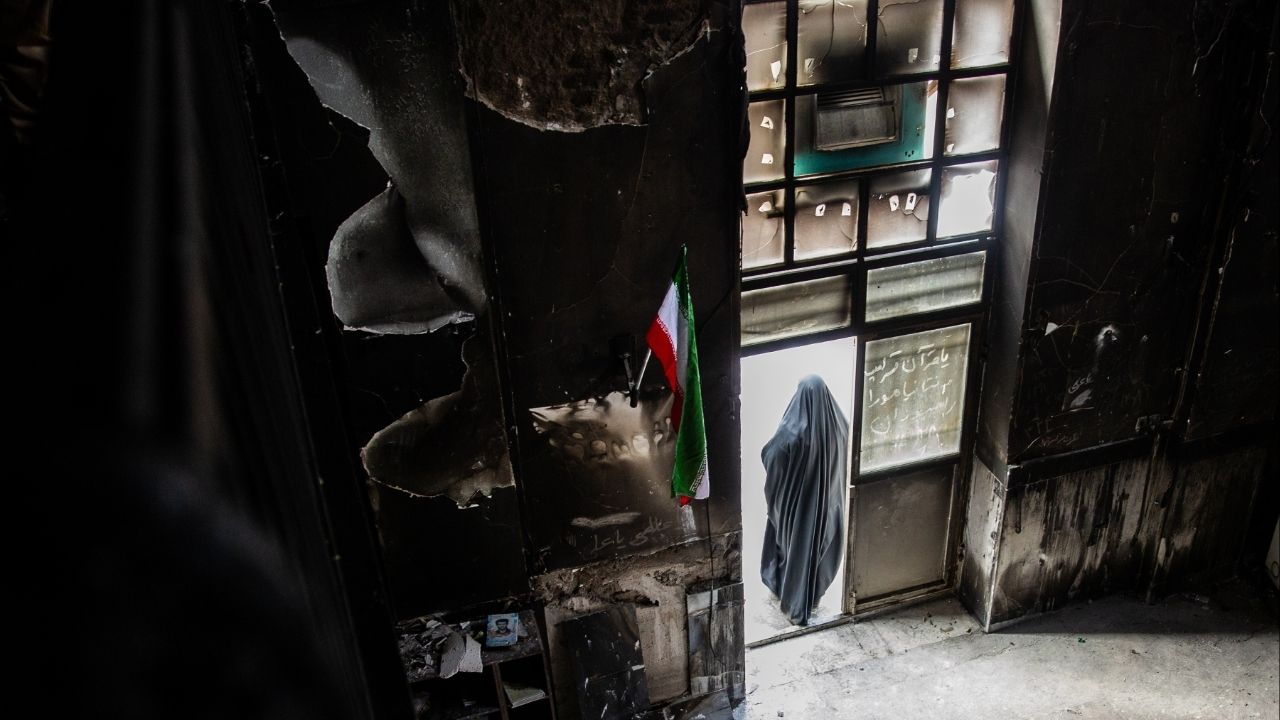
UPDATE: Iranians are boldly commemorating the 40th day of mourning for victims of the government’s violent crackdown on protests, defying authorities who are intensifying efforts to suppress dissent. As of Tuesday, October 31, 2023, crowds have gathered across the country, chanting patriotic anthems and expressing outrage against the ruling clerics.
Authorities have been on high alert, deploying security forces in key cities including Lesfijan and Abdanan. Verified footage shows armed patrols and armored vehicles responding to gatherings, as families of the slain assert their right to memorialize their loved ones despite intimidation tactics. These ceremonies are critical, marking a pivotal moment in Iran’s mourning culture, often serving as a platform for political expression.
The memorials, which coincide with the anniversary of the bloodiest days of protests from January 8 to 10, have seen families transform traditional funeral rites into vibrant displays of defiance. “They’ve reinvented this with a revolutionary rage,” said historian Arash Azizi, emphasizing the significance of reclaiming national identity amid oppression.
In a stark contrast to the government-sanctioned mourning events, dissidents have used these gatherings to voice anger against the regime. Families, such as that of Robina Aminian, a 23-year-old victim of the protests, have faced harassment from security forces. Her aunt, Hali Nouri, revealed that plainclothes officers have been stationed near their home to deter public commemorations.
Despite official attempts to control the narrative, many families have opted to hold private ceremonies in rented venues, where they celebrate the lives of the deceased with music and dance instead of adhering to somber traditions. Videos from these events reveal crowds singing and chanting uplifting messages, asserting their resilience against the government.
In a speech on Tuesday, Supreme Leader Ayatollah Ali Khamenei referred to security forces killed during the unrest as “the highest-ranking martyrs,” while labeling the protesters as “seditionists.” This rhetoric underscores the regime’s continuing narrative of framing dissent as a threat to national security.
Human rights groups estimate that over 7,000 protesters have died since the unrest began, with the government’s numbers vastly underestimating the actual toll. The events of January 8-10 are now widely regarded as a turning point in the protests, with many calling them the deadliest days in modern Iranian history.
As the memorials unfold, signs of dissent are growing. Reports indicate that students at various universities are organizing sit-ins, and nighttime chants of “death to Khamenei” are echoing from rooftops across cities. This ongoing defiance is punctuated by small protests, such as one in Abdanan on Monday, where demonstrators were met with police aggression.
The severity of the government’s crackdown reflects not only internal pressures but also external threats, including tensions with the U.S. and recent military posturing in the region. As the situation develops, observers are closely watching to see if these memorials will spark a renewed wave of protests or if the regime’s heavy-handed tactics will suppress dissent.
Families remain determined to honor their loved ones, with some pledging not to shout political slogans during their memorials to avoid confrontation. Nonetheless, the spirit of resistance is palpable, transforming mourning into a powerful declaration against oppression. “Their sadness is defiant,” Azizi noted, highlighting the unwavering resolve of the Iranian people.
As these memorial events continue throughout the week, the world watches closely. The resilience and courage displayed by Iranians in the face of state repression serve as a poignant reminder of their fight for justice and freedom.