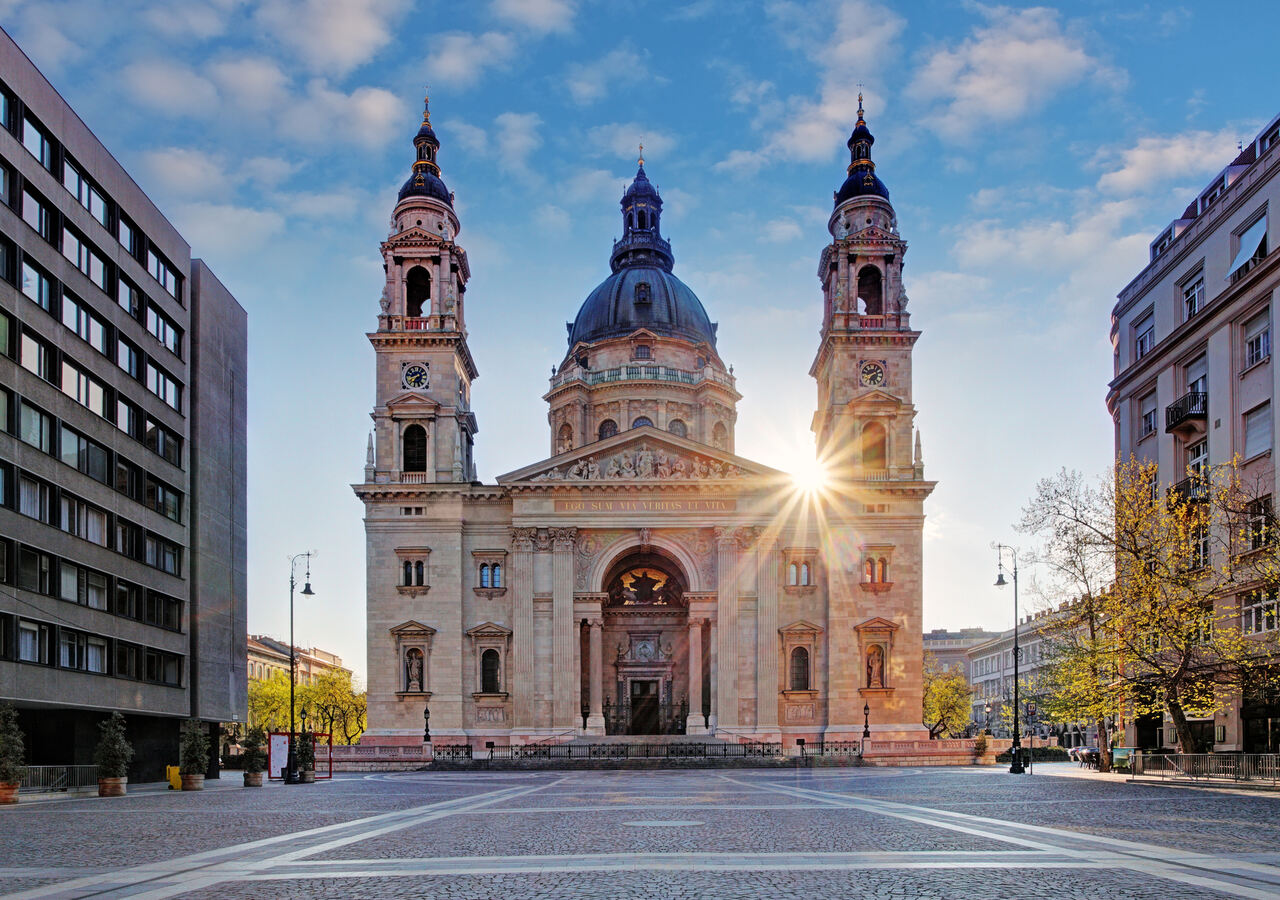
BREAKING: Discover the rich history behind Budapest’s iconic landmarks today! As Hungary’s capital thrives with architectural marvels, officials highlight the significance of these sites that embody centuries of political, cultural, and religious identity.
From the majestic Buda Castle to the grand Hungarian Parliament Building, each landmark offers a glimpse into the nation’s transformation. This is not just a tourist attraction — it’s a vibrant narrative of Hungary’s past and present.
Buda Castle, perched above the Danube since the 13th century, stands as a testimony to resilience. Originally constructed after the Mongol invasion, this royal palace has witnessed wars, reconstruction, and now serves as a cultural center, housing museums and the National Széchényi Library.
Meanwhile, the Hungarian Parliament Building, completed in 1904, is a marvel of Neo-Gothic architecture. It proudly symbolizes Hungary’s growing independence within the Austro-Hungarian Empire. Notably, it is one of Europe’s largest legislative buildings, safeguarding the Holy Crown of Hungary.
The history of St Stephen’s Basilica is marked by faith and perseverance. Named after Hungary’s first king, this iconic structure took over 50 years to complete, with its original dome collapsing during construction. Today, it is among Budapest’s tallest buildings, serving both as a religious site and a cultural venue for concerts.
Before the 19th century, crossing the Danube was often a struggle. The Chain Bridge, which opened in 1849, became the first permanent link between Buda and Pest, significantly uniting the two sides of the city, which officially merged in 1873 to form Budapest.
Despite its medieval look, Fisherman’s Bastion is a modern creation from around 1900. Designed as a decorative terrace, it provides breathtaking views of the Parliament and the Danube, making it a favored spot for photos.
At the end of Andrássy Avenue lies Heroes’ Square, established in 1896 to commemorate the 1,000th anniversary of Hungary. Currently, the statue of Gabriel Archangel is undergoing major restoration, set to unveil in 2026. This monument features statues of Hungary’s historic leaders, symbolizing the nation’s complex and often turbulent history.
Why do these landmarks matter today? They not only provide stunning views but also tell the compelling story of Hungary’s evolution from a medieval kingdom to a modern European nation.
Stay tuned for more updates about Budapest’s landmarks! Engage with us on our Facebook, X (Twitter), and Telegram channels for the latest news.
Visiting these sites offers an opportunity to connect with Hungary’s enduring legacy. With many located close together in central Budapest, it’s possible to explore multiple highlights in just one day. Don’t miss out on this chance to experience the historical heart of Hungary!
Join the conversation and share your experiences!