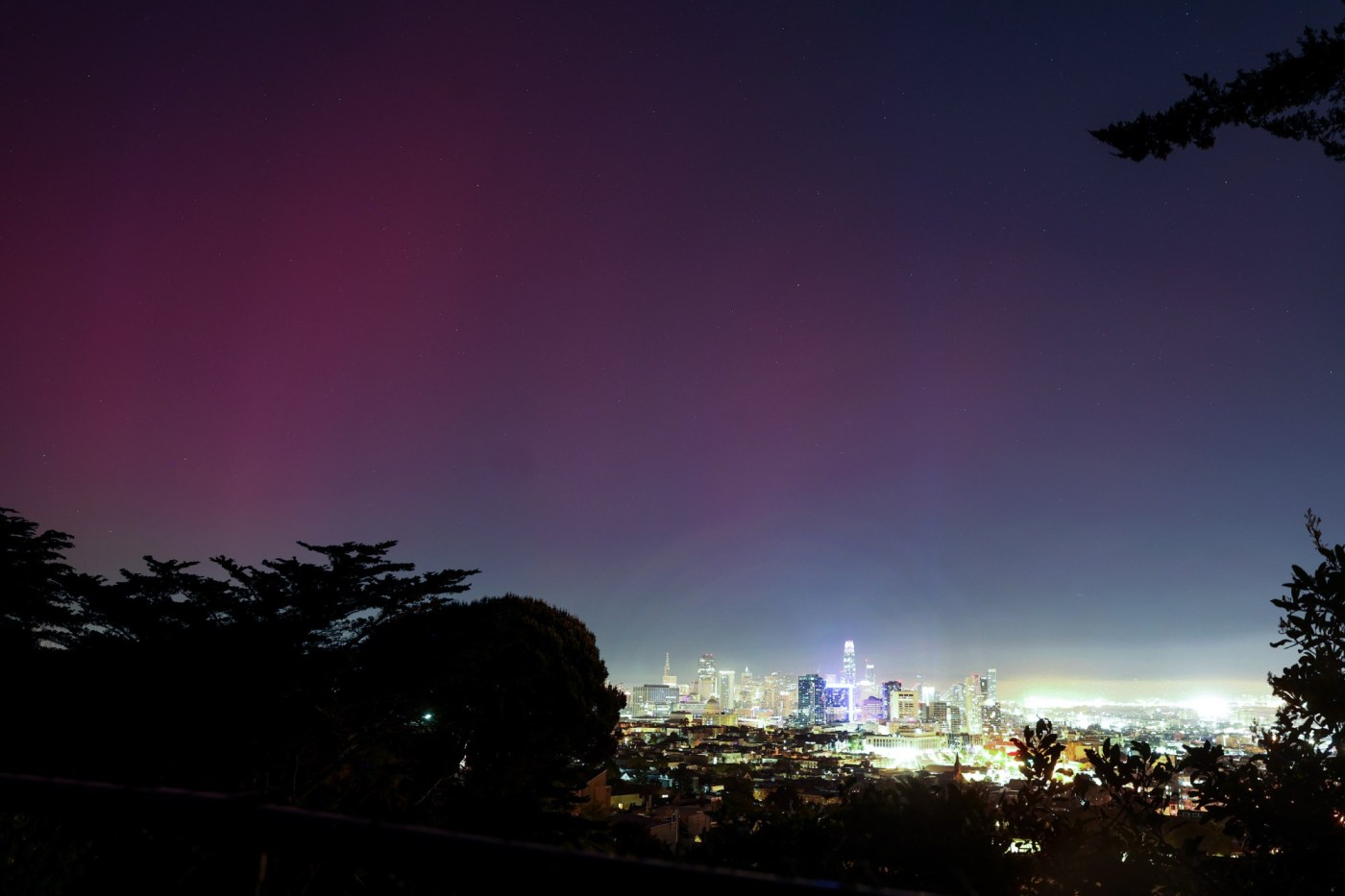
A recent project led by Jason Press, a graduate of Marin Catholic High School, is utilizing artificial intelligence to transform how scientists collect data on the aurora borealis. Press, who is currently a senior at Pepperdine University in Malibu, California, aims to overcome the challenges posed by cloud cover, which often obscures vital information about this natural phenomenon.
Press emphasizes the limitations of existing data collection methods. “There are very few clear-sky nights with aurora data,” he explained. “When clouds roll in, that data is usually lost. My job was to build a model that could see through the clouds.” This innovative approach not only recovers previously discarded information but also offers a fresh perspective on auroral research.
Breakthrough in Data Recovery
Last summer, Press and his research team successfully processed 90 minutes of satellite video, revealing clearer images of the aurora borealis. Their achievements garnered recognition, leading to an invitation to present their findings at the American Geophysical Union conference in December.
Press’s computer science professor, Fabien Scalzo, expressed pride in the accomplishments of his student. “I’m thrilled by the work Jason has done,” Scalzo stated. “His curiosity and hard work at the intersection of computer vision and AI are opening vast areas of research in the analysis of auroras.”
The aurora borealis occurs due to the interaction between solar-charged particles and the Earth’s magnetic field. Despite being monitored by satellites for over a decade, Press noted that at least half of the satellite data was rendered useless due to cloud cover.
The research team is led by Gerard Fasel, a physics professor at Pepperdine. Fasel highlighted the broader implications of their findings. Being able to read the aurora borealis more accurately could enable scientists to predict severe solar events, such as large solar flares or “solar wind” emissions.
One notable historical incident, a solar wind blast in 1859, caused extensive damage, igniting telegraph lines across the world. A less severe storm in 1989 led to a power outage in Quebec, demonstrating the potential risks posed by these solar phenomena. “We’d like to be able to predict these storms so that we can power our spacecraft down and avoid damaging the electrical circuits,” Fasel explained, emphasizing the importance of ongoing research.
Personal Background and Community Impact
Press, who grew up in Mill Valley, California, is the middle child in a family of five, both of whose parents are veterinarians. The Press family has been well-known in the local community, with all five siblings attending Marin Catholic High School. Principal Chris Valdez praised Press’s academic and extracurricular achievements, stating, “Each of them top academic students, balanced by activities in service, sports, and music.”
Valdez noted the creative spirit that runs in the Press family, highlighting Jason’s innovative approach to his research. “It is no surprise that Jason is using his intellectual gifts and curiosity to explore this data recovery project,” he remarked.
As Press’s work continues to unfold, the implications for both scientific research and future predictions of solar activity remain significant. His efforts not only advance the understanding of the aurora borealis but also pave the way for enhanced safety measures in response to solar events.