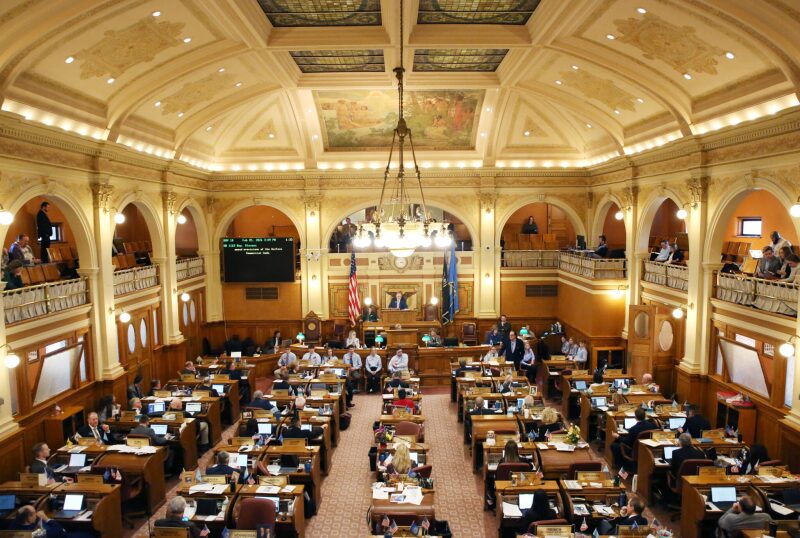
UPDATE: South Dakota lawmakers are racing to address a growing property tax crisis, having introduced at least 28 bills this legislative session, with more on the way. The urgency is palpable as property taxes for homeowners have surged nearly 70% over the past decade, prompting immediate action from state officials.
The legislative session kicked off earlier this month and will run until March. The Comprehensive Property Tax Task Force had already recommended 19 proposals in October, some of which have yet to be filed. Gov. Larry Rhoden is backing a significant initiative that would allow counties to impose a 0.5% sales tax specifically to fund property tax relief.
Democratic leaders in the legislature revealed plans to introduce their own property tax relief proposals soon. Senate Assistant Majority Leader Carl Perry likened past attempts to reduce property tax burdens to a game of Whack-A-Mole, stating, “It’s going to be tough to get things exactly right, but we’re going to work at it.”
State revenue does not depend on property taxes; it primarily relies on sales taxes. Local governments, particularly counties and schools, are heavily dependent on property taxes, which are now under intense scrutiny.
Compounding the situation, U.S. Rep. Dusty Johnson, a candidate for governor, has suggested that funds from a scheduled increase in state sales tax next year should be redirected to ease property taxes. Notably, the state sales tax was reduced from 4.5% to 4.2% last year, with the reduction set to expire in 2027.
In response to these mounting pressures, Senate President Pro Tempore Chris Karr introduced a bill this week to maintain the 4.2% sales tax rate. Karr argued that raising the sales tax would only exacerbate the financial burden on taxpayers already struggling with rising property taxes, equating it to a feudal system where the burden shifts to those without property.
Lawmakers are also revisiting last year’s property tax relief legislation, which included caps on residential assessment growth and exemptions for certain home improvements. Sen. Randy Deibert has proposed raising the cap on new construction and growth from 3% to 5%, aiming to alleviate revenue losses in rapidly growing communities.
During a recent Senate Taxation Committee hearing, Heath VonEye, deputy city administrator for Harrisburg, expressed concern that restrictive caps hinder community growth, stating that the cumulative revenue loss for Harrisburg could reach nearly $3 million by 2031 if growth continues at current rates. VonEye emphasized the adverse impact on essential services like infrastructure and public safety.
Several key property tax bills are currently being considered, including:
– Senate Bill 85: Mandates elections for schools exceeding property tax limits.
– House Bill 1168: Provides a property tax credit for private school or homeschool expenses.
– Senate Bill 118: Allocates $100 million annually from state sales tax revenue for homeowner tax rebates.
In contrast, some proposals have not gained traction. Senate Bill 99, which aimed to shift public education funding from property taxes to sales taxes, was rejected in a 6-1 committee vote due to concerns about its ambitious scope.
As the legislative session progresses, all eyes will be on how these proposals evolve. Lawmakers are under pressure to find effective solutions that not only address property tax burdens but also ensure sustainable funding for essential services. With mounting public concern and the legislature’s commitment to reform, the coming weeks will be critical for South Dakotans seeking relief from skyrocketing property taxes.