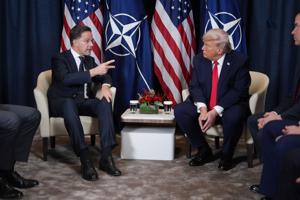
NATO’s ability to deter Russia has been significantly undermined by escalating tensions within the alliance. As trust erodes, European members and Canada are pouring billions into support for Ukraine and enhancing their defense budgets. This internal discord, exacerbated by remarks from former U.S. President Donald Trump, raises concerns about the effectiveness of the alliance in the face of Russian aggression.
The transatlantic rift has highlighted differing perspectives and priorities among NATO members. While European allies and Canada have pledged substantial financial resources to bolster Ukraine’s defense, the discord threatens to weaken the collective stance against Russia. According to NATO officials, the alliance’s unity is crucial for maintaining deterrence, particularly as the war in Ukraine continues to evolve.
Investment in Defense and Support for Ukraine
In response to the ongoing conflict, NATO members have committed to increasing defense spending. Reports indicate that European countries and Canada are investing over $100 billion collectively to enhance their military capabilities. This financial commitment aims to support Ukraine amidst the ongoing war and deter any further advancements by Russia.
The funds are not simply numbers on a balance sheet; they represent a strategic shift in defense policy across Europe. Countries such as Germany, France, and the United Kingdom have announced plans to raise their defense budgets significantly in response to the perceived threat from Russia. As NATO Secretary General Jens Stoltenberg stated, “We are investing in our collective security now more than ever.”
However, divisions have emerged regarding the best approach to counter Russian actions. The differing opinions within NATO reflect broader geopolitical concerns, with some members advocating for a more aggressive military posture while others call for diplomatic solutions. This discord risks diluting the alliance’s message and effectiveness.
Impact of U.S. Political Dynamics
The situation is further complicated by the political landscape in the United States. Former President Donald Trump has been vocal about his skepticism towards NATO, often questioning the commitment of the U.S. to the alliance. His statements have reverberated through the ranks of NATO, leading some member states to reconsider their reliance on American leadership.
As the U.S. approaches the 2024 presidential election, the potential for a change in administration could significantly influence NATO’s cohesion. Allies are increasingly concerned about whether the next U.S. president will maintain the same level of support for the alliance and its efforts to deter Russian expansionism.
The uncertainty surrounding U.S. policy has prompted European nations to accelerate their defense initiatives. Some leaders argue that Europe must take greater responsibility for its own security, reducing dependence on American military power. This shift could lead to a reconfiguration of NATO’s strategic framework and its approach to collective defense.
The impact of these dynamics extends beyond military spending. Trust, once the bedrock of NATO’s collaboration, is eroding, and the alliance’s ability to present a united front against external threats is being tested. The ongoing conflict in Ukraine serves as a stark reminder of the stakes involved in maintaining transatlantic unity.
As NATO navigates these challenges, the need for open dialogue and collaboration among member states has never been more critical. The alliance must find a way to reconcile differing views while reinforcing its commitment to collective defense. Only then can NATO hope to restore the trust necessary to deter adversaries like Russia effectively.
With the situation evolving rapidly, the outcome of internal debates within NATO will have profound implications for global security in the coming years. As nations grapple with their strategic priorities, the alliance’s future will depend on its ability to unite in the face of adversity.