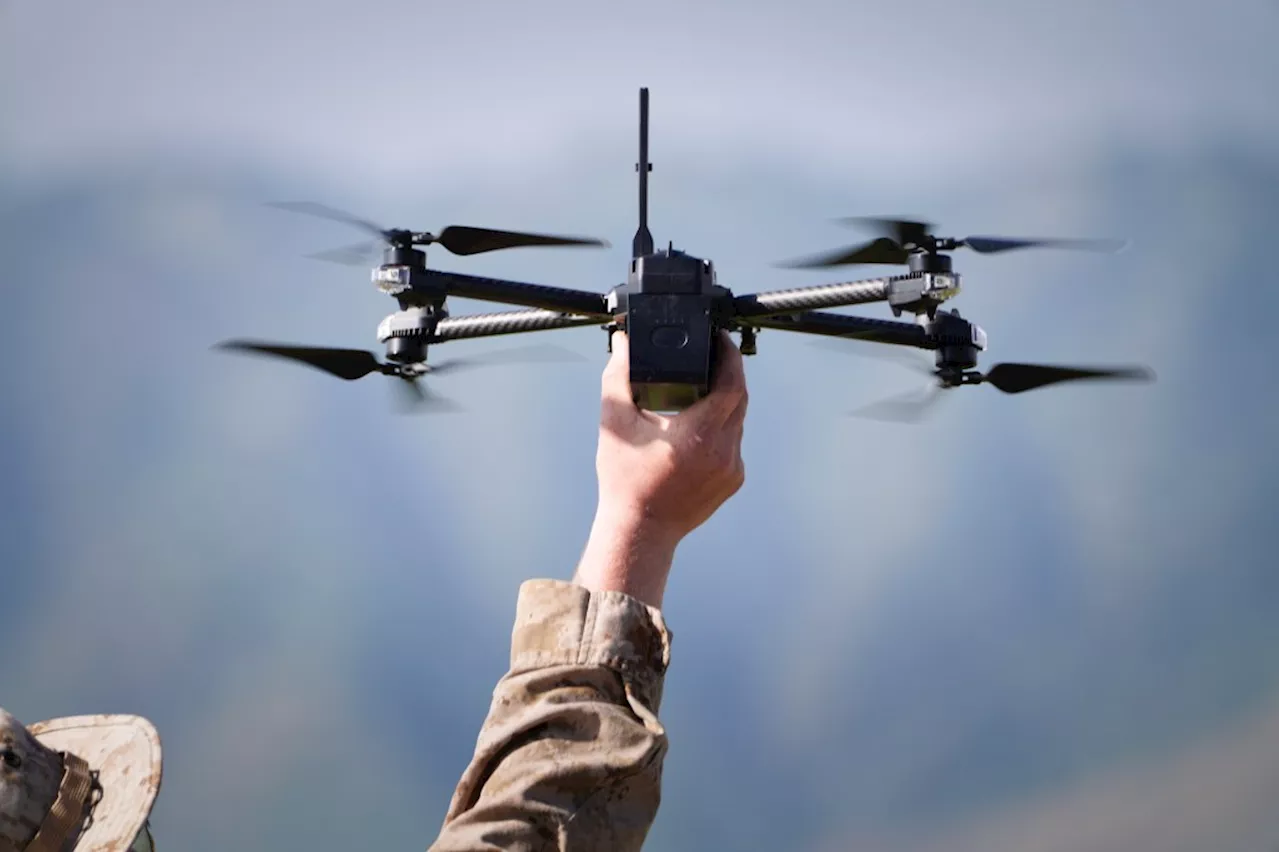
The United States Marine Corps is ramping up its operational capabilities by integrating small, lethal drones into its combat strategies at Camp Pendleton. This initiative aligns with lessons learned from the ongoing conflict in Ukraine, where small drones have proven effective in combat against larger forces.
During recent training exercises at Camp Pendleton, located in Southern California, Sgt. Jason Hamm successfully launched an intelligence, surveillance, and reconnaissance drone towards a target approximately one mile away. The drone, a swift black object, executed a sharp turn before striking the target, resulting in a significant explosion that could be heard for miles. This marked a pivotal moment as the Corps moves to adopt these advanced technologies for ground combat teams.
The military’s plan includes deploying around 10,000 of these small, disposable, and rapidly deployable drones this year. Initial training sessions are taking place in the mountainous regions of Camp Pendleton, an area recognized for its focus on unmanned systems and electronic warfare. The 1st Marine Division is currently training with the Neros Archer drones, which are compact, weighing only 2 pounds and capable of carrying approximately 3 pounds of ordnance, including C4 explosives.
The drones can reach speeds exceeding 100 mph, and their operating systems are designed to be user-friendly, resembling many popular video games. This familiarity aids the younger Marines, many of whom have grown up engaging with such technology. During operations, a ground pilot uses specialized goggles to receive real-time video feeds from the drone, allowing precise control over its movements. A navigator assists in this process, while a third team member manages the antenna mast for better communication.
The tactical approach mirrors the historical context of kamikaze attacks, as the drones can be directed to crash into designated targets when conditions are favorable. An example of this was demonstrated when Lance Cpl. Nicholas Miller guided a drone to a target designed to mimic a tank, achieving an effective strike within about two minutes. “The target is now in a million pieces,” remarked 1st Lt. Nicholas Forthman, who oversaw the exercise.
Lt. Col. James Nilan, who oversees the drone training program, emphasized the importance of developing fine motor skills for operating these agile devices. Utilizing advanced simulator software allows Marines to refine their skills with the drones before actual deployment. “You’re responsible for pitch and yaw and roll, and the speed of the drone,” he explained, highlighting the complexity of the task.
The push to adopt these drones is significantly influenced by the operational successes observed in Ukraine, where the military has effectively utilized low-cost drones to target Russian tanks and carry out maritime attacks. Lt. Col. Nilan stated, “We see a very, very cost-effective way for Marines to use a system that’s incredibly lethal. Anything we can do to advance the warfighting ability of our Marines and sailors is a 100% win.”
This integration of drone technology not only enhances the tactical capabilities of the Marine Corps but also reflects a broader trend in military innovation, where lessons from contemporary conflicts are rapidly adapted to improve combat effectiveness. As training continues, the Corps is positioned to leverage these advancements in their ongoing commitment to maintaining operational superiority.