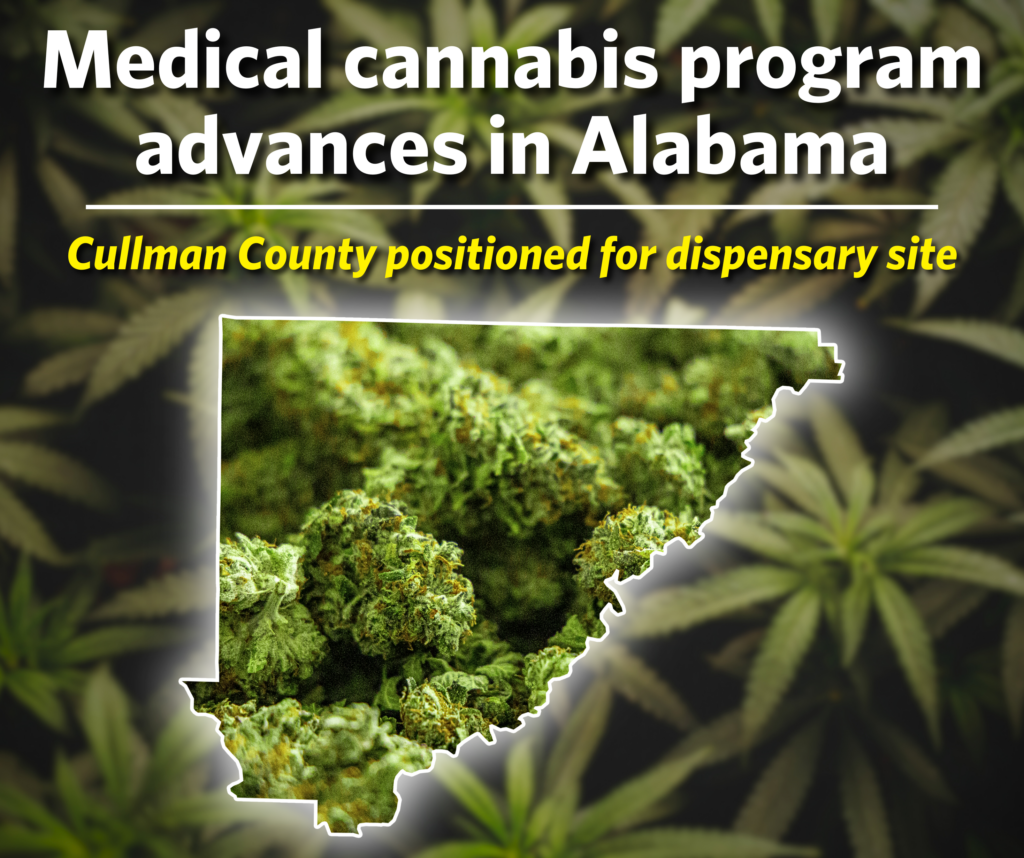
Alabama’s medical cannabis program is advancing towards operational status as the Alabama Medical Cannabis Commission has recently issued the state’s first dispensary licenses. After enduring extensive regulatory delays and legal challenges, Cullman County is set to become a future location for cannabis dispensaries.
The program was established by the Alabama Legislature in 2021 through the Darren Wesley “Ato” Hall Compassion Act. This legislation strictly legalizes marijuana for medical purposes within a tightly controlled state framework, while recreational use remains prohibited. In December 2025, the Commission’s vote to issue dispensary licenses marked a pivotal moment following over two years of interruptions, including halted implementations due to court interventions.
Several dispensary sites are planned across Alabama, with Cullman County identified as a key location. While products are yet to be available for purchase, state officials have indicated that the program is now in its final administrative phase. Notably, Alabama’s medical cannabis regulations are among the strictest in the United States, prohibiting smoking or vaping of the product and limiting the sale to specific forms such as capsules, tinctures, and topical creams.
The local company Wagon Trail Med-Serv has played a significant role in Cullman County’s connection to the program. It initially applied for an integrated facility license, which would enable the company to cultivate, process, and dispense cannabis. In June 2023, the Commission awarded integrated facility licenses, but shortly after placed those licenses on hold due to scoring inconsistencies. Wagon Trail Med-Serv was among the applicants affected by this decision.
In a subsequent meeting in August 2023, the company faced another denial of its integrated facility license. Following an appeal and continued collaboration with state regulators, Wagon Trail Med-Serv was ultimately selected for a license in December 2023. Pre-issuance inspections have indicated that the company is prepared to proceed, with CEO Joey Robertson emphasizing their commitment to patient access despite challenges.
Robertson described local support as “tremendous” and expressed eagerness to provide essential medicine to those in need. Yet, legal challenges resurfaced in early January 2024 when a temporary restraining order halted the issuance of integrated facility licenses statewide. Nonetheless, inspections confirmed the company’s readiness, allowing it to demonstrate compliance with application requirements.
Court rulings subsequently resolved much of the ongoing litigation, enabling the Commission to resume licensing efforts throughout 2024 and into 2025. By late 2025, the Commission continued issuing dispensary licenses, transitioning the program from planning to its implementation phase. Currently, no cannabis cultivation or processing facilities operate in Cullman County, but state records confirm its designation as a dispensary location, pending final approvals.
Under Alabama law, physicians are now allowed to register to recommend medical cannabis to qualifying patients. Physicians must possess an active Alabama medical license and complete mandatory training before registering with the Alabama Medical Cannabis Commission. They do not prescribe cannabis in the traditional sense; instead, they provide certifications that allow patients to apply for a medical cannabis card through the state’s registry.
Patients must be Alabama residents with qualifying medical conditions to legally access medical cannabis. Conditions include autism spectrum disorder, cancer-related symptoms, Crohn’s disease, epilepsy, and PTSD, among others. Physicians can only recommend cannabis for conditions aligned with their training, and evaluations must occur in person, as telemedicine assessments are not permitted.
Registered caregivers are subject to background checks and limitations on the number of patients they may assist. Law enforcement agencies emphasize that outside the parameters of the Compassion Act, marijuana remains illegal, and possession without a valid medical card is a criminal offense.
With dispensary licenses now issued and major legal hurdles cleared, state officials are turning their focus to final inspections, permitting, and patient certification. As dispensary operators secure locations and physicians prepare to certify patients, Cullman County residents with qualifying conditions may soon gain their first access to legal medical cannabis. However, officials advise that the rollout will be carefully monitored and strictly regulated.