Since taking office in January 2025, President Donald Trump has made headlines with a series of unpredictable decisions that have shaped his administration’s early narrative. Just three weeks into 2026, he ordered a military strike against Venezuela, issued threats to the Iranian regime in support of protesters, and raised eyebrows with comments regarding potential military action in Greenland. His administration’s actions suggest a stark departure from his earlier promise to be a “peacemaker and unifier.”
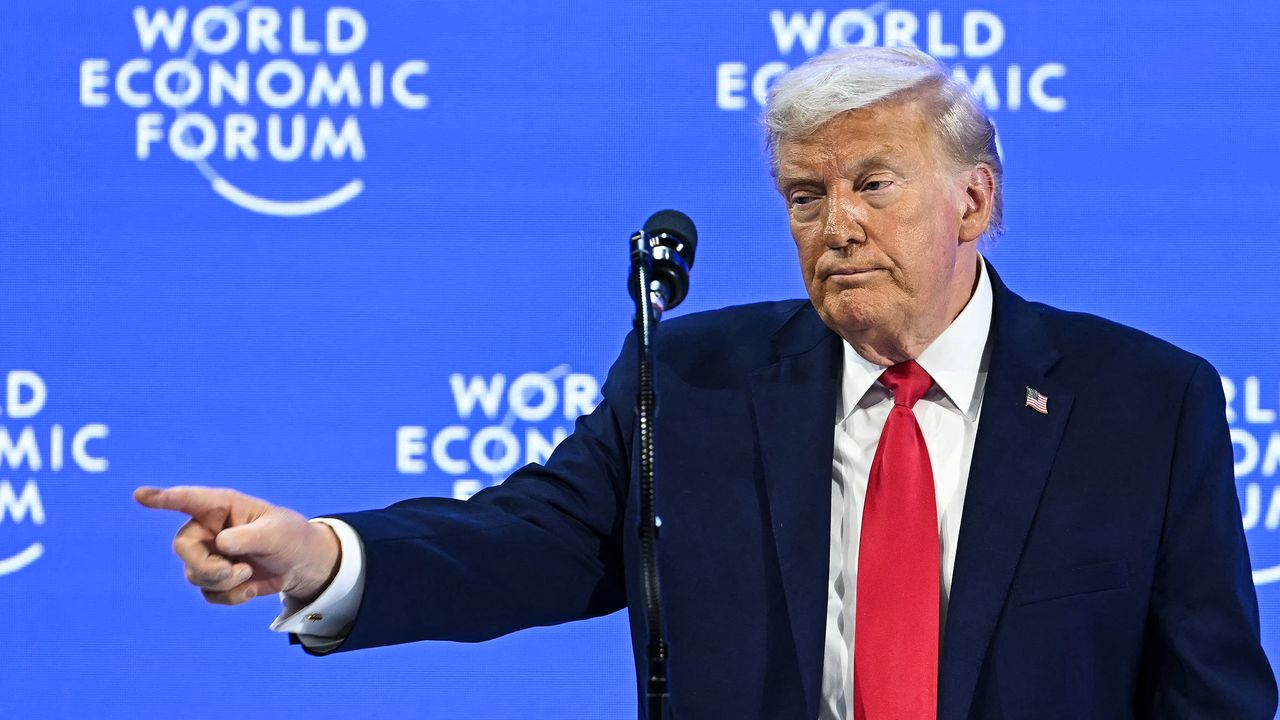
In a recent letter to the Prime Minister of Norway, Trump stated, “I no longer feel an obligation to think purely of Peace.” This sentiment contrasts sharply with remarks he made at the World Economic Forum in Davos, where he claimed the United States would refrain from using force to take control of Greenland and announced a halt to tariffs on European allies.
Polarizing Policies and Public Reaction
The first year of Trump’s second term has been marked by a heightened sense of political tension. As noted by Amy Davidson Sorkin, there is now an undercurrent of political violence that was less pronounced a year ago. Despite ambitious plans, Trump’s public approval ratings have faltered, especially with the midterm elections approaching.
According to Michael Luo, executive editor, there appears to be a significant disconnect between the impact of Trump’s deportation policies and the level of public outrage. Although a majority of Americans reportedly oppose his immigration strategies, the widespread concern expected from such policies has not materialized. Luo attributes this to potential desensitization to Trump’s actions, as well as a longstanding empathy gap concerning immigrants.
Susan B. Glasser, a staff writer, points to the predictability of Trump’s actions since his return to office. While the policies may have been anticipated, the surprising element lies in the complicity of those who support or enable his agenda. Without this backing, Trump could have been relegated to a retired figure, rather than a dominant force in U.S. politics.
Financial Markets and Government Operations
From a financial standpoint, the resilience of the markets amidst Trump’s turbulent policies has surprised many. John Cassidy, writing for the Financial Page, highlights a critical moment last April when Trump enacted high tariffs but quickly reversed course after significant market downturns. This behavior led to the creation of the acronym “TACO” — “Trump Always Chickens Out” — as investors adapted to his unpredictable nature.
Despite recent threats to Greenland and NATO, Cassidy notes that Wall Street has largely remained unfazed, focusing instead on the boom in artificial intelligence. However, uncertainty surrounding Trump’s latest actions has rekindled investor apprehension.
On the ground, the chaotic and often disjointed nature of Trump’s administration has drawn attention from observers like E. Tammy Kim. She emphasizes the non-linear approach to governance, where not all federal agencies have followed the same destructive path. Some departments, such as the Environmental Protection Agency and the Department of Education, have experienced frequent staff changes, driven by both public pressure and legal protections.
Family Business and Political Ambitions
Perhaps one of the most striking aspects of Trump’s presidency has been the audacity of his family’s efforts to leverage their political position for personal gain. David D. Kirkpatrick notes that the Trump family seems to have escalated their business activities significantly compared to his first term, with ventures extending into international markets and a focus on cryptocurrency. This shift raises ethical concerns, particularly regarding the use of presidential influence for personal profit.
Reflecting on the past year, Ruth Marcus highlights the rapid pace of Trump’s initiatives, from dismantling federal programs to his unexpected pivot towards a more imperialistic foreign policy. The establishment of a so-called “Donroe Doctrine” has emerged as a surprising development in his geopolitical strategy.
As Trump’s second year unfolds, the implications of his decisions continue to resonate across the political landscape. With midterm elections on the horizon, the administration’s actions will undoubtedly shape the future of American politics and policy. The blend of unpredictability, ambition, and controversy that has characterized Trump’s presidency thus far suggests that further surprises may still lie ahead.