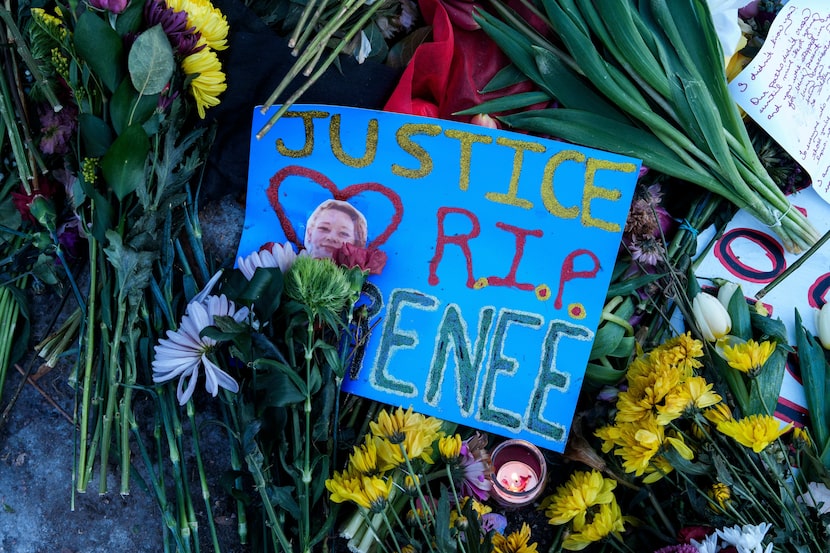
The shooting of Renee Good, a 37-year-old mother of three, by an Immigration and Customs Enforcement (ICE) officer in Minneapolis has ignited a heated national debate regarding the justification of the use of lethal force by law enforcement. Good’s death has prompted strong opinions from various community members and officials, raising questions about the actions of federal agents and the broader implications of immigration enforcement practices.
Witnesses reported that Good was involved in a confrontation with ICE agents on January 9, 2024, while picking up her children from school. According to U.S. Homeland Security Secretary Kristi Noem, Good allegedly “weaponized her vehicle” and attempted to run over an officer. In contrast, bystander videos circulated on social media depict the agent, who discharged his weapon, walking around uninjured after the incident. This discrepancy has fueled public outrage and skepticism about the official narrative.
Opinions on the shooting vary widely. Some community members express concern over ICE’s tactics, suggesting that agents have been known to walk into the path of oncoming vehicles to justify the use of deadly force. Thomas Urech, a local resident, emphasized that this behavior is not new, asserting that ICE has a history of employing aggressive methods since at least 2014. Urech called for the complete abolition of ICE, claiming that the agency’s practices reflect a broader pattern of systemic violence.
Conversely, some defend the actions of the officers involved. Supporters argue that Good’s behavior posed a legitimate threat to law enforcement. Neal Okerblom, another resident, stated that officers are often faced with unpredictable and violent situations. He maintained that people have the right to protest but not to obstruct lawful immigration enforcement.
The response from elected officials has also come under scrutiny. Critics question the silence of local and national representatives regarding the incident. Many feel that their leaders should vocally oppose what they perceive as escalating violence against innocent citizens. Diane Ramsey from Mesquite voiced frustration over the lack of accountability, stating that the current climate of fear is unacceptable.
In addition to local reactions, media coverage has also drawn criticism. Some believe that outlets like The Dallas Morning News have failed to provide a balanced view of the events surrounding Good’s death. Bill Underhill, a resident of Dallas, accused the media of promoting a narrative that paints ICE agents as aggressors while neglecting critical details such as Good’s alleged harassment of ICE operations prior to the shooting.
As the debate continues, the community remains divided. Many are calling for a thorough investigation into the incident and a review of ICE’s operational protocols to prevent future tragedies. The case of Renee Good has not only spotlighted the contentious nature of immigration enforcement but also raised profound questions about accountability and the use of force by law enforcement agencies.
In the wake of this tragedy, the broader implications of ICE’s tactics will likely remain a contentious issue as citizens demand answers and accountability from their elected officials. The conversation surrounding Renee Good’s death serves as a reminder of the ongoing struggles within the immigration system and the urgent need for reform.