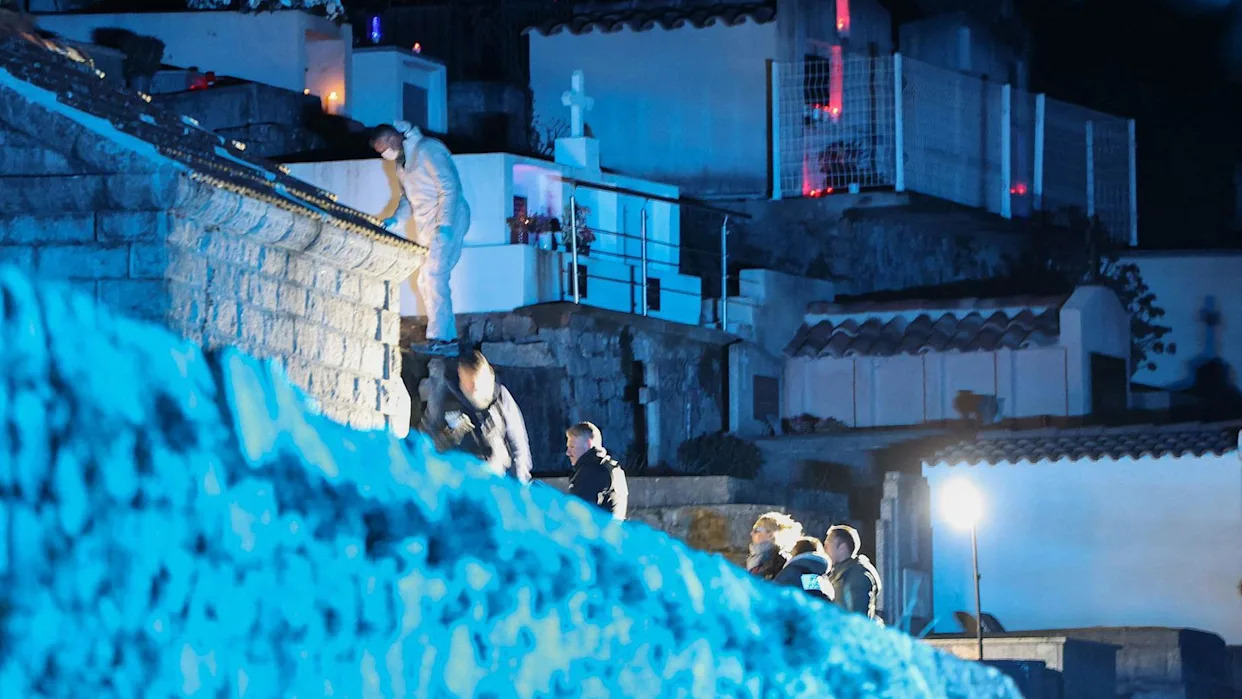
A shocking incident unfolded in the small village of Vero, located a half-hour’s drive from Ajaccio, the capital of the Mediterranean island of Corsica. During a funeral service for his mother, former nationalist leader Alain Orsoni, aged 71, was fatally shot. A gunman fired from nearby scrubland, killing Orsoni instantly. This tragic event highlights the ongoing violence on the island, which has recorded 35 murders in just the past three years, contributing to one of the highest murder rates in France.
The islanders, accustomed to the legacy of vendettas and organized crime, were nonetheless taken aback by the manner of Orsoni’s death. His funeral, held in Ajaccio, saw a heavy police presence as mourners gathered to pay their respects. Close friend Jo Peraldi expressed disbelief at the defilement of a sacred space. “A cemetery is sacred in Corsica, just like a church. Never have I witnessed someone murdered while accompanying their mother to their final resting place,” he said in an interview with Corsican radio.
The incident has prompted reactions from family and officials alike. Christian Leca, a cousin of Orsoni, described the shooting as “a tipping point in the horror” that has plagued Corsica. “People don’t kill in cemeteries, it’s intolerable,” he told Le Monde. The shifting nature of violence on the island has drawn analysis from experts like Thierry Dominici, a scholar at the University of Bordeaux. He noted the transformation of armed groups that once sought autonomy into entities focused on organized crime, suggesting that the French state’s focus on separatists overlooked the rise of these criminal activities.
The investigation into Orsoni’s murder is being led by judges in Paris who specialize in organized crime, in collaboration with the regional prosecutor’s office in Marseille. Gilles Simeoni, president of Corsica’s regional authority, remarked that the murder adds to the mafia pressure on Corsican society, emphasizing Orsoni’s significance in both open and clandestine nationalist activities.
The Orsoni family is deeply rooted in Corsican nationalism and violence. Alain Orsoni himself had a tumultuous past, spending time in prison for bomb attacks aimed at pressuring the French government for greater autonomy for Corsica. The nationalist movement has since splintered, with factions increasingly engaging in criminal enterprises such as money laundering, drug trafficking, and extortion.
Orsoni’s history is marked by personal loss and survival. His brother, Guy Orsoni, was murdered by a rival clan in 1983, and his son is currently incarcerated for drug trafficking. Alain Orsoni narrowly escaped assassination attempts and lived in exile in Nicaragua, where he became involved in casino investments. He returned to Corsica to manage the local football club, AC Ajaccio, where he gained a reputation as a charismatic leader. Despite his violent past, he attracted notable players and even mingled with French political figures, including former President Nicolas Sarkozy.
In the face of ongoing violence, Alain Bauer, a criminology professor, stated that Orsoni’s assassination was foreseeable. “That Alain Orsoni was killed does not surprise me; it was just a question of when, not if,” he commented to the BBC. The implications of such violence extend beyond individuals, affecting the entire Corsican community.
As the island grapples with its troubled legacy, Cardinal François Bustillo, the bishop of Ajaccio, has called for an end to the cycle of violence. He stressed the need for a cultural shift away from retribution, saying, “We mustn’t get used to this eye-for-an-eye, tooth-for-a-tooth violence.” His appeal for peace raises the question of whether Corsica can break free from its historical demons, as the community mourns a leader whose life was intertwined with the island’s complex narrative of nationalism and violence.