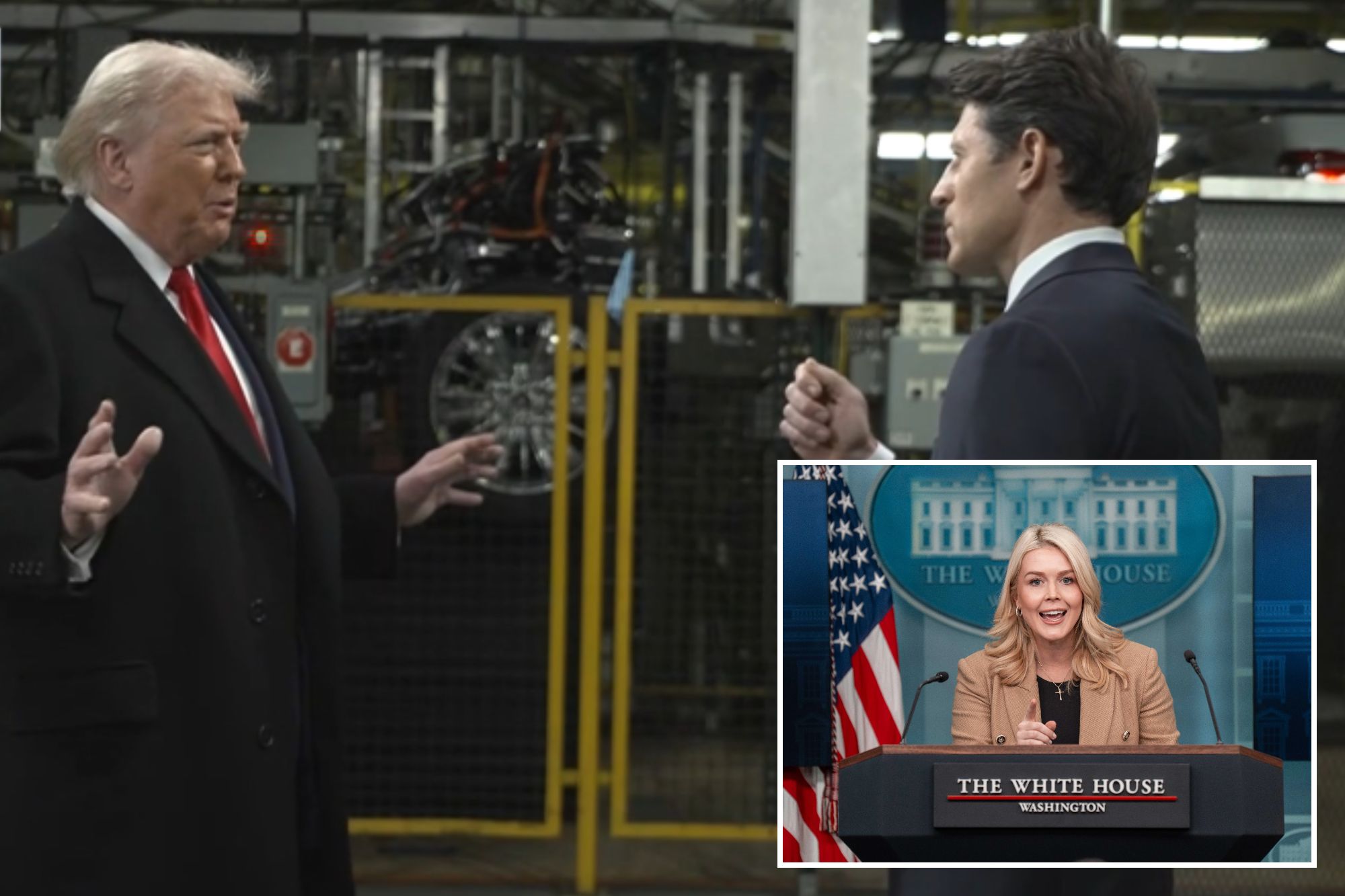
Karoline Leavitt, the White House press secretary, warned CBS News that President Donald Trump would pursue legal action if his recent interview was not broadcast in full. This assertion was captured in an audio recording obtained by The New York Times. The remarks followed a 13-minute interview between Trump and CBS anchor Tony Dokoupil that took place in Michigan.
Details of the Warning
After the interview concluded, Leavitt approached the CBS team and expressed Trump’s demand for the segment to be aired unedited. She stated, “Make sure you guys don’t cut the tape, make sure the interview is out in full,” according to the recording. When Dokoupil affirmed their commitment to airing the entire segment, Leavitt reiterated Trump’s position, saying, “If it’s not out in full, we’ll sue your ass off.”
In response to the situation, CBS News clarified that the network had already made the decision to air the interview in its entirety prior to its recording. The network released a statement asserting, “The moment we booked this interview, we made the independent decision to air it unedited and in its entirety.” Following this assurance, the full interview aired as scheduled on the CBS Evening News that evening.
Background on Editorial Concerns
This incident is not the first time Trump has threatened legal action regarding media coverage. In 2024, he filed a lawsuit against CBS over the editing of a “60 Minutes” interview with then–Vice President Kamala Harris. Trump accused the network of deceptive editing in that instance. The lawsuit culminated in a significant $16 million settlement from Paramount, the corporate parent of CBS News at the time. This outcome led to considerable scrutiny and debate within the newsroom and has since influenced editorial decisions concerning Trump.
The current warning by Leavitt highlights ongoing tensions between the Trump administration and media outlets. This incident raises questions about the influence of political figures on media practices and the implications for journalistic independence.