In the early 20th century, rancher Fred Engle became embroiled in a contentious legal battle against the Northern California Power Company over water rights. This conflict significantly impacted his family and set the stage for his son, Clair Engle, to pursue a career in politics that would ultimately lead him to Congress.
Fred Engle moved to the Manton area in 1914 with his wife and two sons, Fred Jr. and Clair. The community was already engaged in a protracted struggle against the power company regarding water access. Fred joined the fight, but the legal costs forced the family to relocate to Gerber, where he found work with the Southern Pacific Railroad and later at the Red Bluff post office. The struggle against the power company left a lasting impression on Clair, who grew up witnessing his father’s passion for history and public affairs.
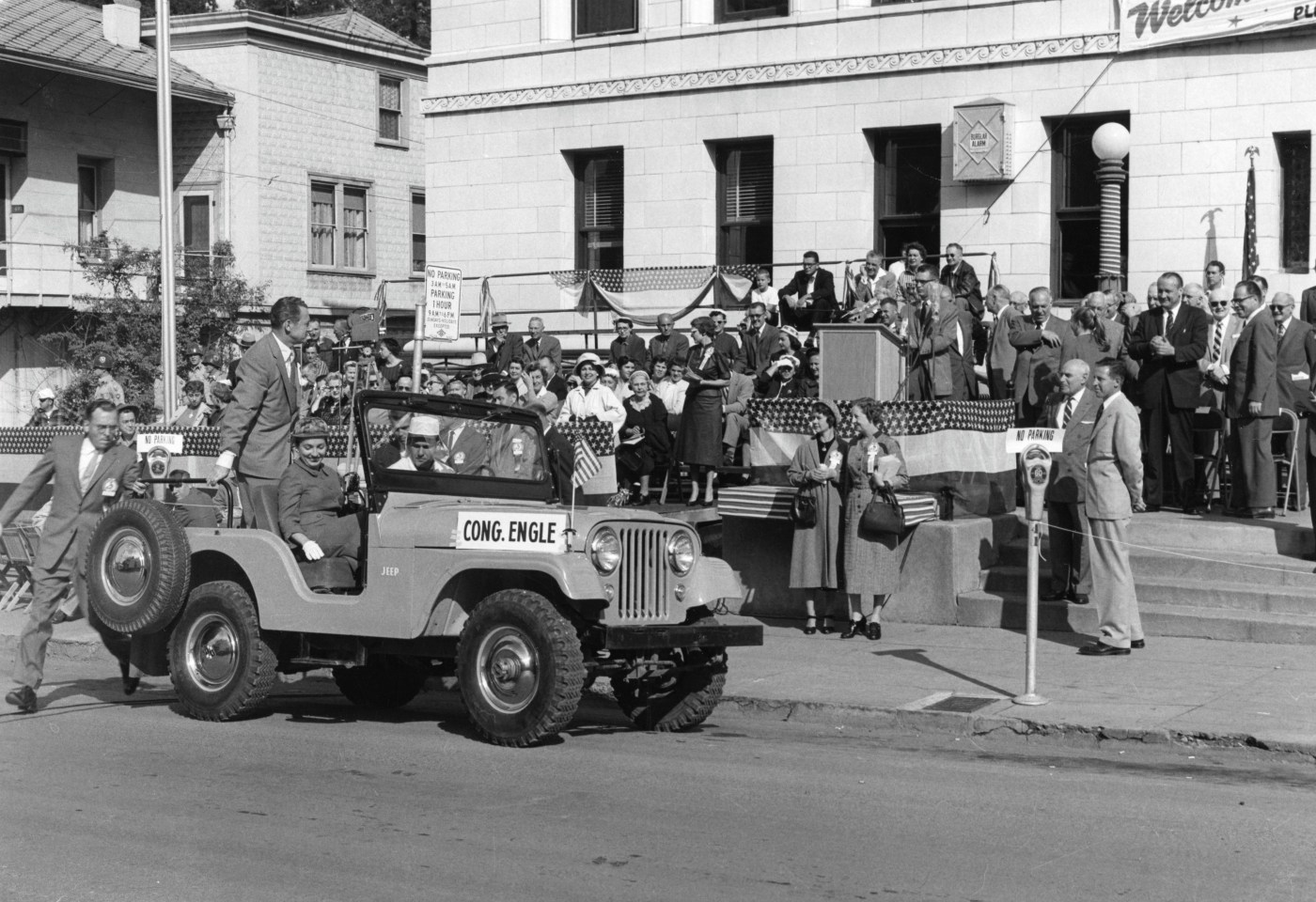
Inspired by his father’s advocacy, Clair Engle embarked on a political career that began in school, where he was elected as Red Bluff High School’s student body president. After earning his law degree, he practiced in Corning before being elected as the Tehama County District Attorney in 1934. His political journey culminated in 1943 when he was elected to represent California’s Second Congressional District, the largest in the nation, which encompassed 18 counties from the Oregon border to near Los Angeles.
Engle’s commitment to his constituents was evident in the extensive travel required to serve his district. He covered over 5,000 miles by car and flew an additional 10,000 miles to ensure that he was accessible to voters. His love for flying was well-known; a notable incident occurred in 1947 when he navigated a small plane from Washington, D.C., to Red Bluff. During the flight, he faced severe turbulence that caused an accident with the aircraft’s canopy, leading to a humorous encounter with a farmer.
Campaigning was another area where Engle thrived. He often took unconventional approaches, such as when he entered a bar in Markleeville and declared he would buy drinks for the house to gather support. His charisma and willingness to connect with voters paid off, as he consistently won elections in that region.
Engle’s political career reached new heights when he became a United States Senator in 1958. He served until his death in 1964 and was regarded as a significant figure in both California and western politics. His major legislative accomplishments included pivotal enhancements to the 1935 Central Valley irrigation-control project, such as the 1949 American River development bill, which facilitated the construction of Folsom Dam, along with securing $100 million for Sacramento Valley canals.
Engle’s passing was marked by a large turnout at his burial in Oak Hill Cemetery, attended by approximately 3,000 people. The Red Bluff Daily News noted, “Engle built a reputation as one of the most colorful individuals to stride the halls of Congress. But in Red Bluff, the memory of Clair Engle is deeply etched on the hearts of his Tehama County friends and neighbors.”
Clair Engle’s legacy continues to resonate in the region, a testament to his dedication to public service and the enduring impact of his family’s struggles against powerful interests.