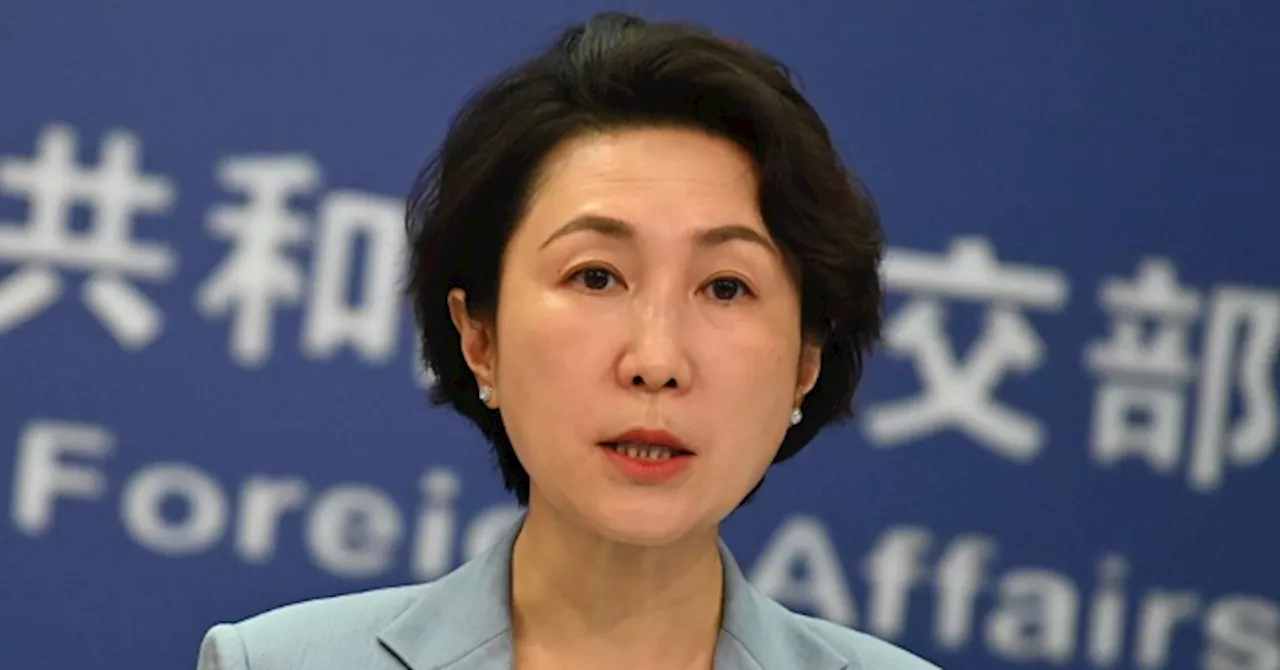
China’s Foreign Ministry has sharply criticized the United States for its attempts to acquire Greenland, asserting that the U.S. is acting out of selfish interests in the Arctic region. The statement, issued on Monday by spokesperson Mao Ning, emphasizes China’s commitment to maintaining peace, stability, and sustainable development in the Arctic, while urging respect for international law and the rights of nations operating in the area.
This response from China comes in light of increasing concerns over its growing presence in the Arctic, particularly through investments in Greenland and initiatives like the Polar Silk Road. The commentary highlights a broader context of geopolitical tensions surrounding Arctic territories as nations vie for influence and resources in this strategically important region.
Mao’s remarks addressed President Donald Trump‘s expressed interest in acquiring Greenland, a semi-autonomous territory of Denmark. She condemned the U.S. for using other countries as a “pretext for pursuing its own selfish gains.” According to Mao, “The Arctic bears on the common interests of the international community. China’s activities in the Arctic are aimed at promoting the peace, stability, and sustainable development of the region.” She further asserted that the rights of nations to operate in the Arctic must be fully respected.
When questioned about the implications of a U.S. takeover of Greenland, Mao reiterated that state-to-state relations should adhere to the principles of the U.N. Charter. She emphasized the importance of respecting the rights and freedoms of countries engaged in lawful activities in the Arctic.
China has made significant investments in Greenland, particularly in its rare-earth mineral resources, which are crucial for advanced technologies. These investments have included attempts to upgrade airports in the Greenlandic cities of Nuuk and Ilulissat, though these bids were withdrawn in 2019 under pressure from the U.S. and Denmark. A Chinese state-linked firm, Shenghe Resources, also acquired a stake in a rare-earth and uranium mining project in 2016, but this initiative collapsed after Greenland’s government banned uranium mining in 2021.
As Greenland moves toward greater autonomy, concerns grow regarding its relationship with Denmark, which currently holds veto power over foreign investments. The geopolitical stakes are high, as the U.S. views control of Greenland as critical to countering Russian and Chinese influence in the Arctic.
Experts suggest that any U.S. move to take control of Greenland would likely provoke a strong response from China, given its commercial interests in the territory and its strategic ambitions in Arctic shipping routes. Xinbo Wu, a scholar at Fudan University in Shanghai, remarked that China would “push back hard” against U.S. efforts in Greenland.
The situation reflects the increasing international focus on the Arctic, with nations like the U.S., China, and Russia competing for access to its resources and shipping routes as climate change opens new pathways. As tensions rise, the implications of these geopolitical maneuvers will continue to unfold, impacting not only Arctic nations but the global community as a whole.