The death toll from ongoing protests in Iran has risen to at least 544, according to the U.S.-based Human Rights Activists News Agency. This increase comes as U.S. President Donald Trump announced that Iran has proposed negotiations following his threats of military action against the Islamic Republic. The protests have escalated in response to a violent crackdown on demonstrators, resulting in more than 10,600 arrests over the past two weeks.
Trump stated on Sunday that he is considering a range of options, including potential cyberattacks and military strikes, as his administration assesses the situation. Speaking to reporters aboard Air Force One, he emphasized, “The military is looking at it, and we’re looking at some very strong options.” He warned Iran that if they retaliate, the U.S. would respond with unprecedented force.
Despite the harsh rhetoric, Trump indicated that negotiations with Tehran are on the table. He mentioned, “Iran wants to negotiate,” while cautioning that actions may be necessary before any formal meeting can take place. As of now, there has been no official acknowledgment from Iran regarding the proposed talks.
The unrest began on December 28, 2023, triggered by the collapse of the Iranian rial, which currently trades at over 1.4 million to $1. The protests have developed into widespread calls for political change, challenging the country’s theocratic leadership.
The Iranian government has maintained a communications blackout, making it challenging to verify the situation on the ground. Activists report that 496 of those killed were protesters, while 48 were members of the security forces.
Escalating Tensions and International Responses
Iran’s government has warned that any U.S. military action could make American forces and Israeli assets “legitimate targets.” Hardline Iranian parliament speaker Mohammad Baagher Qalibaf threatened that in the event of an attack, both U.S. and Israeli military installations would be targeted. During a recent parliamentary session, lawmakers expressed their support for Qalibaf’s comments by chanting, “Death to America!”
The dynamics are further complicated by the ongoing U.S. military presence in the region, which includes significant deployments in the Caribbean. The Pentagon has indicated that it is prepared for various combat scenarios to protect U.S. interests and personnel.
At an international level, reactions have poured in. Pope Leo XIV expressed concern over the violence in Iran, urging for dialogue and peace. The United Nations Secretary-General Antonio Guterres has condemned the violence against protesters and called for restraint from Iranian authorities.
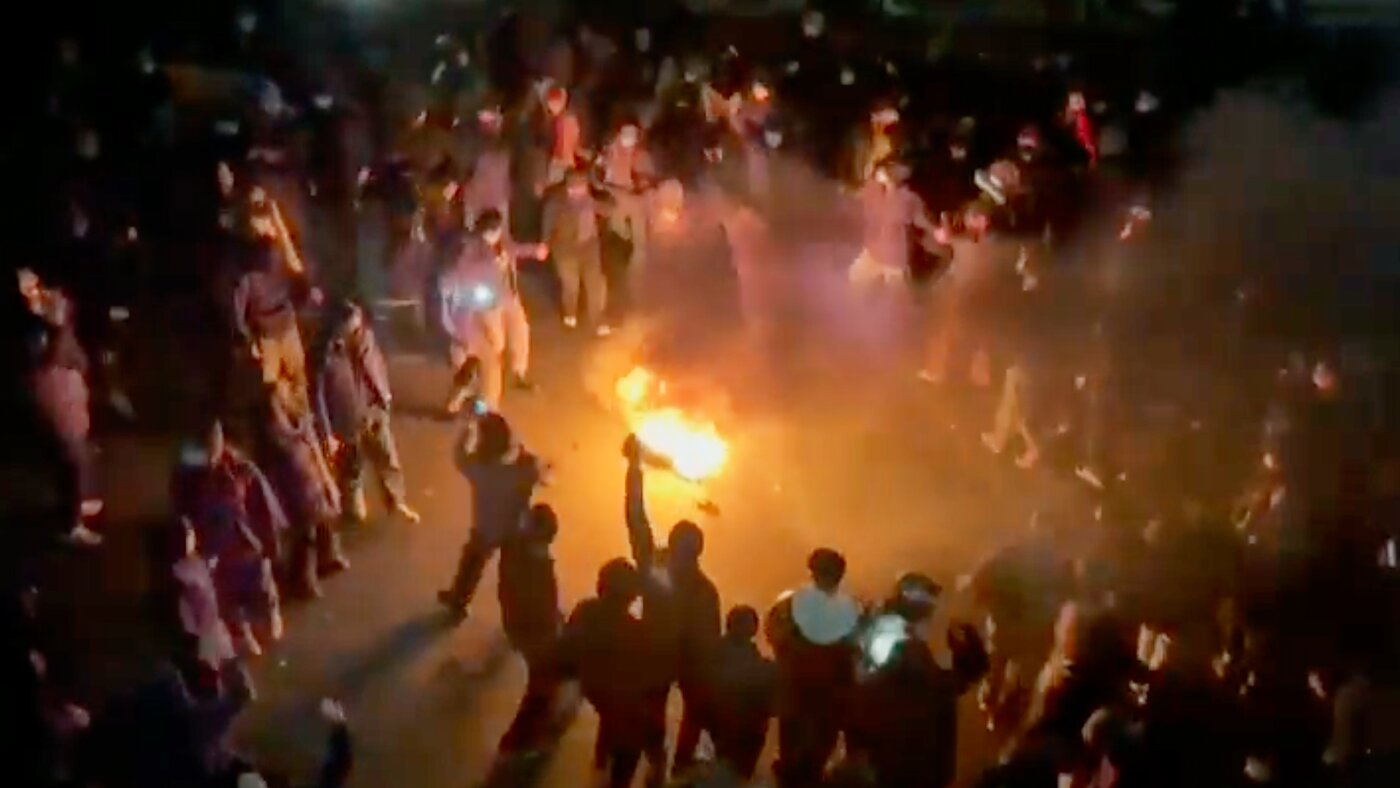
Demonstrations continue to spread across major cities, including Tehran and Mashhad. Videos reportedly show protesters gathering in various neighborhoods, waving their mobile phones and confronting security forces. The Iranian state media has attempted to downplay the unrest, focusing on areas that appear calm, which has raised skepticism about the authenticity of these reports.
Future Implications for Iran and the Region
As the situation unfolds, the potential for further violence remains. The lack of reliable communication has raised fears that hardliners within Iran may feel emboldened to escalate their response to dissent. The ultimate decision on military engagement rests with Iran’s 86-year-old Supreme Leader Ayatollah Ali Khamenei, whose authority is paramount in determining the country’s course of action.
While the international community watches closely, the prospect of negotiations could represent a critical juncture for both Iran and the U.S. The coming days may reveal whether diplomatic efforts can alleviate tensions or if the situation will escalate further, putting more lives at risk.