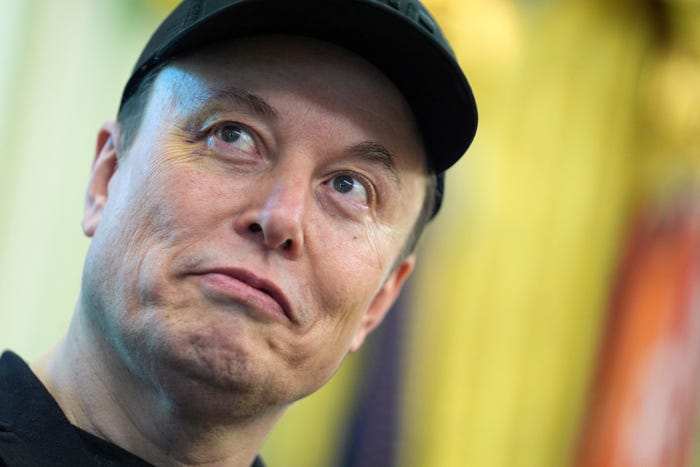
Elon Musk has stirred significant conversation by asserting that saving for retirement will soon be “irrelevant.” During a recent episode of the “Moonshots with Peter Diamandis” podcast, the CEO of Tesla and SpaceX painted a picture of a future transformed by advancements in artificial intelligence and technology. He believes these innovations will create an unprecedented abundance of resources, fundamentally changing personal finance.
Musk specifically suggested that in the next 10 to 20 years, the landscape of work and income will shift dramatically. “One side recommendation I have is: Don’t worry about squirreling money away for retirement in 10 or 20 years,” he stated. He expressed confidence that if his predictions are accurate, traditional financial planning will no longer hold the same importance.
The billionaire entrepreneur, whose net worth exceeds $600 billion, emphasized that advances in AI, energy, and robotics could lead to a society with a “universal high income.” Musk envisions a world where everyone can access superior medical care, education, and material goods. “The good future is anyone can have whatever stuff they want,” he elaborated. This vision includes “no scarcity of goods and services” and the opportunity for anyone to learn anything for free.
Despite Musk’s optimistic outlook, he also acknowledged potential challenges in the transition to this new societal model. He cautioned that the shift may be “bumpy,” leading to significant change and social unrest. In particular, he raised concerns about the loss of purpose that could accompany a life without work. “Now, if you actually get all the stuff you want, is that actually the future you want?” he questioned.
Musk’s predictions contrast sharply with the current realities faced by many people in the USA and beyond. High inflation rates, elevated interest rates, and stagnant wage growth have created a financial landscape where millions struggle to afford college, quality healthcare, and home ownership. Surveys indicate that a significant portion of Americans are not saving enough for retirement, making Musk’s vision seem far removed from everyday life.
While Musk’s advances in technology, including electric vehicles with Tesla and reusable rockets with SpaceX, have transformed industries, his latest assertions could be interpreted as overly optimistic or even risky. Critics argue that if individuals take his advice to heart and cease saving for retirement, they may find themselves unprepared if the anticipated changes do not materialize as he predicts.
As Musk continues to lead innovations in self-driving cars, humanoid robots, and AI assistants, the debate around his views on retirement savings highlights a broader conversation about the future of work, wealth, and societal structure. Whether his vision will come to fruition remains to be seen, but it undoubtedly raises important questions about financial planning in an era of rapid technological advancement.