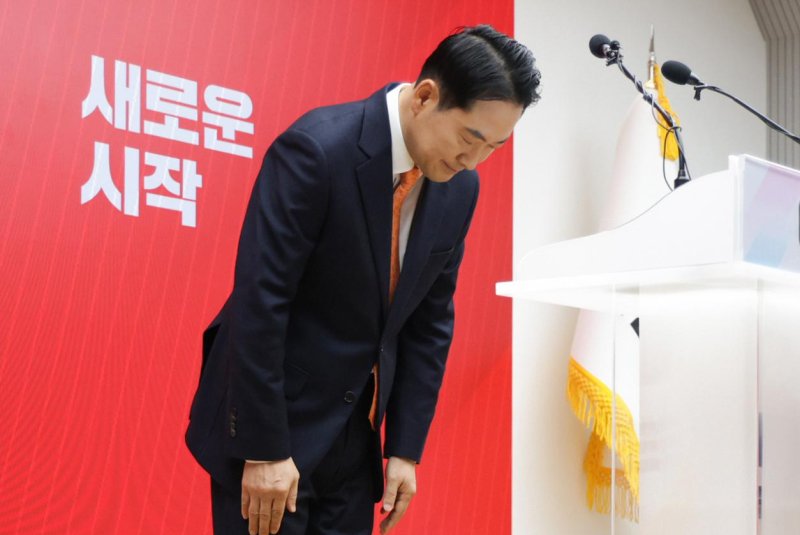
UPDATE: In a critical move, Jang Dong-hyeok, leader of South Korea’s main opposition People Power Party, issued a formal apology today for the party’s association with former President Yoon Suk Yeol‘s controversial declaration of martial law on December 3, 2024. This urgent announcement comes as Yoon faces insurrection charges following the failed decree that sparked national outrage.
During a press conference at party headquarters in Seoul, Jang articulated the party’s need to distance itself from Yoon’s administration, asserting that the martial law declaration was a “wrongful measure” that led to significant confusion and suffering among the populace. “It inflicted deep wounds on our party members who have defended the constitutional order of liberal democracy,” he stated.
Jang acknowledged the People Power Party’s “heavy responsibility” in the situation, revealing that he was among the 18 lawmakers who rushed to the National Assembly to dismantle the decree, which was overturned within hours. This moment of urgency underscores the party’s struggle to regain credibility in the wake of political turmoil.
As South Korea approaches the local elections set for June 1, 2025, Jang unveiled the “Change to Win” initiative, a comprehensive plan aimed at revitalizing the party’s image and appeal. Proposed reforms include mandatory youth nominations for upcoming elections, new platforms to engage external policy experts, and dedicated committees focusing on labor and generational issues.
“We must rebuild around the youth and foster a more engaged political process,” Jang emphasized, showing a commitment to inclusivity and progress. Furthermore, he expressed a willingness to collaborate with other opposition factions to challenge the ruling party led by President Lee Jae Myung. “If they align with the values of liberal democracy, we will join forces with anyone willing to stop the dictatorship of the Lee Jae Myung regime,” he declared.
This apology and reform agenda emerge against a backdrop of heightened political tension, with the Democratic Party maintaining a commanding majority in parliament since Lee’s victory in June. Conservatives have criticized the current administration for overreach, claiming it marginalizes opposition voices while the government defends its actions as essential for stability.
Jang also indicated that the People Power Party is committed to internal reforms, including stricter anti-corruption measures and potentially a name change for the party to better reflect its new direction. He urged party members to leave past political strife to the courts and historians, focusing instead on restoring public trust.
“We will cross the river of martial law and impeachment and move toward the future,” Jang concluded, a statement that resonates with a populace eager for accountability and reform. As South Korea braces for imminent local elections, the spotlight remains on the People Power Party and its ability to navigate the political landscape shaped by recent events.
Stay tuned for more updates as this developing story unfolds.