The recent decision by President Donald Trump to authorize U.S. strikes against Venezuela and the capture of former President Nicolás Maduro has drawn swift condemnation from major global adversaries. Nations including China, Russia, and Iran denounced the action as a violation of both Venezuela’s sovereignty and international law. Cuba, which maintains close ties with Caracas, echoed these sentiments, warning that the U.S. actions could destabilize the region.
In the wake of the U.S. military operation, Ryan C. Berg, director of the Americas Program at the Center for Strategic and International Studies, remarked, “What I think is clear is that we’re entering a new phase of great power competition.” He emphasized that the implications of this unilateral U.S. action extend beyond immediate military concerns, suggesting a shift in the geopolitical landscape where previously unthinkable options are now on the table.
China’s Reaction and Economic Implications
China, the largest buyer of Venezuelan oil, expressed profound shock at the U.S. strikes. The Chinese Foreign Ministry condemned the actions, asserting that the U.S. had “clearly violated international law.” Foreign Minister Wang Yi stated, “The sovereignty and security of all countries should be fully protected under international law.” Despite its economic ties to Venezuela, analysts believe China is unlikely to intervene militarily. Eric Olander, co-founder of the China-Global South Project, noted that while China might not provide material support, it will likely lead international efforts to rally opposition against the U.S. at the United Nations.
It’s important to note that China’s oil imports from Venezuela constituted approximately 80% of the latter’s total petroleum exports, which have dwindled to less than one million barrels per day in recent years. As the U.S. begins to rebuild Venezuela’s oil infrastructure, the question remains whether this production will benefit the U.S. or be redirected to international markets, impacting China’s energy security and its financial position in Venezuela.
Berg pointed out that if Venezuela diverts its oil exports from China to the U.S., this could create significant challenges for Beijing. “China has a way to make up for what Venezuela represented, but it is not going to be easy,” he stated, especially with the U.S. simultaneously exerting pressure on Iran, another critical oil supplier to China.
Reactions from Russia and Iran
In Moscow, the Kremlin’s response has been more measured. While President Vladimir Putin has not publicly commented on the U.S. actions, former President Dmitry Medvedev described them as “illegal” and “destabilizing.” He acknowledged the U.S. actions were consistent with defending national interests, particularly given Venezuela’s vast oil reserves.
Berg noted that the U.S. operation aligns with Russia’s philosophy of asserting influence in regions it considers strategically important. “The Russians have for a long time thought of themselves as a great power,” he said, suggesting that they view the U.S. actions in Venezuela through a similar lens.
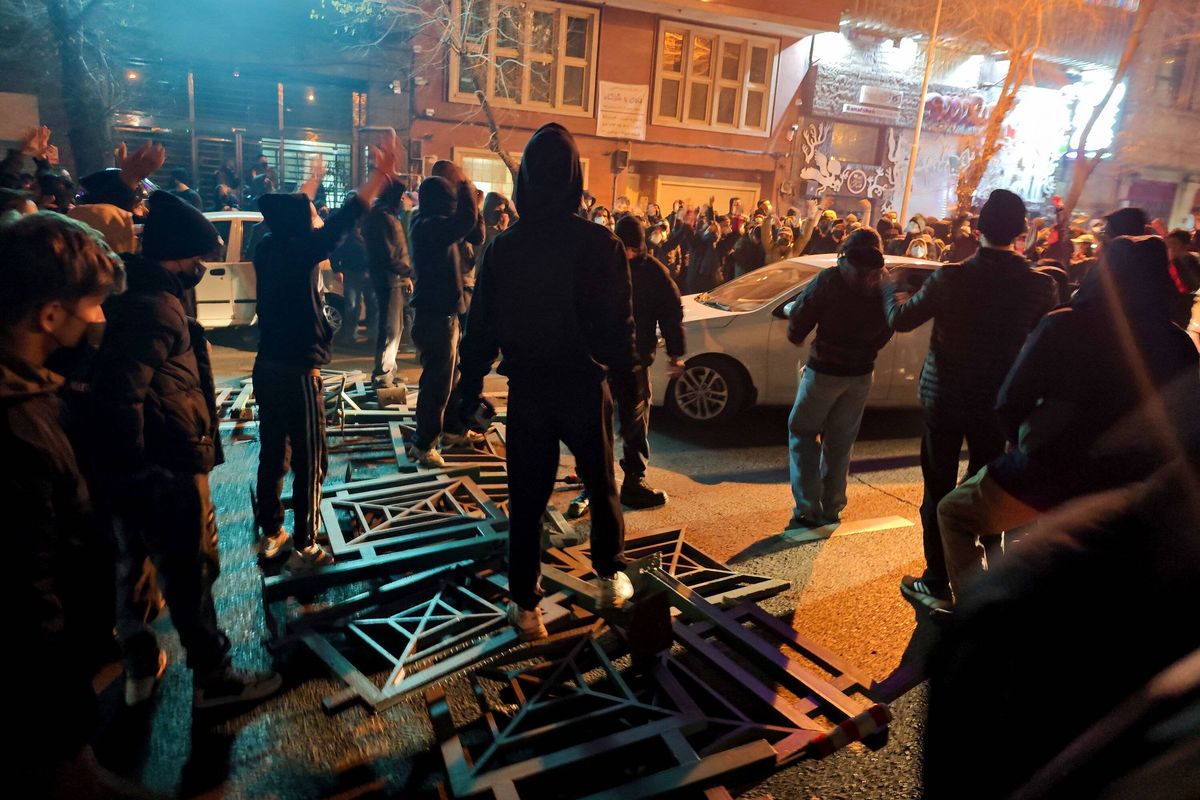
In Iran, unrest has been escalating amid protests against the government, with at least 29 deaths reported. Trump threatened that the U.S. would support the Iranian people if the government continued to use violence against demonstrators. This statement has sparked hope among some Iranians that U.S. actions against Maduro could inspire similar pressure against their leadership.
Maziar Bahari, editor of IranWire, commented, “Many Iranian people will be inspired by that message.” He noted, however, that while the protests might not lead to regime change, they could influence the government’s actions.
On the topic of Cuba, Trump suggested that the U.S. operation in Venezuela could precipitate the downfall of the Cuban government, which has heavily relied on Venezuelan oil for its economy. “Cuba looks like it is ready to fall,” he said, underscoring the economic vulnerabilities faced by Havana.
The Cuban government condemned the U.S. strikes, stating that 32 Cuban nationals were killed during the operation. The Cuban leadership called for international solidarity against what they termed as U.S. aggression, warning that other nations in the region should be on high alert.
Berg further articulated that any potential regime change in Cuba would likely not result in a pro-American government. “We have decades and decades of anti-Americanism,” he explained, making a shift toward pro-U.S. policies highly unlikely.
As the global community reacts to the U.S. intervention in Venezuela, the broader implications of this military action are becoming increasingly clear. It has not only heightened tensions with major powers but also raised questions about the future of U.S. foreign policy in Latin America and beyond.