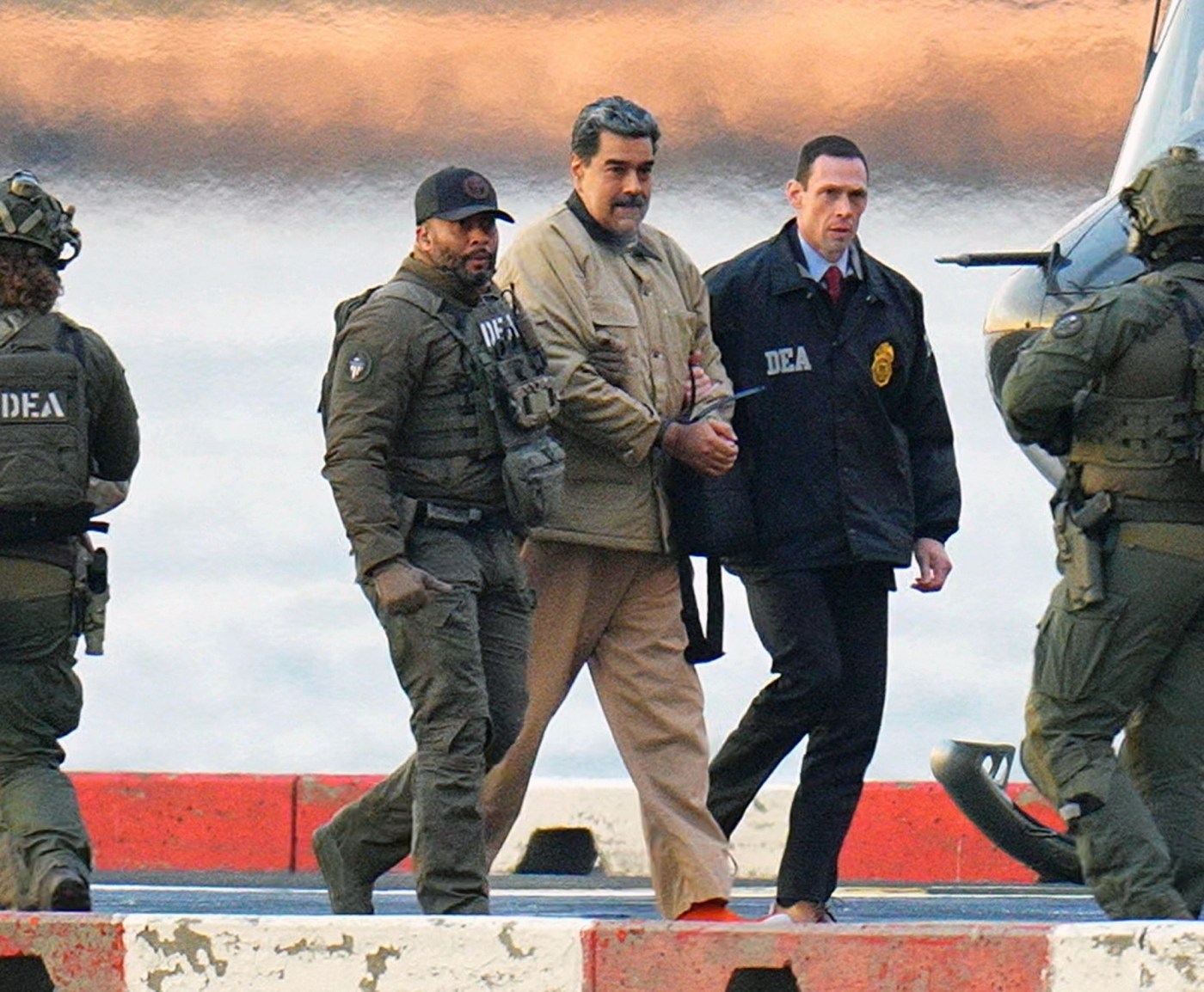
The recent capture of former Venezuelan President Nicolás Maduro during a U.S. military operation has raised questions about the potential impact on gas prices in California, where motorists currently face the highest fuel costs in the continental United States. While experts acknowledge the complexities involved, they suggest that any significant changes in fuel prices may be a long way off.
Fuel market analyst David Hackett, president of Stillwater Associates, stated that the immediate effects of Maduro’s ouster are unlikely to influence prices. “It doesn’t have a short-term impact,” he said. However, he noted that a revival of Venezuela’s oil production in the long term might lead to “additional world supply and probably would result in lower volatility and energy prices.”
Maduro and his wife were apprehended during a coordinated military operation on Saturday. They were subsequently flown to the United States to face charges related to narco-terrorism and cocaine trafficking. Following their arraignment in a Manhattan federal courthouse on March 4, 2024, the couple pleaded not guilty.
U.S. politicians, including former President Donald Trump, have suggested that the removal of Maduro could allow American companies to re-enter Venezuela’s lucrative oil market. Trump commented, “We’re going to have our very large United States oil companies — the biggest anywhere in the world — go in, spend billions of dollars, fix the badly broken infrastructure, and start making money for the country.”
Nevertheless, not all responses have been positive. Senator Chris Van Hollen of Maryland criticized Trump’s comments, stating, “This has never been about stopping drugs from coming to the US — it’s about grabbing Venezuela’s oil for his billionaire buddies.”
Historically, Venezuela was a major player in global oil production and holds more proven reserves than any other country, including Saudi Arabia, according to the Organization of the Petroleum Exporting Countries (OPEC). However, under Maduro and his predecessor, Hugo Chávez, the oil sector has significantly deteriorated. In 2001, Venezuela produced over 3 million barrels per day, but by 2024, that number had plummeted to just 903,000 barrels, as reported by the U.S. Energy Information Administration.
The ongoing exodus of citizens, with an estimated 8 million Venezuelans leaving since 2014, has contributed to the decline of the oil industry. Hackett noted that many skilled professionals in the oil sector would eagerly return to assist in revitalizing the industry.
Despite the capture of Maduro, uncertainty looms over the future of Venezuela’s oil sector. Patrick De Haan, head of petroleum analysis at GasBuddy, emphasized that restoring the oil industry will take time and effort. “A lot needs to happen… U.S. oil companies are not going to be chomping at the bit to potentially have their assets reseized again,” he cautioned.
Currently, Chevron remains the only major U.S. oil company operating in Venezuela, producing approximately 250,000 barrels a day through a partnership with the state-owned Petróleos de Venezuela S.A. (PDVSA). Following the recent developments, Chevron stated, “We continue to operate in full compliance with all relevant laws and regulations.”
The impact of these events on oil markets has been minimal so far. On the first trading day after Maduro’s capture, the price of Brent crude rose by 1.8% to about $62 per barrel, while West Texas Intermediate also increased by 1.8% to just over $58 a barrel. The national average gas price in the United States remained steady at $2.81 per gallon, with California averaging $4.27 per gallon, second only to Hawaii at $4.41.
Hackett pointed out that while there is a significant amount of oil available globally, the current outlook remains cautious. “The Energy Information Administration puts together a short-term energy outlook, and they’re still pretty bearish on oil prices, at least in the first quarter, maybe in the first half of this year,” he said.
The future of gas prices in California and beyond hinges on a multitude of factors, including geopolitical developments and the capacity for Venezuela to rebuild its oil infrastructure. As the situation unfolds, motorists may need to brace for continued uncertainty in fuel costs.