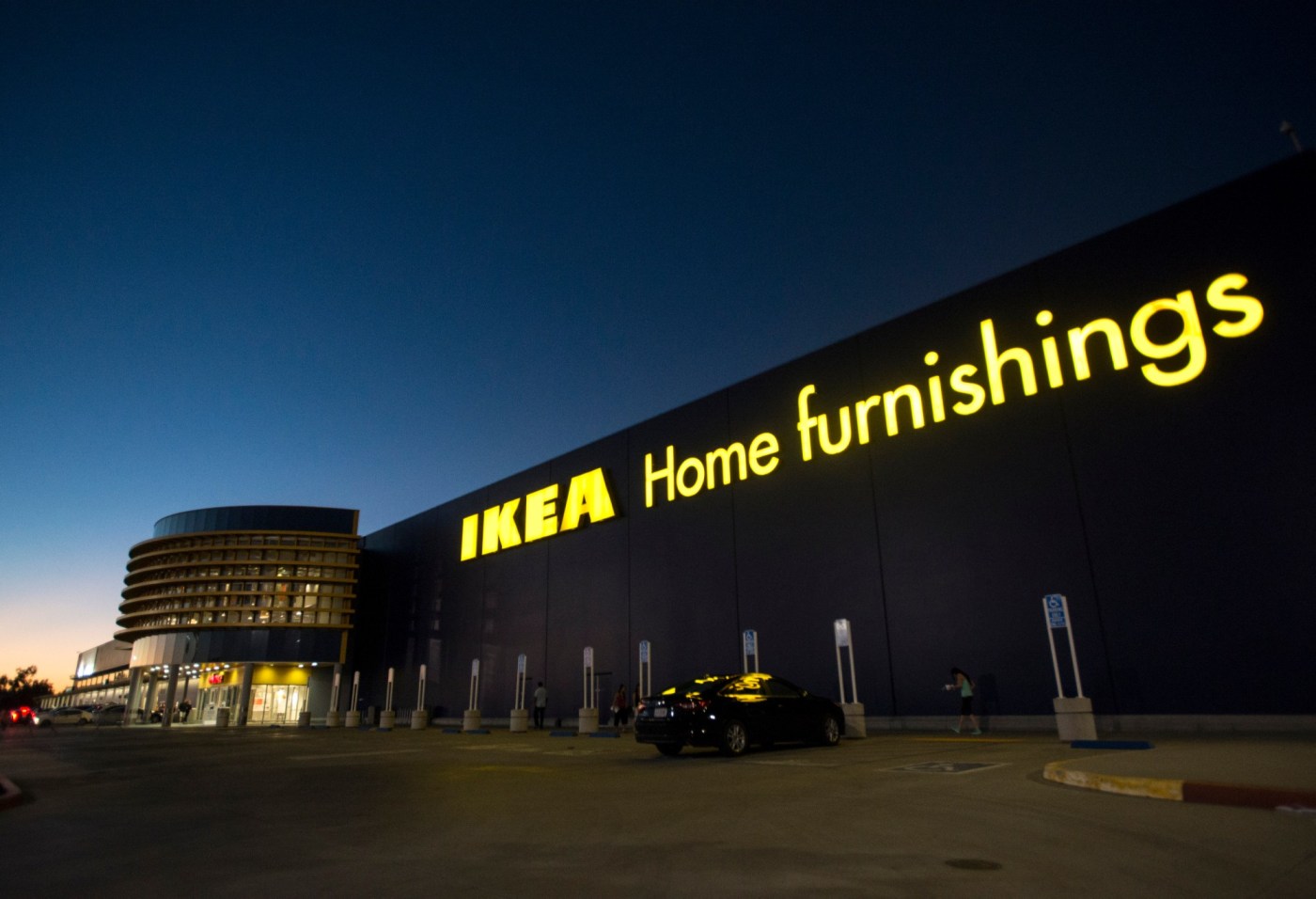
As the holiday season approaches, IKEA is grappling with significant challenges that threaten its long-standing dominance in the global furniture market. The company is experiencing flat sales, rising timber costs, and fierce competition from online marketplaces such as Amazon, Temu, and Shein. In response to these pressures, Inter IKEA, the company’s worldwide franchiser, reported a sharp profit decline of 26% for the year ending August 31, 2023, as it reduced prices to remain competitive.
During its annual summit in November, held in the small Swedish town of Älmhult, managers from around the world convened to discuss strategies for addressing these urgent issues. Despite the warm atmosphere and corporate camaraderie, the tone was underscored by an acute awareness of the challenges ahead. Senior partner at McKinsey & Co., Clarisse Magnin, emphasized the changing landscape, stating, “Consumers want price, convenience and speed, and they’re more than ready to change stores to get it.”
The brand, known for its iconic blue-and-yellow logo and beloved products like the Billy bookcase, is undergoing a substantial transformation. This is the third major overhaul in its history, and for the first time, the company has appointed non-Swedish leaders to oversee its two main entities: Inter IKEA and Ingka Group, which operates most of its stores. Jakub Jankowski, a veteran of the company, was appointed CEO of Inter IKEA in September 2023, taking charge on January 1, 2024.
IKEA’s unique ownership structure, which allows it greater flexibility compared to publicly traded retailers, has been a key advantage. The company can reinvest profits rather than pay dividends, a strategy that helped it navigate past challenges like the oil crisis of the 1970s and the 2008 recession. Yet, the current convergence of a sluggish housing market, tariffs, and rapidly evolving online competition raises concerns about whether this cushion will suffice for sustainable growth.
According to Sara Rosengren, a professor at the Stockholm School of Economics, IKEA must enhance its ability to connect with customers across various platforms. The brand’s strategy is increasingly focused on expanding product offerings, improving store locations, and accelerating delivery services. Traditionally, IKEA opened large stores on city outskirts before moving into urban centers; however, it is now piloting a new format called “Lada” for towns with populations between 100,000 and 200,000.
The company is also expanding its online services, ensuring that large stores function as both showrooms and logistics centers. CEO of Ingka Group, Juvencio Maeztu, stated, “The store will always remain the backbone of the IKEA experience in an omni-channel world.” Both Maeztu and Jankowski are pushing for aggressive pricing strategies and a commitment to a multi-channel retail approach to counter the growing threat from platforms like Temu and Shein.
Supply chain stability is another critical concern, particularly for securing wood, IKEA’s primary raw material. Following sanctions that impacted Russian and Belarusian timber sources, the company has intensified investments in Central and Eastern Europe. In October 2023, Ingka Investments acquired over €720 million (approximately $844 million) worth of forest land in Latvia and Estonia, marking its largest acquisition in this area.
While these moves are strategic, they have not gone unnoticed by environmental groups. Organizations such as Greenpeace have criticized IKEA for sourcing wood from sensitive regions, including Romania’s Carpathians. Although IKEA denies these allegations, the company has set goals to halve emissions by 2030, a target that has drawn skepticism from environmental advocates. Recently, the brand was nominated for “Sweden’s Greenwash Prize” for its sustainability claims while maintaining high sales volumes.
Despite these challenges, IKEA remains a significant player in the global retail landscape, with 808 outlets, around 222,000 employees, and annual retail sales of €44.6 billion. Store visits increased by 1.8% in the last fiscal year, reaching approximately 915 million. E-commerce now accounts for 28% of sales, and the company consistently ranks highly in global consumer surveys, solidifying its status as a household name alongside other Swedish brands like Spotify and H&M.
IKEA’s retail strategy has successfully utilized the Gruen effect, a concept that encourages impulse buying through store design. Its large, maze-like stores, enhanced by music and lighting, create an environment conducive to spontaneous purchases.
Founded in 1943 by Ingvar Kamprad at the age of 17, IKEA began as a mail-order business selling small items before transitioning to furniture in 1948. Kamprad’s innovative flat-pack and self-assembly model transformed the furniture industry, allowing IKEA to expand globally. The detailed ownership structure he established in the 1980s has helped the company remain resilient, particularly during the pandemic, when closures and supply chain disruptions tested its operational agility.
As IKEA adapts to an increasingly competitive market, its leadership is focused on adhering to Kamprad’s nine-point manifesto, known as the “Testament of a Furniture Dealer.” This approach emphasizes affordability, sustainability, and digital innovation while staying true to the company’s roots. Maeztu expressed optimism about the future, stating, “In many markets our share is still small. We can grow by being more accessible in big stores, small formats, web, and social, while staying unique and relevant.”
With these strategies in place, IKEA aims to navigate the challenges ahead while remaining a formidable force in the global furniture market.