As global air travel continues to expand, the challenges of maintaining flight schedules have become increasingly complex. In 2025, the aviation industry is projected to facilitate approximately 38.9 million flights, facing challenges from staffing shortages, unpredictable weather, and geopolitical tensions that restrict airspace. According to the aviation analytics firm Cirium, the hurdles impacting timely departures and arrivals have solidified as ongoing concerns rather than temporary disruptions. Their latest report, titled “On-Time Performance Review 2025,” identifies the top-performing airlines and airports that excelled in punctuality, showcasing their ability to enhance passenger satisfaction and reduce operational costs.
Top Performers in Punctuality
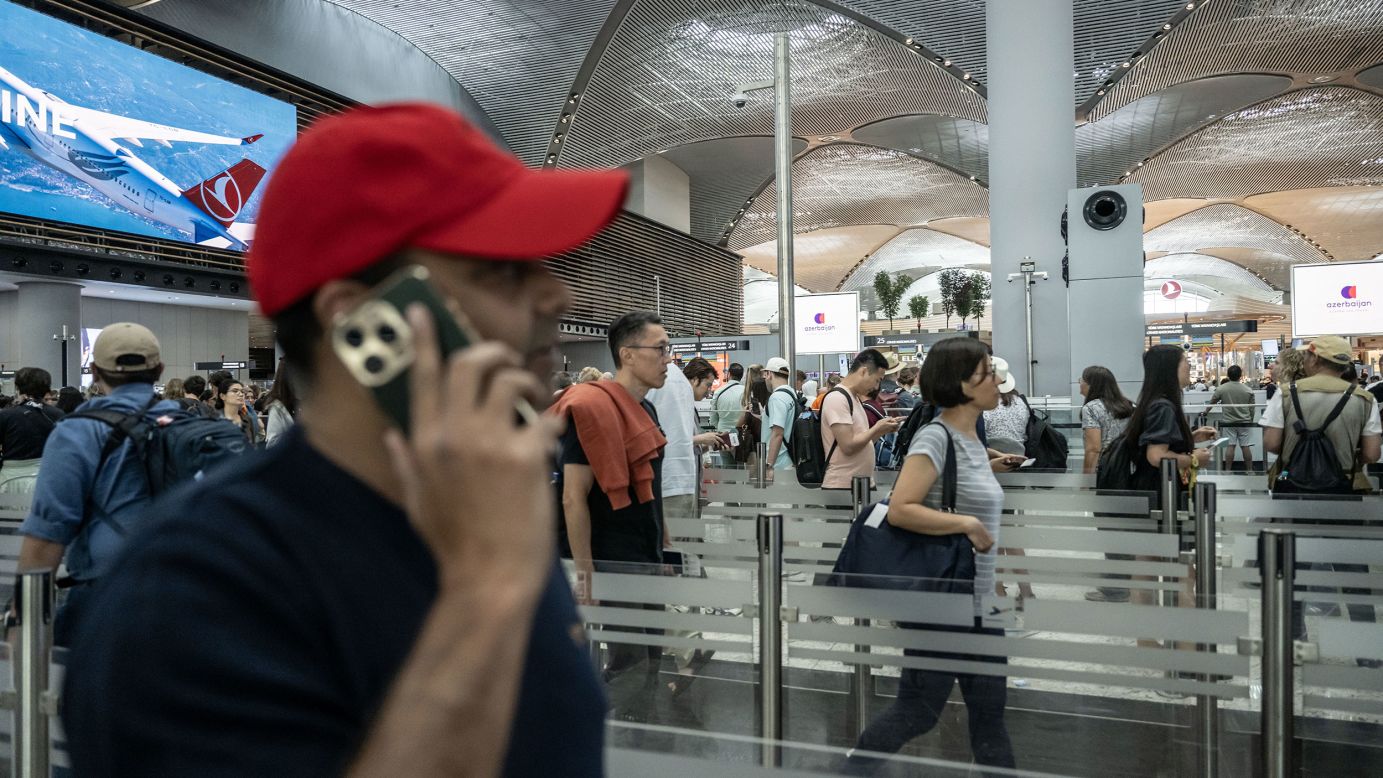
Istanbul Airport (IST) has secured the title of Platinum Winner for airports in 2025, recognized for its outstanding performance and reliability. Serving as a major hub, this Turkish airport accommodates over 84 million passengers annually, connecting them to 330 destinations. In April 2025, Istanbul Airport became the first in Europe to implement triple independent runway operations, significantly boosting its capacity from 120 to 148 movements per hour. Cirium reported an on-time performance (OTP) of 80.72%, ranking it as the 19th most punctual large airport globally, placing it between San Francisco International (SFO) and Detroit Metropolitan Wayne County (DTW).
The report highlights that Cirium’s Platinum Winner awards are based on comprehensive operational performance metrics, which include on-time performance, schedule execution, daily operational control, and recovery capabilities over the year.
In terms of punctuality, the best large airport was identified as Santiago Arturo Merino Benitez International Airport in Chile, achieving an impressive 87.04% OTP with 153,326 flights servicing 68 routes. The airport’s recent expansion, including the inauguration of a new terminal, has effectively doubled its annual passenger capacity.
For medium-sized airports, Panama City Tocumen International achieved the highest punctuality with 93.34% across 148,065 flights. Meanwhile, Guayaquil José Joaquín de Olmedo International in Ecuador topped the small airport category, recording 91.47% OTP across 34,068 flights.
Leading Airlines of 2025
In the airline sector, Qatar Airways was named the Platinum Winner, also recognized as the world’s best airline by Skytrax in 2025. The airline recorded an 84.42% OTP, an improvement from 82.83% in 2024, across 198,303 flights. Cirium noted that despite facing disruptions from geopolitical airspace constraints and weather challenges, Qatar Airways effectively managed its operations to ensure passengers reached their destinations.
For the second consecutive year, Aeroméxico was recognized as the top airline in terms of punctuality, achieving an OTP of 90.02% across 188,859 flights. In the Asia Pacific region, Philippine Airlines led with an OTP of 83.12%, despite operational difficulties at its congested hub, Manila Ninoy Aquino International Airport.
In North America, Delta Air Lines took the top spot with 80.9% OTP across over 1.8 million flights. The airline navigated through significant challenges, including recurrent air traffic control system issues and a government shutdown, demonstrating resilience in a difficult operational environment.
In Europe, Iberia Express was named the top airline for the third year running, achieving 88.94% OTP across 37,119 flights, overcoming notable disruptions such as a widespread power outage affecting air travel. Copa Airlines emerged as the leader in Latin America with a notable 90.75% OTP from 133,748 flights. Cirium predicts that Latin America will account for 8.5% of global passenger traffic in 2025, highlighting the region’s growing importance in the aviation sector.
In the Middle East and Africa, FlySafair led the way with a punctuality rate of 91.06% across 62,805 flights. Lastly, Virgin Atlantic was recognized as the Most Improved Airline in 2025, achieving an OTP of 83.45%, a significant increase from 74.01% in 2023.
Overall, Cirium’s report underscores the continuous improvement and adaptability of both airlines and airports in an increasingly complex global aviation landscape.