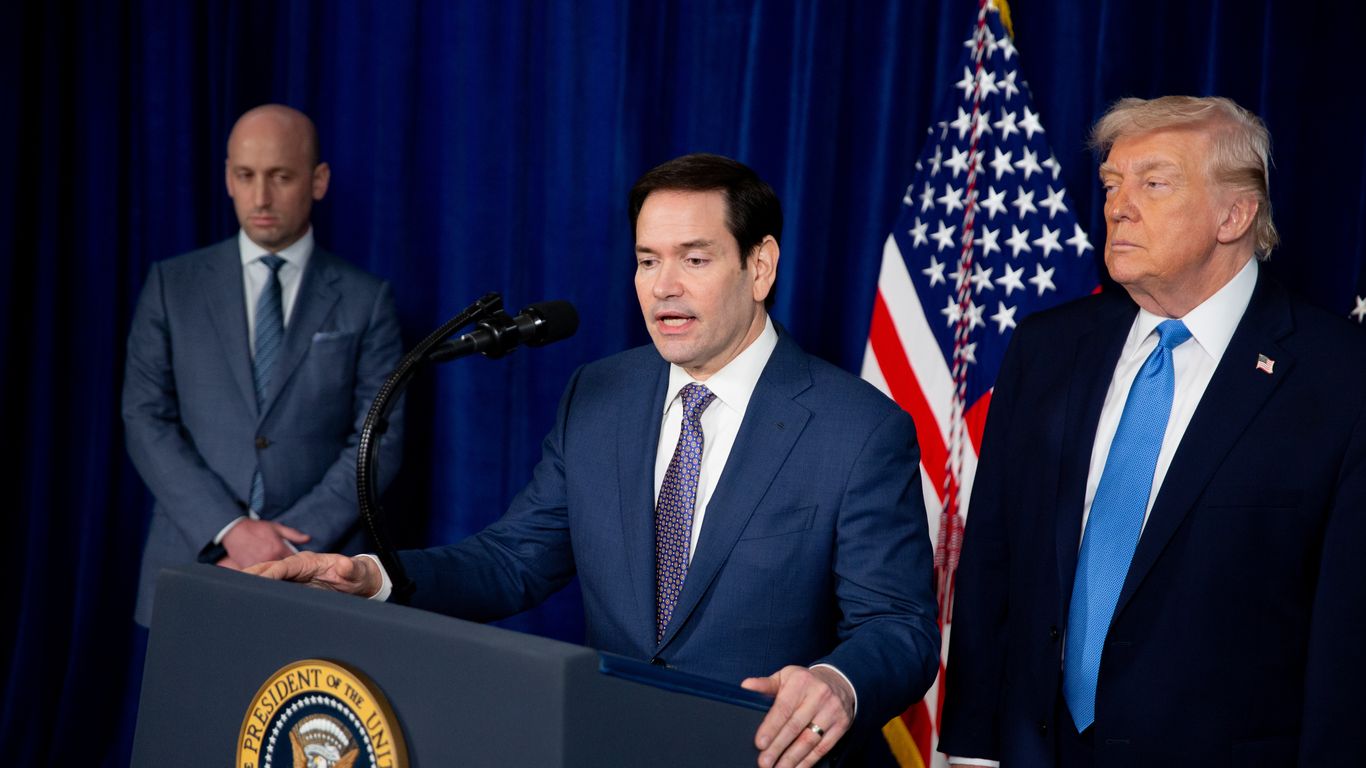
The U.S. government is embroiled in a complex legal debate following a dramatic raid in Venezuela that resulted in the capture of President Nicolás Maduro. Secretary of State Marco Rubio asserted on January 7, 2024, there is “not a war” with Venezuela, framing the operation as a law enforcement action against drug trafficking organizations instead of an act of war. This distinction is significant, as it could allow the administration to conduct further military actions without requiring congressional approval.
The raid on Maduro’s location has raised questions about the legal ramifications of such actions. By characterizing the operation as law enforcement, the administration argues it circumvents the legal constraints imposed by the War Powers Resolution and the Geneva Conventions, which could afford Maduro protections as a prisoner of war. President Donald Trump has hinted at potential further strikes, suggesting that U.S. operations might extend beyond Venezuela.
The raid occurred after months of targeted strikes against alleged “narco-terrorists,” resulting in significant casualties, including reports of at least 80 fatalities, both military and civilian. Rubio emphasized that there are currently no U.S. forces on the ground in Venezuela, but he indicated that Trump retains the option to deploy troops if necessary.
Critics of the administration’s justification highlight comments made by Susie Wiles, White House Chief of Staff, regarding the need for congressional approval for land strikes in Venezuela. In response, Rubio reiterated that the operation was not an attack on the nation itself but rather a targeted effort to apprehend an indicted drug trafficker.
Some legal scholars argue that this operation has escalated into an international armed conflict, triggering wartime legal standards regardless of the administration’s framing. According to experts at the national security journal Just Security, this includes protections under the Geneva Conventions, which may affect detention standards and U.S. immigration policy for Venezuelans.
Legal implications extend even further. Brian Finucane from the International Crisis Group contends that despite the administration’s assertions, the use of military force implicates Congress’s war powers. Additionally, Steve Vladeck, a law professor at Georgetown University, cautions that if the U.S. can justify military action based solely on a court indictment outside its borders, it sets a dangerous precedent that could lead to military interventions worldwide.
Historically, this situation echoes the controversial U.S. invasion of Panama during the late 1980s, where the U.S. sought to apprehend Manuel Noriega, illustrating the thin line between law enforcement and military action on foreign soil. Jack Goldsmith, a Harvard Law professor, highlighted that the legal framework for such actions remains contentious, particularly under the U.N. Charter.
Looking ahead, Tim Kaine, a senator from Virginia, indicated that a bipartisan resolution to block U.S. military action in Venezuela without congressional approval could be voted on shortly. The War Powers Resolution mandates that the president must consult with Congress before engaging military forces, providing a framework intended to prevent unauthorized military actions.
As the situation evolves, the administration plans to brief lawmakers, reinforcing the need for transparency regarding military engagements. The implications of the recent operation extend beyond Venezuela, potentially affecting U.S. foreign policy and military strategy in the region.
Ongoing discussions highlight the urgency for a clear legal framework governing military actions abroad, as the administration navigates the complexities of international law and domestic oversight.