The Indian Rupee (INR) faces significant pressure as the USD/INR exchange rate approaches the critical resistance level of 90.40. This comes in the wake of Donald Trump‘s recent threats to impose additional tariffs on India unless it ceases imports of Russian oil. The geopolitical tension surrounding the ongoing conflict in Ukraine adds further complexity to the currency dynamics.
During the Christmas week, the United States Dollar (USD) experienced fluctuations, initially weakening but recovering much of its value as markets returned to typical levels. The macroeconomic landscape indicates that the latest employment and inflation reports were weaker than expected. Specifically, the Non-Farm Payroll (NFP) and Consumer Price Index (CPI) figures suggest a cautious outlook, leading the market to anticipate a potential interest rate cut of approximately 63 basis points by the end of the year.
Market analysts remain cautious about the December data, attributing some of the softness to seasonal factors, including holiday disruptions. As the Federal Reserve (Fed) considers its next moves, the upcoming data releases could significantly impact its decisions. The market is currently projecting that any rate cut may not occur until March 2024, necessitating weaker economic indicators this month to prompt earlier action.
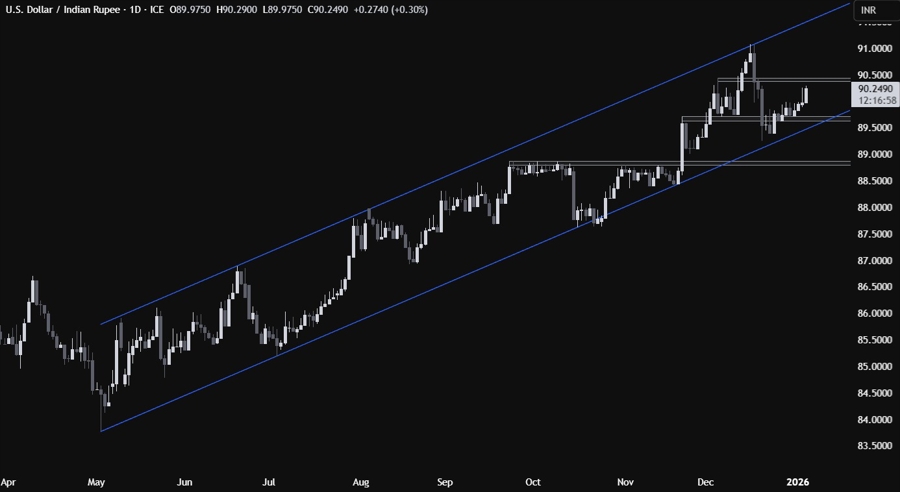
On the Indian front, the Reserve Bank of India (RBI) intervened on December 17, providing a temporary boost to the Rupee. However, the overall trend appears to be skewed downward, as gains are quickly diminishing, particularly with the USD/INR pair nearing the 90.40 threshold. Analysts have noted that a decisive break above this level could signal a potential rally towards new record highs.
The daily charts reveal a recent decline in the USD/INR rate, which fell to the lower limit of a rising channel post-RBI intervention. Traders have shown increased interest, with buy orders emerging at the bottom trendline. Following the breach of the significant 89.70 level, bullish sentiment has grown, pushing towards the resistance at 90.40. Should this resistance be overcome, it could lead to further upward momentum.
On a shorter timeframe, the four-hour charts indicate strong resistance around the 90.40 mark. Sellers may enter the market at this level, placing defined risk parameters above it to capitalize on potential declines towards 89.60. Conversely, buyers are expected to target a breakout, aiming for a rally that could establish new all-time highs.
This week, several key economic indicators will further shape market sentiment. The US ISM Manufacturing PMI is set to be released today, followed by the ADP employment figures, ISM Services PMI, and Job Openings data on Wednesday. Thursday will bring the latest US Jobless Claims figures, culminating in the highly anticipated NFP report on Friday.
As these developments unfold, the interaction between geopolitical factors and economic indicators will be crucial in determining the trajectory of both the USD and INR. Investors and traders alike will be closely monitoring the situation as they navigate this complex landscape.