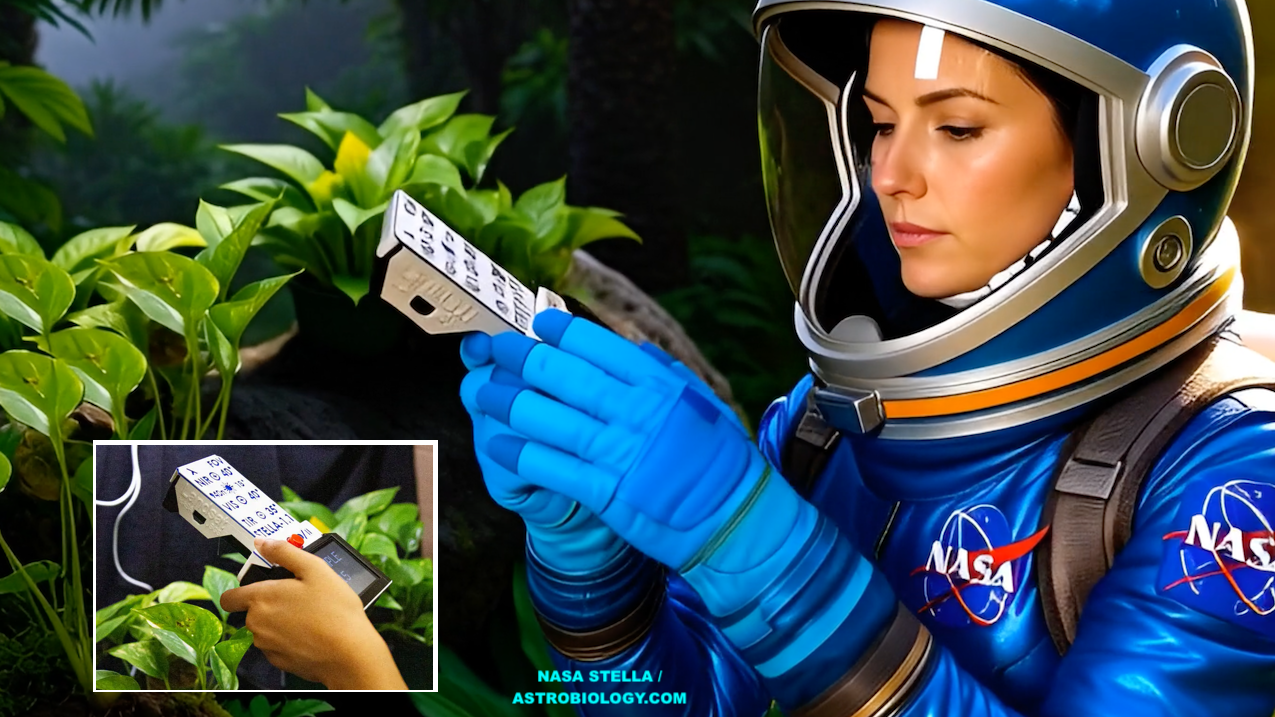
NASA has introduced an innovative project called STELLA (Science and Technology Education for Land/Life Assessment), aimed at democratizing access to remote sensing technology. This initiative enables individuals from various backgrounds to build and utilize low-cost sensor instruments for environmental monitoring and scientific research. The findings were detailed in a recent paper available online, showcasing a vision for the future of scientific exploration.
The STELLA project at NASA’s Goddard Space Flight Center focuses on developing lightweight, user-friendly instruments that can measure light spectra across 18 channels in the visible and near-infrared spectrum. These instruments facilitate the observation of natural and constructed surfaces, providing insights into environmental health, particularly in vegetation. By utilizing commercially available components, STELLA enables a hands-on educational experience for students and aspiring scientists.
One of the standout models, the STELLA-Q, can be assembled for approximately $200 in 2025. It connects components using inexpensive cables, making it accessible for anyone interested in exploring remote sensing technology. For those with soldering skills, the STELLA-1 model supports additional sensors to measure surface temperature and atmospheric conditions, following straightforward, step-by-step instructions.
The open-source software that powers these instruments is based on a freely available version of the Python programming language, allowing users to easily understand and manipulate the data collected. Recordings are saved in plain text format on a micro-SD card, simplifying data access and analysis.
Empowering Future Scientists
NASA’s STELLA initiative targets the burgeoning “Artemis Generation,” a group of young people poised to become the next wave of researchers exploring other planets. By providing tools that encourage analytical thinking and practical application of scientific principles, STELLA aims to inspire a new generation of environmental scientists.
The project emphasizes the importance of in situ analysis—evaluating conditions directly on the ground rather than relying solely on data sent back to Earth. This approach is crucial as humanity expands its search for extraterrestrial life. With the potential to gather and relay data at the speed of light, these instruments will enable astronauts and robotic teams to engage in real-time exploration.
This innovative methodology not only reduces the logistical challenges associated with sample return missions but also enhances the capacity for immediate empirical exploration. The data collected will contribute to a growing catalog of life forms encountered on other worlds, allowing for quicker identification and differentiation of alien biota.
Collaboration and Community Engagement
The STELLA project is supported by various collaborators, including university researchers and the Morven Sustainability Lab at the University of Virginia. NASA extends gratitude to all personnel involved in the project for their expertise in remote sensing and scientific programming.
In an era where technology is increasingly accessible, the STELLA project exemplifies how citizen science can play a pivotal role in advancing research and education. The initiative aligns with the global trend of open science, encouraging individuals to engage in scientific inquiry using affordable and readily available resources.
As NASA continues to refine these instruments, the STELLA project stands as a testament to the potential of community-driven science. By breaking down barriers to entry, NASA is fostering a collaborative environment that empowers individuals to contribute to our understanding of both Earth and the broader universe.
For more information about the STELLA initiative, the detailed research paper can be accessed at the NASA website.