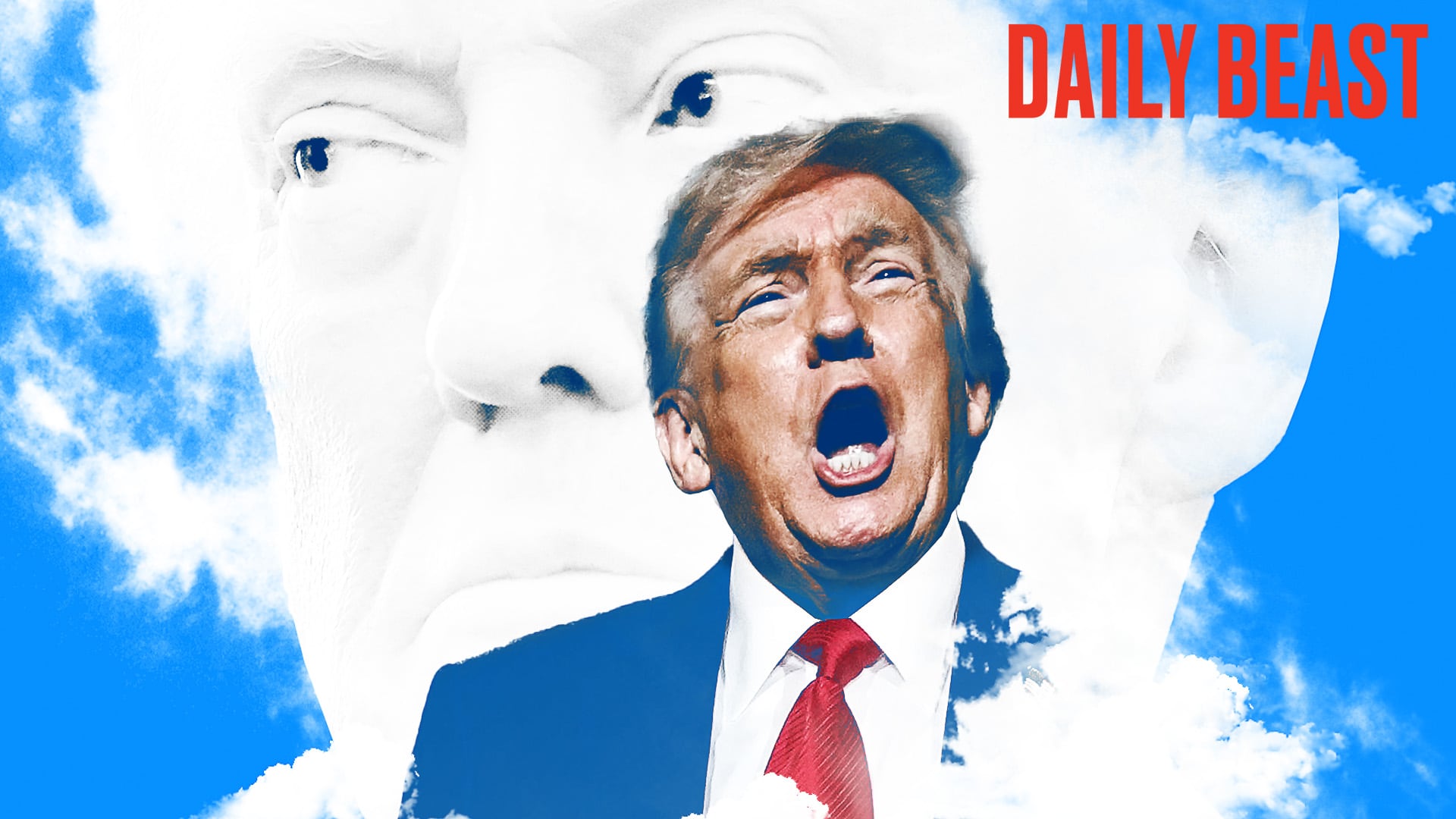
President Donald Trump has recently shared his concerns regarding his mental health and its implications for his presidency. During a phone interview, he expressed frustration about ongoing discussions surrounding his health, particularly fears related to the potential invocation of the 25th Amendment. This amendment outlines the process for presidential succession and addresses issues of incapacity.
In a conversation with psychologist Dr. John Gartner on The Daily Beast Podcast, the psychiatrist highlighted Trump’s increasing paranoia about threats to his power stemming from his perceived mental decline. Dr. Gartner noted that the president’s reaction to inquiries about his health is significant, suggesting a deeper concern about his cognitive state. He stated, “No story enrages Donald Trump more than the stories about his physical and cognitive health. And there’s a reason for that.”
Trump’s recent admission about wearing compression socks to manage swollen ankles has sparked further scrutiny. In his remarks, he claimed his health was “perfect,” yet the ongoing public discourse about his well-being continues to generate speculation. Dr. Gartner, a former professor at Johns Hopkins University, suggested that Trump may be exhibiting “clinical signs of dementia,” which could explain his increasing defensiveness.
During his second term, Trump has displayed a pattern of targeting perceived adversaries, a behavior acknowledged by White House Chief of Staff Susie Wiles as “retribution.” This strategy includes public calls for prosecution against individuals like former FBI Director James Comey. Dr. Gartner posits that the type of dementia he believes Trump may have is “frontotemporal dementia,” a condition that affects the frontal lobes and can result in impulsive and erratic behavior.
In a notable instance of this behavior, Trump recently claimed that following the U.S. capture of Venezuelan leader Nicolás Maduro, the country would be under U.S. control, suggesting the seizure of its oil. He also renamed the historical Monroe Doctrine to the “Donroe Doctrine,” showcasing a disconnect from established foreign policy norms. Dr. Gartner remarked, “He really could do almost anything,” reflecting concerns over Trump’s decision-making capabilities.
Despite Dr. Gartner’s alarming assessments, Trump maintains that he has “aced” his cognitive tests, claiming to answer all questions correctly. White House Assistant Press Secretary Liz Huston supported this assertion, stating that Dr. Sean Barbabella, the president’s physician, has consistently reported that Trump remains in “excellent overall health.” Huston further criticized the media for what she described as an intentional effort to distort the narrative around Trump’s health.
Dr. Gartner emphasized that the Montreal Cognitive Assessment test, used to identify mild cognitive impairment, should not be administered repeatedly unless someone is under observation for dementia. He encouraged those interested in understanding Trump’s cognitive state to refer to a New Republic article highlighting “Trump’s 11 Most Senile Moments,” which includes incidents of unusual behavior.
When asked about advice for those surrounding Trump as he exhibits signs of decline, Dr. Gartner stated simply, “invoke the 25th Amendment.” As discussions about Trump’s mental fitness continue, the implications for his presidency and the broader political landscape remain significant.
New episodes of The Daily Beast Podcast are available every Tuesday, Thursday, and Sunday.