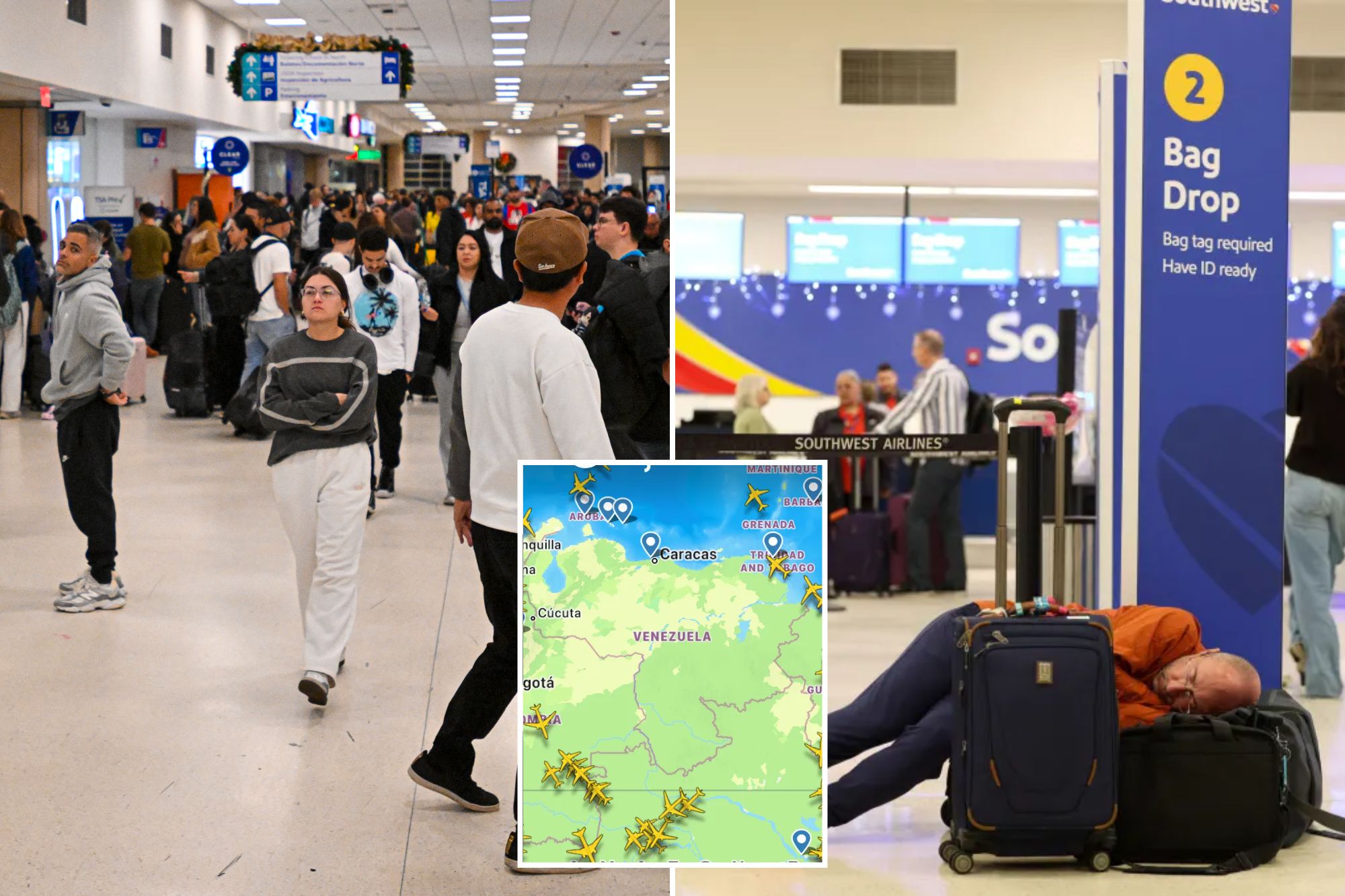
A significant US military operation that resulted in the capture of Venezuelan President Nicolás Maduro on March 9, 2024, severely disrupted air travel across the Caribbean. Following the operation, the Federal Aviation Administration (FAA) imposed restrictions that halted flights over Venezuela, leading to hundreds of cancellations across the eastern Caribbean during a peak travel period.
Data from FlightRadar24.com indicated that no flights were crossing Venezuelan airspace that day. Major airlines such as JetBlue Airways and Southwest Airlines were compelled to cancel numerous flights, affecting destinations including Puerto Rico, the Virgin Islands, and Aruba. Travelers faced uncertainty, with the FAA warning that disruptions could last for several days.
In response to the operational restrictions, airlines began waiving change fees for affected passengers. By Saturday evening, US Transportation Secretary Sean Duffy announced that the restrictions would be lifted at midnight Eastern Standard Time, allowing airlines to restore normal schedules starting Sunday.
To accommodate stranded travelers, Southwest Airlines added six extra round-trip flights to Puerto Rico and eight additional round-trips on Monday. The airline also scheduled two more flights to Aruba. At Queen Beatrix International Airport in Aruba, officials anticipated a return to normal operations on Sunday after a day filled with cancellations.
Travel disruptions extended beyond flight cancellations. In Barbados, Prime Minister Mia Mottley highlighted the broader impact of the conflict on both air and sea travel, stating that the situation had resulted in significant disruptions to the island’s ports of entry.
For families like Lou Levine’s, the disruption meant a sudden change in plans. The Levines were scheduled to return to their home in Washington, D.C., on Saturday morning but discovered their flight had been canceled only after waking up to alarming news. After struggling to reach JetBlue for a rebooking, they managed to secure an alternative flight, extending their vacation unexpectedly. “It’s just really painful on the wallet,” Levine noted, detailing the additional expenses incurred due to the extended stay.
This weekend marked the tail end of a busy travel period, with AAA projecting that 122.4 million Americans would travel at least 50 miles from home for the holiday season. Many travelers were still eager to enjoy the Caribbean’s warm beaches before returning to colder climates. “The Caribbean is a top destination this time of the year,” said AAA spokesperson Aixa Diaz, emphasizing the urgency for those heading home before work and school resumed on Monday.
An announcement from Luis Muñoz Marín International Airport in San Juan, Puerto Rico, confirmed that flight restrictions were a direct result of the “security situation related to military activity” in Venezuela. Nearly 60% of flights to and from the airport were canceled on Saturday, impacting thousands of passengers.
While major US airlines faced widespread cancellations, some foreign airlines continued operations. Air Canada reported that its flights to the Caribbean were running normally, although passengers were given the option to rebook. Conversely, WestJet canceled flights to Aruba “out of an abundance of caution.”
The reach of the cancellations included nearly two dozen island destinations, such as Anguilla, Antigua, Curacao, and St. Lucia, while areas farther west like the Dominican Republic and Jamaica were largely unaffected. JetBlue stated that approximately 215 flights were canceled due to airspace closures linked to the military operation.
For those set to embark on Caribbean cruises, companies like Virgin Voyages offered full credits for future trips to passengers who could not make it to San Juan in time for departure.
As airlines work to restore normal operations, the impact of this military action on regional travel continues to unfold, affecting countless families and vacationers across the Caribbean.