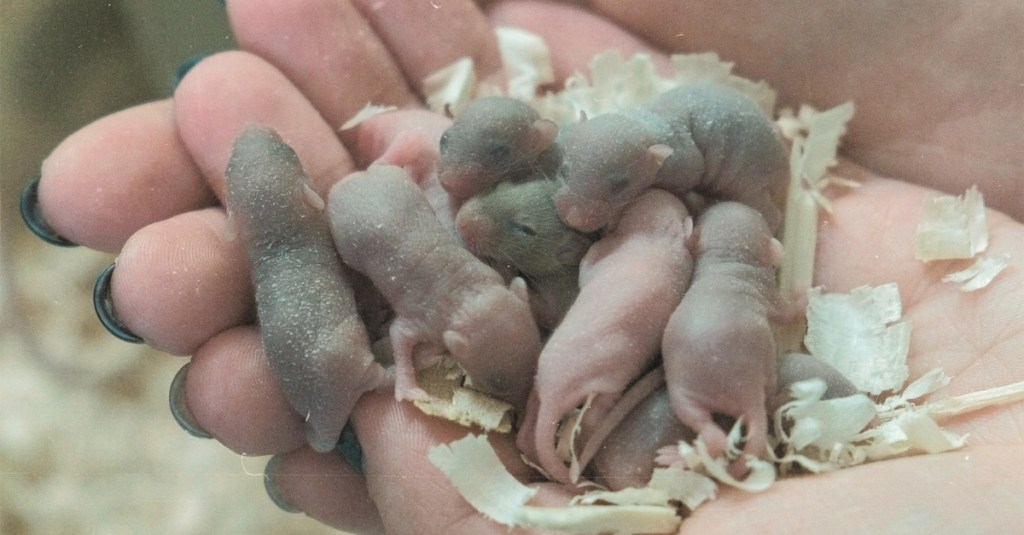
BREAKING: For the first time, a female mouse that journeyed to space has given birth, a critical development for future space exploration. This milestone occurred on December 10, 2023, after a female mouse returned from 14 days in orbit aboard China’s Shenzhou-21 mission, which launched on October 31, 2023.
The significance of this event goes beyond a simple birth; it raises vital questions about the viability of reproduction during long-term space missions. The mouse, who delivered a litter of nine pups—six of which survived—proves that short-term spaceflight does not impair reproductive abilities. This finding is crucial as scientists assess the potential for human life to thrive beyond Earth.
The mission took place approximately 400 kilometers above the Earth at China’s space station, where the mice faced the challenges of microgravity and space radiation. Despite a schedule change that extended their stay, ground teams adapted by testing emergency food supplies, including soy milk, to ensure the mice’s well-being during their mission.
According to Wang Hongmei, a researcher at the Chinese Academy of Sciences, the successful birth indicates that the female mouse’s reproductive functions remained intact despite the rigors of space travel. This is particularly important as mammals, including humans, share similar biological traits with mice, making them essential for understanding reproduction in space.
Researchers are now closely monitoring the growth and health of the pups, tracking any physiological changes and eventually assessing their ability to reproduce. This ongoing study is essential to detect potential reproductive issues that may not surface immediately but could affect future generations.
While this successful birth does not confirm that mammals can sustain reproduction in reduced gravity indefinitely, it does eliminate a significant concern regarding immediate reproductive viability in space. As humanity prepares for long-duration missions to Mars and discusses potential off-world settlements, ensuring the continuity of life in space remains a top priority.
This groundbreaking event underscores the importance of understanding how space travel impacts biological processes. As scientists continue to explore the implications of this birth, one thing is clear: the journey to sustaining human life beyond our planet is moving forward, one small step—and one small mouse—at a time.
Stay tuned for more updates on this developing story as researchers delve deeper into the implications of this monumental achievement in space exploration.