Members of the U.S. Congress are calling for immediate legislative measures to prevent President Donald Trump from escalating military actions in Venezuela. This demand follows Trump’s recent statements indicating intentions for further intervention, which he described as a “second wave” of attacks. Lawmakers express significant concern over Trump’s assertion that the U.S. will control the Venezuelan government indefinitely.
During a press conference on January 3, 2026, Rep. Greg Casar (D-Texas), chair of the Congressional Progressive Caucus, emphasized the need for a War Powers Resolution. “Congress should vote immediately to stop President Trump,” Casar said, highlighting the administration’s previous unauthorized bombings of vessels in international waters. He labeled Trump’s actions as “reckless and illegal,” underscoring a long-standing pattern of military engagement without congressional approval.
Another vocal critic, Rep. Rashida Tlaib (D-Mich.), described the administration’s military actions as representative of a “rogue state.” In a social media post, Tlaib stated, “Trump’s illegal and unprovoked bombing of Venezuela and kidnapping of its president are grave violations of international law.” She urged that the American public overwhelmingly opposes another regime change war.
Calls for Congressional Action Intensify
The calls for urgent congressional intervention were echoed by prominent establishment Democrats. Sen. Adam Schiff (D-California) urged for a renewed War Powers Resolution, arguing that Trump’s actions could destabilize the region. “Without congressional approval, Trump risks plunging a hemisphere into chaos,” Schiff stated. He emphasized the necessity for Congress to assert its authority to authorize military force, reflecting the sentiments of many Americans who do not support new military conflicts.
Sen. Tim Kaine (D-Va.) announced plans to introduce a bipartisan War Powers Resolution next week aimed at blocking further military action in Venezuela. Kaine questioned the potential ramifications of Trump’s military strategies, asking rhetorically if the president would deploy troops in various international scenarios without legislative consent. “It is long past time for Congress to reassert its critical constitutional role in matters of war and peace,” he said.
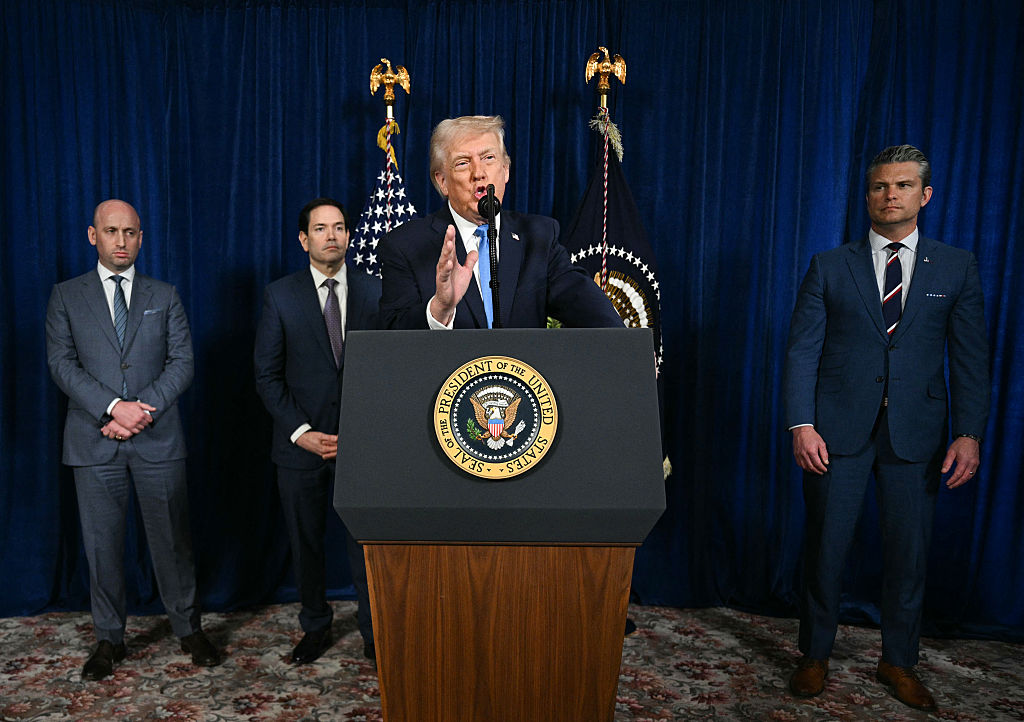
The legislative push comes as Trump makes clear his administration’s intentions to engage further in Venezuela’s internal affairs, particularly regarding the nation’s extensive oil resources. During his press conference, Trump stated, “We’re not afraid of boots on the ground,” indicating a willingness to increase military presence.
Republican Support and Legislative Challenges
The response from the Republican-controlled Congress remains mixed. While some Republican leaders, such as House Speaker Mike Johnson (R-La.) and Senate Majority Leader John Thune (R-SD), have publicly supported the administration’s actions, others show caution regarding the implications of such military operations without congressional endorsement.
Senator Mike Lee (R-Utah), who previously raised constitutional concerns, appeared to soften his stance following a discussion with Secretary of State Marco Rubio. Despite this, Rep. Andy Kim (D-N.J.) criticized the administration for what he considers a breach of constitutional protocols, arguing that the American public does not support unwarranted military involvement.
The unfolding situation places the U.S. government at a crossroads, where the balance of power between the executive and legislative branches is tested against the backdrop of international law and military ethics. As Congress prepares to debate the proposed War Powers Resolution, the future of U.S. involvement in Venezuela remains uncertain, with lawmakers keen to prevent any further escalation.
As discussions continue, the actions taken by Congress over the coming weeks will be pivotal in shaping U.S. foreign policy and military engagement in Venezuela and potentially influencing broader geopolitical relations in the region.