Nathan Bedford Forrest, a Confederate general during the American Civil War, is recognized for his innovative military tactics and controversial legacy. His strategies significantly impacted battlefield maneuvers, influencing future military leaders, including German Field Marshal Erwin Rommel, who reportedly studied Forrest’s approaches prior to World War II.
Military Tactics and Innovations
Forrest’s unique use of cavalry redefined conventional warfare. Traditional tactics often involved cavalry charging directly into battle. In contrast, Forrest utilized his cavalry to transport troops swiftly, transforming them into a formidable fighting force upon arrival. His actions delayed key Union campaigns, notably Ulysses S. Grant’s assault on Vicksburg and William T. Sherman’s Atlanta Campaign.
Forrest’s famed motto, “Get there first with the most,” epitomized his strategy. During the Battle of Paducah, his cavalry, numbering approximately 2,500 men, covered 100 miles in 50 hours. This remarkable speed allowed them to destroy Union supplies and disrupt enemy operations. Union General William T. Sherman expressed frustration over Forrest’s tactics, declaring in 1864, “That devil Forrest needs to be killed, I don’t care if it costs 10,000 lives and bankrupts the Federal Treasury!”
Forrest’s ingenuity extended beyond speed. At the Battle of Cedar Bluff, he deceived Union Colonel Abel Streight into surrendering 1,500 troops by creating the illusion of superior numbers. Such tactics made Forrest a formidable opponent on the battlefield.
A Complex Legacy
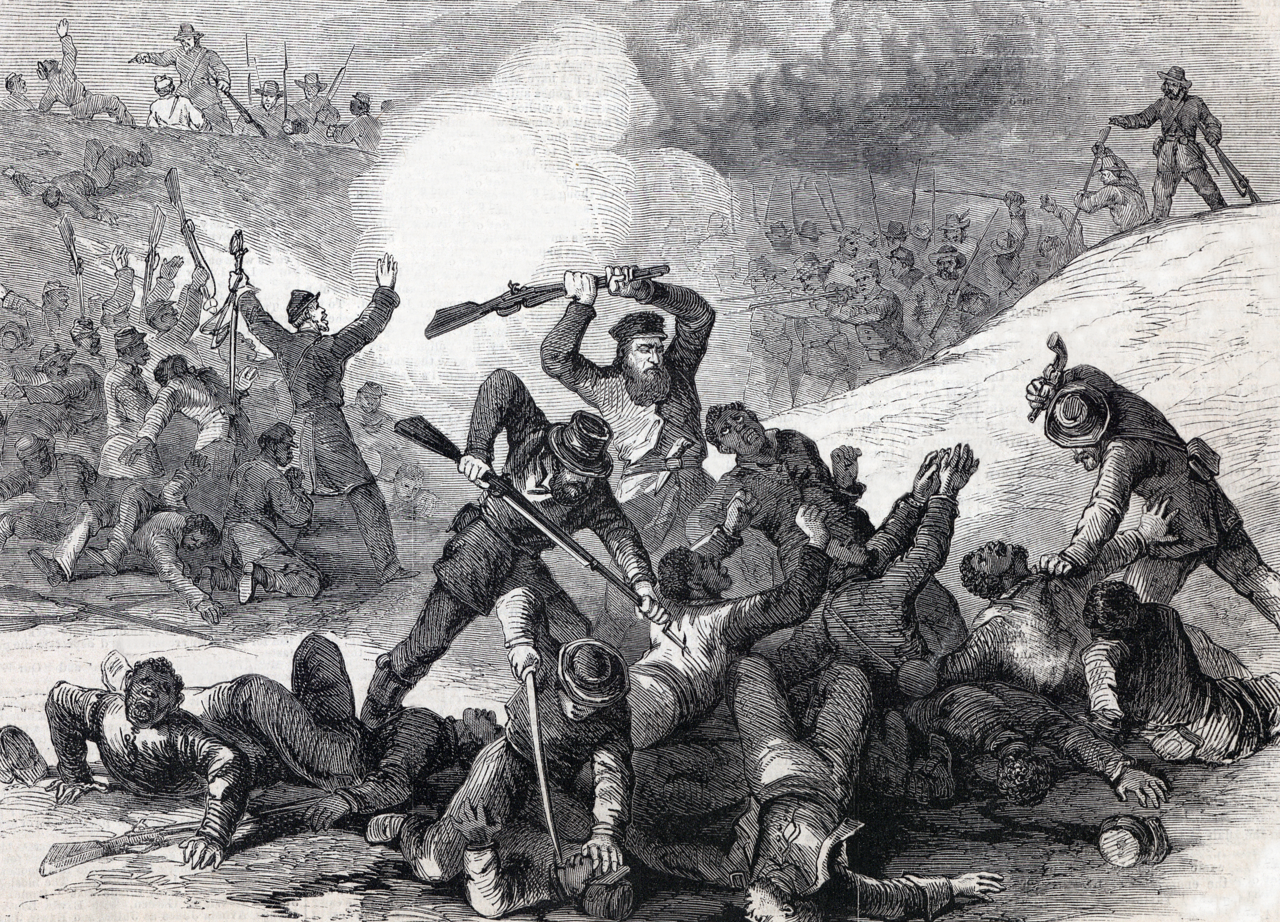
Despite his military prowess, Forrest’s legacy is marred by his deep-seated racism and involvement in the atrocities committed during the war. The most notorious incident occurred at Fort Pillow in March 1864, when Forrest’s forces captured the garrison. His order of “No Quarter” led to the massacre of Black soldiers, with estimates suggesting that around 200 captured troops were killed. While debates continue regarding whether Forrest personally issued the order, it remains clear that he bore responsibility for the actions of his troops.
Forrest’s post-war life further complicates his legacy. He is often linked to the formation of the Ku Klux Klan, serving as its first Grand Dragon. His involvement with the organization perpetuated the racism and violence against freed Black individuals in the United States, casting a long shadow over his military achievements.
As a historical figure, Forrest evokes both admiration and revulsion. He is often regarded as one of the most fascinating individuals of the Civil War era, alongside President Abraham Lincoln. Shelby Foote, a respected Civil War historian, noted that Forrest and Lincoln were the two most intriguing figures to emerge from that tumultuous period.
In contemporary discussions, Forrest’s influence remains evident. His strategies are studied in military academies, and his name persists in various public spaces across Tennessee, where he has more parks, schools, and buildings named after him than three U.S. presidents from the state combined.
Forrest’s complicated legacy continues to resonate in American culture, illustrating the duality of his contributions and the darker aspects of his character. As modern society grapples with the implications of historical figures, Nathan Bedford Forrest stands as a reminder of the complexities inherent in history—both inspiring and troubling.