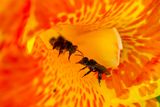
In a groundbreaking move for environmental law, officials in Satipo, located in Peru’s central Amazon, have approved an ordinance that recognizes native stingless bees as legal subjects with inherent rights. This marks the first time in history that insects have been granted legal rights, emphasizing their crucial role in maintaining biodiversity within the rainforest ecosystem. The ordinance acknowledges that these bees are vital pollinators, helping to sustain approximately 80 percent of native Amazonian plant species, including trees and crops essential for wildlife, Indigenous food systems, and global markets.
The importance of stingless bees extends beyond their ecological contributions. They are integral to the livelihoods of Asháninka communities, who have practiced meliponiculture—stewardship of stingless bees—for centuries. Families harvest honey and wax for food, medicine, and cultural rituals. The knowledge of bee behavior and nesting habits is passed down through generations, closely tied to the health of the forest ecosystem. As their populations decline due to habitat loss, traditional practices face increasing challenges, threatening both biodiversity and Indigenous ecological knowledge.
Legal Framework Shifts to Protect Pollinators
The newly established ordinance reframes conservation law by recognizing stingless bees not merely as biological resources but as entities with rights. This legal recognition enables authorities to act decisively when bee colonies or their habitats face threats. The ordinance grants stingless bees several rights, including:
– The right to exist and thrive
– The right to maintain healthy populations
– The right to a habitat free from pollution
– The right to stable ecological conditions
– The right to regenerate their natural cycles
– The right to legal representation in the event of harm or threat
This innovative approach allows authorities to treat harm to these pollinators as a legal injury, enabling intervention against activities such as deforestation or pesticide use that threaten their survival.
A Global Perspective on Pollinator Decline
Globally, wild bees contribute to the pollination of more than 90 percent of the crops that feed the population, according to the Earth Law Center. In the Amazon, stingless bees are among the most significant species, with nearly half of the world’s 500 stingless bee species residing in tropical forests, many in the Amazon basin. Their decline has immediate repercussions for forest ecosystems; fewer flowers lead to a decrease in fruits and seeds, which in turn affects wildlife and agricultural yields, particularly for fruit-bearing plants reliant on animal pollinators.
The ordinance is significant not only for its immediate implications for stingless bees but also for its potential to influence conservation practices worldwide. While legal frameworks have previously granted rights to rivers and forests, insects have largely remained unrecognized in law. The Satipo ordinance serves as a test case for whether conservation law can effectively protect species that play crucial roles in maintaining the health of their ecosystems.
As environmental challenges continue to escalate—driven by deforestation, climate change, and agricultural practices—the recognition of stingless bees’ rights may inspire similar initiatives elsewhere. This innovative approach could pave the way for more inclusive conservation strategies that prioritize the protection of both biodiversity and Indigenous knowledge systems.
With this landmark decision, Satipo not only champions the rights of a vital pollinator but also signals a transformative shift in how humanity perceives and legislates its relationship with nature.