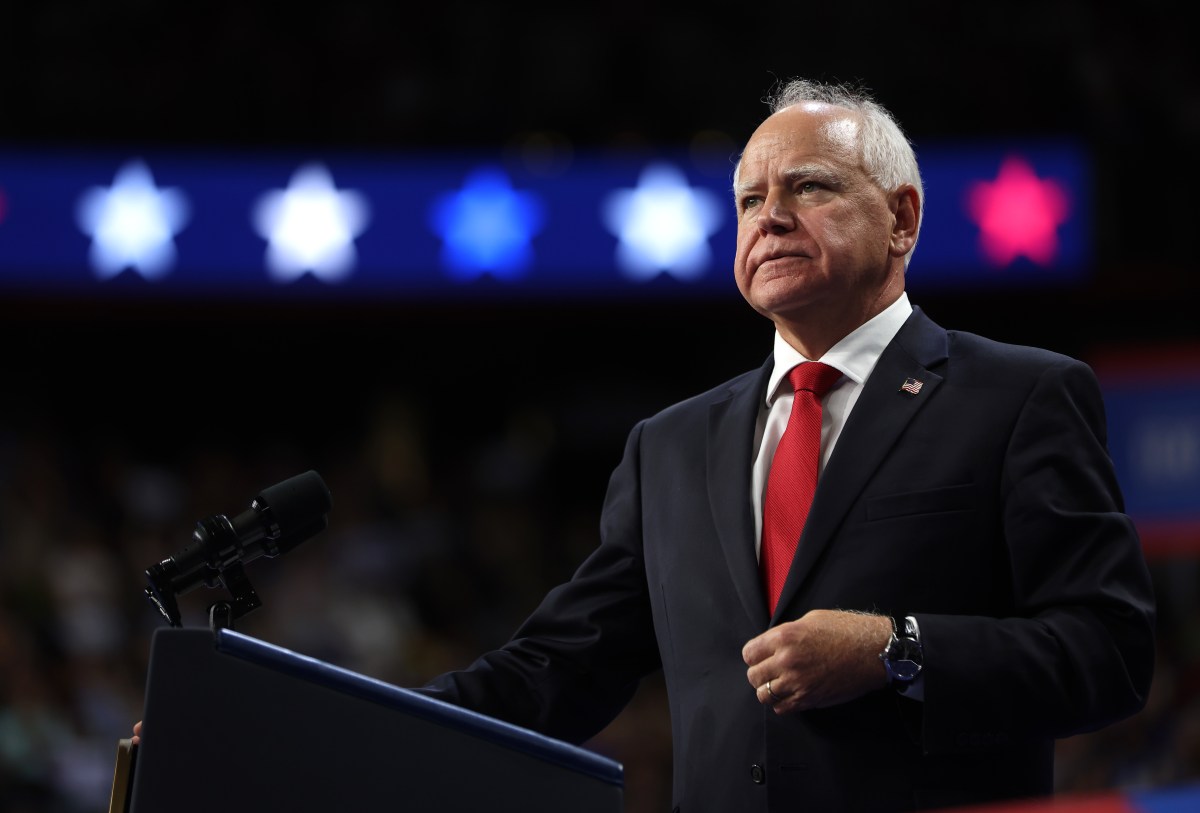
Minnesota Governor Tim Walz is gearing up for a challenging reelection campaign in November 2026, as he grapples with serious allegations of fraud involving federal programs within the state. The controversy has intensified following a viral video by influencer Nick Shirley, which showcased alleged fraudulent activities at several daycares in the Minneapolis area. This has prompted strong reactions from the Minnesota Republican Party, who assert that these allegations will significantly influence voter sentiment in the upcoming election.
A spokesperson for the Minnesota Republican Party, Noah Rouen, emphasized the issue’s relevance, stating, “Fraud isn’t an abstract issue — it’s about schools, public safety, and services that Minnesotans expect their tax dollars to support.” He added that voters are increasingly leaning toward Republican leadership due to a desire for “accountability, transparency, and a government that actually works for them.”
The allegations of fraud have received heightened attention, with federal prosecutors reporting that over 60 individuals have been convicted for fraud in the state, and more than 90 have been charged. Estimates suggest that the cost to taxpayers ranges from $250 million to $1 billion, with ongoing investigations hinting that the total could be even larger. A federal prosecutor recently stated that as much as $9 billion in federal funds allocated to 14 state-run programs since 2018 may have been misappropriated.
While the Walz administration disputes the figures being cited, they acknowledge the scale of the problem and express determination to address it. Many of those implicated in the alleged fraud are believed to be from Minnesota’s large Somali immigrant community, which adds another layer of complexity to the issue.
The political ramifications of these fraud allegations are significant, as Republicans aim to make them a cornerstone of their campaign against Walz. Critics have accused the Walz administration of failing to prevent the fraud, though his office has defended his track record. In a statement, Walz’s team noted that he has worked for years to combat fraud and has sought greater authority from the state legislature to take decisive action.
Recent polling data provides a snapshot of the political landscape. A KSTP-TV/SurveyUSA poll conducted from September 15-18, 2025, showed Walz leading various potential Republican challengers, including a 5-point lead over state Senator Scott Jensen and a 13-point lead over former gubernatorial candidate Kendall Qualls. This poll, however, was conducted before the fraud allegations took center stage.
Political analysts suggest that Walz’s reelection prospects are complicated by broader trends in Minnesota. David Schultz, a political science professor at Hamline University, pointed out that Walz is experiencing a “basic structural problem” as he seeks a third term in a political climate where incumbents often struggle for reelection. He noted that perceptions of Walz have shifted dramatically since the fraud scandal emerged, stating, “At this point, Walz is clearly the underdog and faces significant obstacles to reelection.”
In a more recent survey conducted from December 9-12, 2025, Walz’s approval rating stood at 48 percent, with an equal percentage disapproving of his performance. Notably, 69 percent of respondents felt that he needs to do more to combat fraud in the state.
Despite these challenges, betting markets still show some optimism for Walz. Polymarket assigned an 80 percent chance of a Democratic victory in November, while Kalshi indicated a 77 percent chance. Both the Cook Political Report and Sabato’s Crystal Ball currently classify the race as Likely Democratic.
The fallout from the ongoing fraud investigations continues to escalate. Kash Patel, Director of the FBI, stated that the agency has already increased personnel and resources in Minnesota to dismantle large-scale fraud schemes exploiting federal programs. He pledged, “We will continue to follow the money and protect children, and this investigation very much remains ongoing.”
As the election approaches, the outcome will likely hinge on how effectively Walz can address the fraud allegations and whether he can maintain support among key voter demographics. The unfolding situation promises to shape not only the governor’s campaign but also the broader political landscape in Minnesota leading into 2026.